


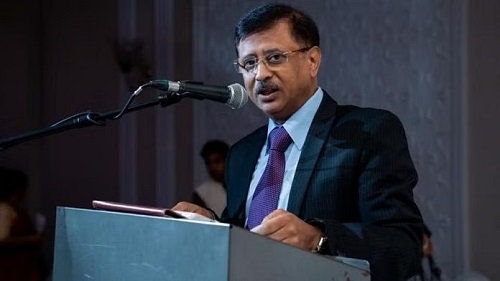
In a recent interview with Canadian broadcaster CTV News, Sanjay Kumar Verma, the former Indian High Commissioner to Canada, made explosive allegations, claiming that Sikh separatists in Canada, particularly Khalistani extremists, are deep-state agents cultivated by Canadian intelligence. Verma's comments come amid a growing diplomatic row between India and Canada, sparked by allegations surrounding the killing of Hardeep Singh Nijjar, a prominent Sikh separatist leader, in British Columbia in June 2023.
Verma, who returned to India along with five other Indian diplomats after their withdrawal from Canada last Monday, alleged that Canadian intelligence—specifically the Canadian Security Intelligence Service (CSIS)—has long nurtured these separatist elements. He stated, "This is my allegation and I am not giving you any evidence on that. I also know that these Khalistani extremists and terrorists are deep assets of CSIS."
These allegations echo the controversy surrounding Canadian Prime Minister Justin Trudeau’s accusation that Indian officials were linked to the assassination of Nijjar, a man India designated as a terrorist due to his involvement in the Khalistan separatist movement. Trudeau's government claimed that Indian diplomats, including Verma, were "persons of interest" in the case and requested India to waive their diplomatic immunity to allow questioning.
Verma, however, firmly denied any involvement of Indian officials in Nijjar’s death, condemning the murder and stating that New Delhi had never sought to kill Sikh separatists in Canada. He explained that any monitoring of separatist activities by the Indian High Commission in Canada was conducted through completely overt means, such as reading public statements and social media posts, and not through any covert operations.
Despite the seriousness of the allegations made by Canada, Verma repeatedly emphasized that no evidence has been provided to India to substantiate the claims. "We needed to see some evidence on the basis of which we can converse with our Canadian counterparts. Unfortunately, not a shred of evidence has been shared with us. Any evidence that has been shared has to be legally acceptable," he stated during the interview. Even during a meeting between Indian National Security Adviser Ajit Doval and his Canadian counterparts in Singapore on 12 October, no such evidence was presented.
The standoff between the two nations has escalated tensions, with India denying the charges and accusing Trudeau’s government of politically motivated actions. Verma suggested that the Canadian government’s actions are driven by domestic political considerations and that there is "a large mistrust" between New Delhi and Trudeau's administration.
Further complicating matters, Verma revealed that Canadian authorities had requested to travel to India for discussions on 8 October 2024, but shared the necessary paperwork for visas on the same day, despite the standard one-week processing time for such meetings. He noted that no agenda was shared for the proposed meeting, which led to the talks being held in Singapore later that week.
The diplomatic crisis continues to strain India-Canada relations, with Ottawa refusing to release any substantive evidence related to Nijjar’s killing, and New Delhi accusing Canada of harboring extremists. While Verma’s allegations regarding the role of Canadian intelligence in fostering Sikh separatism are yet to be substantiated, they add a new dimension to the already fraught relationship between the two countries.


















Leave Your Comment