


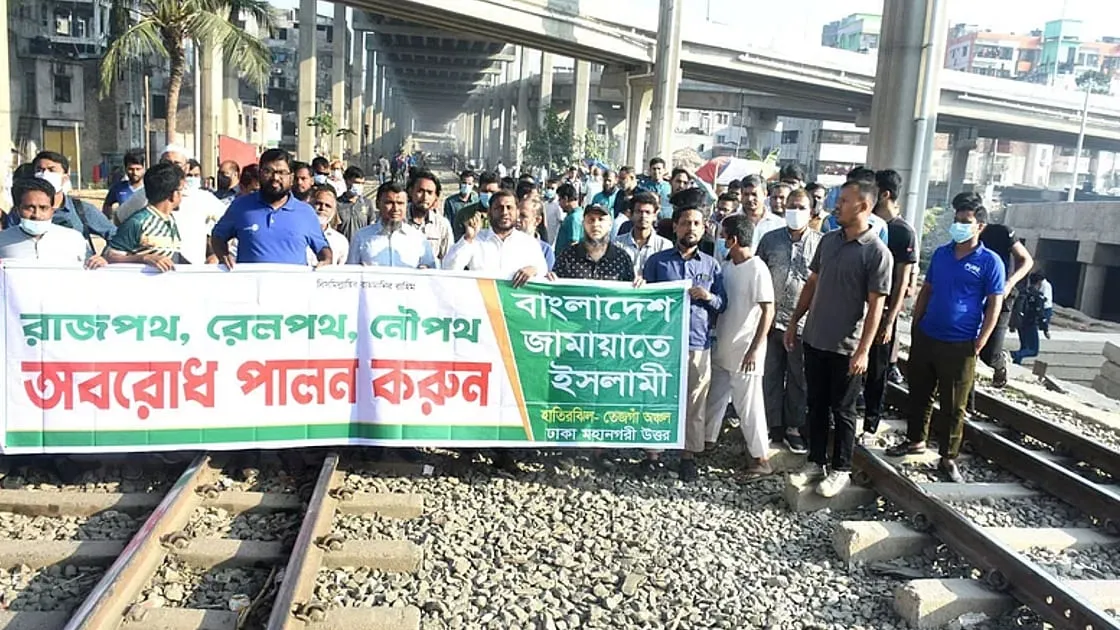
In Bangladesh, the opening day of a nationwide three-day road, rail, and waterway blockade, enforced by the Bangladesh Nationalist Party and allied opposition factions, was marred by sporadic incidents of violence. These included clashes with law enforcement and the torching of vehicles. The blockade commenced at 6 a.m. on Tuesday and is scheduled to conclude at 6 p.m. on Thursday.
Opposition leaders and activists were observed taking positions on various roadways throughout the country, including the capital, to enforce the blockade. They also engaged in confrontations with law enforcement officers in different districts, resulting in two fatalities in Kishoreganj. Simultaneously, six vehicles were set ablaze in different locations across Bangladesh. Among these incidents, three buses were torched in Chattogram, two pick-up vans in Narayanganj, and a bus near the High Court in Dhaka during the blockade.
The primary objective of the blockade is to exert pressure on the ruling Awami League government to step down and facilitate the upcoming election, scheduled for January 2024, under a non-partisan, neutral administration. The banned political group, Bangladesh Jamaat-e-Islami, has also implemented a similar blockade with identical demands.
In response to the 72-hour blockade called by the BNP, Jamaat, and their affiliated parties, the Awami League has organized a march and sit-in program on the streets. Leaders and supporters of the ruling party were witnessed chanting slogans in support of the Sheikh Hasina government while protesting against the opposition's blockade.
This unrest has disrupted public transportation systems within cities and led to the suspension of long-distance bus services between major cities since Tuesday morning. The three-day blockade has generated panic and street violence, disproportionately affecting low-income individuals, including street vendors, as their daily sales and incomes have sharply declined due to the prevailing political uncertainty.
Meanwhile, the Chief Election Commissioner of Bangladesh, Kazi Habibul Awal, affirmed that the 12th national elections would proceed as scheduled, irrespective of the election environment's favorability. He conveyed this message to reporters following a meeting with US Ambassador Peter Haas on Tuesday. He expressed optimism that most political parties would eventually participate in the polls and help create a conducive election environment, regardless of the initial conditions.


















Leave Your Comment