


The partition of India in 1947 also led to the division of Bengal, splitting the British Indian province into Hindu-majority West Bengal (India) and Muslim-majority East Pakistan (now Bangladesh). West Bengal, currently the fourth most populous state with over ten crore people, borders Bangladesh to the east, Nepal and Bhutan to the north, and the Indian states of Jharkhand, Odisha, Bihar, Sikkim and Assam. The state encompasses the Darjeeling Himalayan hills region, the Ganges delta, the coastal Sundarbans known for mangroves, and the Bay of Bengal. The majority of ethnic group is Bengali, with Bengali Hindus forming the demographic majority, while Muslims make up about 30% of the population. West Bengal has produced many eminent personalities such as Swami Vivekananda, Raja Ram Mohan Roy, Ishwar Chandra Vidya Sagar, J. C. Bose, Rabindranath tagore, Subhash Chandra Bose and Satyajeet Ray, whose contributions to humanity remain cherished. The state has unicameral legislature with 294 seats and contributes 42 members to the Lok Sabha and 16 to the Rajya Sabha. The Indian National Congress remained in power until 1977, followed by the left-wing parties until 2011. Since then, the Trinamool Congress (TMC) led by Mamata Banerjee, has governed the state.
The state has a long and complex history of violence, driven by political, religious and social conflicts. In 1947, more than a million people were killed during the partition. East Pakistan’s independence movement led to genocide by the Pakistani army, killing three million people. The state witnessed violent peasant uprisings during Naxalite Movement, led by Charu Majumdar and Kanu Sanyal, which was brutally suppressed by the state government in 1970s and 80s. For decades, the state experienced frequent clashes between Communists, TMC and BJP, resulting in numerous deaths. The Nandigram violence saw 14 people killed in police firing during protests against the government’s plan to expropriate 10,000 acres farmers’ land for Special Economic Zone (SEZ), to be developed by Indonesian Salim Group. In 2006, the government acquired 997 acres of land in Singur for Tata Motors’ Tata Nano plant. Farmers opposed the move, and Mamata Banerjee’s TMC joined the protest. The violence eventually forced Tata Motors to relocate to Gujarat. Mamata Banerjee emerged as a strong leader after Singur movement and in 2011, her party won the majority, ending nearly three decades of the Left rule. She has remained Chief Minister since then. In early 2024, Sandeshkhali village saw widespread protests and violence after allegations against TMC leader Shahjahan Sheikh involved in sexual exploitation and land grabbing. Following 2021 assembly elections, large scale violence erupted, resulting in several deaths. Mamata Banerjee became the Chief Minister for the third time.
The draft of the Waqf Amendment Bill was referred to a Joint Parliamentary Committee (JPC), headed by BJP MP Jagdambika Pal, for consultations with various stake holders. The JPC held over 30 meetings across India in six months and submitted its report with 14 recommended amendments. The revised bill underwent a 28 hour extensive debate before being passed by the Parliament. It received the Presidential assent on 5th April and became the Waqf Amendment Act, 2025. The Waqf Board in India is a statutory, not religious body. Despite owning properties worth over Rs 1.2 lakh crores, its annual income is merely Rs 163 crore, as reported by the Sachar Committee, primarily due to corruption, political interference, inefficiency, and poor auditing. A small elite class benefits from these resources, while the broader needy Muslim community remains deprived.
However, misleading informations have been widely spread, such as the claim that the act will take away the mosques and grave yards. In reality, it focuses solely on better governance of the Boards. Similar fear mongering was seen during the Citizenship Amendment Act (CAA) protests, where false narratives claimed Muslims will lose citizenship and be sent to detention camps, none of which happened.
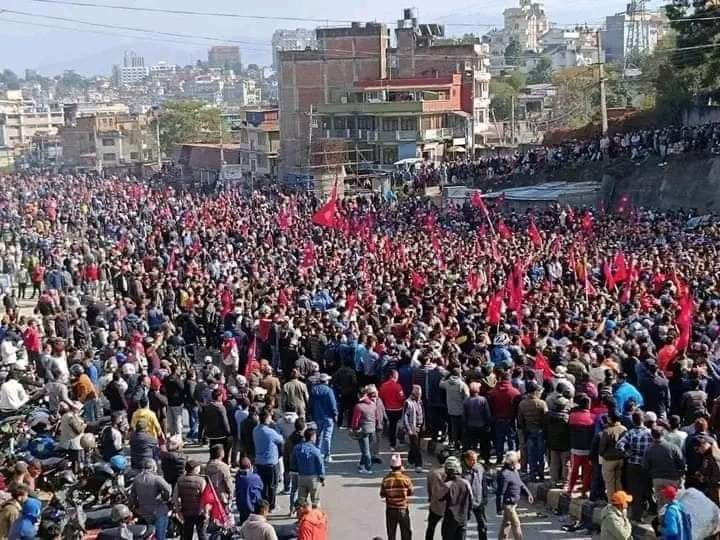
As expected, some groups have approached the Supreme Court both in support of and against this act. Some organizations protested on the roads opposing the act. The first hearing held on 16th April, with the next scheduled for 5th May 2025. Approaching against the act in the court is their right, but when the matter is sub judice, is there a need to come on the roads? Again, peaceful protest is a democratic right but any type of violence is unjustified and condemnable. The protests have been by and large peaceful in some parts of the country except in Murshidabad, West Bengal.
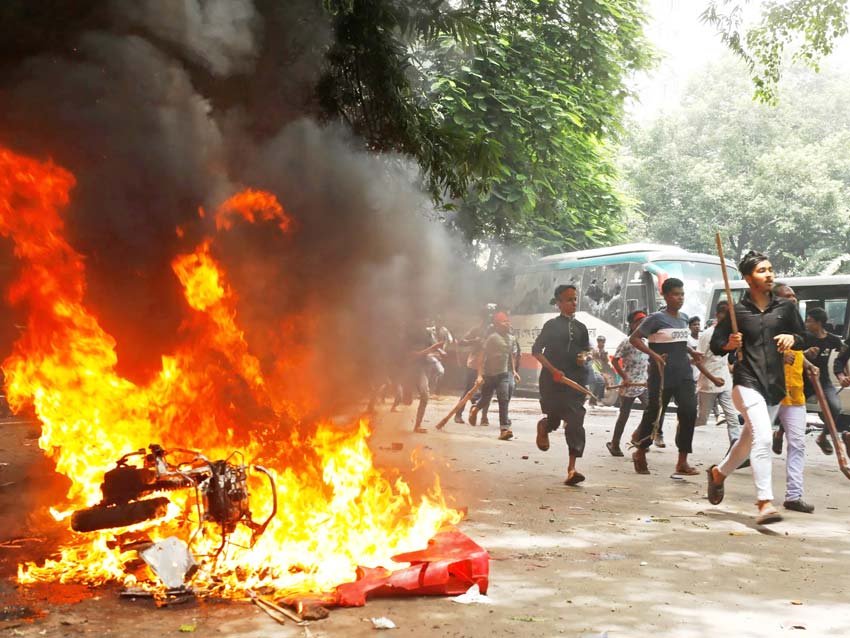
Murshidabad district, part of Malda division, is situated on the left bank of river Ganges, with a population over 75 lakh, more than 66% of whom are Muslims. Founded by Murshid Quali Khan and is named after him, the district is known for fertile land, silk weaving and Farrakha NTPC power plant. It has three Lok Sabha constituencies: Bahrampur, Murshidabad, and Jangipur, all represented by the TMC MPs. The unrest began on 8th April 2025 and escalated through 13th April 2025.Protests triggered by concerns over the Waqf Act 2025, intensified despite CM Mamata Banerjee’s assurance that the Act will not be implemented in West Bengal. Major violence was reported in Jangipur, Umarpur, Shanshergang, Suti, and Dhulian. Three individuals lost their lives, including a father-son duo, Hargovind Das and Chandan Das, who were allegedly dragged from their home and lynched by a mob, many others were injured. Massive groups gathered after Friday prayers, leading to clashes, arson, and attack on Hindu homes, some of which were reportedly marked with black ink before being targeted. Dozens of police officers were injured, revolver of a policeman was snatched, and many vehicles were torched. Over 400 Hindus, including women and children, fled to neighboring Malda district. Following the Calcutta High Court’s directive, five companies of Border Security Force (BSF) were deployed to assist the local police. Authorities have arrested over 300 individuals and lodged FIRs. The CM has appealed for peace and announced the formation of a Special Investigation Team to probe the incidents, although she has yet to visit the affected areas. In contrast, the Governor has visited the violence hit areas and the relief camps in Malda, against the wishes of the Chief Minister, and promised the Hindu victims of necessary help. He is expected to send his report to the central government. The Women’s Commission Chairperson also visited and interacted with
the victims.
Bangladesh commented on the situation, expressing concern over minority rights. India responded by advising Bangladesh to focus on protecting minorities within its
own borders.
There is growing concern about the role of Muslim leaders who are protesting the Act or challenging it in the court, whether they genuinely represent the poor and marginalized or are pursuing political motives. Many believe that the protests are politically driven, and leaders openly giving provocative statements must face legal action. The Hindu families in the relief camps are fearful and have requested a permanent BSF camp in the region. It’s important to recognize that the Waqf Act is not a Hindu-Muslims issue, so why are Hindus attacked? The intention behind the violence seems to be to drive out the Hindu community from the area. Mamata Banerjee must visit the affected areas and shower her mamta to the victims. She must ensure their safe return and provide adequate security. According to the police report submitted to the High Court, Muslims attacked Hindus in Murshidabad. An all-party delegation should visit the area to condemn the violence and restore the faith among both the communities. The central government must not remain a silent spectator. India can’t afford to have another Kashmir like exodus.
By Manoj Dubey
Principal (Retd.)
Delhi Public Schools
(The content of this article reflects the views of writers and contributors, not necessarily those of the publisher and editor. All disputes are subject to the exclusive jurisdiction of competent courts and forums in Delhi/New Delhi only)



















Comments (7)
U
Very nice post content is so much knowledgeable good job keep it up
S
Vividly articulated ???????????? fantastic read ????
S
Well articulated, giving an insight into history and a fantastic read ????????????
N
Worthwhile reading. All aspects covered. Worth the wait. Appreciation.
S
What an interesting article, immense knowledge
S
All the events systematically narrated by the author. Singur movement and cast equation put Mamta Baner jee in power. Even now she is an undisputed leader of the state.
S
All the events systematically narrated by the author. Singur movement was a turning point in the political career of Mamta Banerjee