


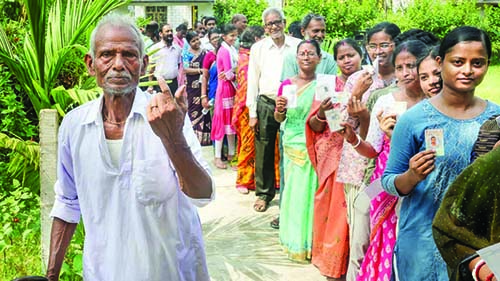
The record turnout yesterday in the polls in Tamil Nadu and in the first phase in West Bengal - about 85 percent in Tamil Nadu and 94 percent in West Bengal - has been said to be unprecedented in the country’s electoral history.
Of course, it will be premature to say which party will benefit out of this heavy turnout, but what can be said without any hesitation that one person has already scored a victory, a victory that cannot be denied by his perennial critics like Rahul Gandhi, Mamata Banerjee, Stalin, and the gang of India’s “left- liberal” fascists, who dominate the country’s intellectual landscape.
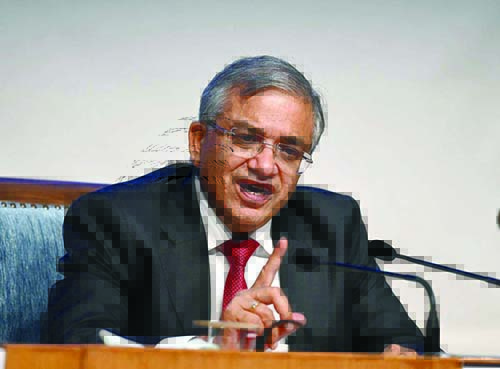
And that victor is none other than Chief Election Commissioner Gyanesh Kumari, under whose leadership, the Election Commission of India (ECI) has achieved significant operational milestones. His performance yesterday of creating a "violence-free" environment to enhance transparency was outstanding, to say the least.
As the Election Commission has said, West Bengal recorded an impressive 91.78% to 92.9% polling percentage in the first phase, the highest since Independence. And what was equally significant was the gender inclusivity: Women voters significantly participated, with a turnout of 92.69%, outperforming male voters at 90.92%..
One of the primary reasons for this success was the ECI’s proactive security deployment. Recognizing the state's volatile history, the Commission implemented a multi-phase election schedule, allowing for the strategic movement of Central Armed Police Forces (CAPF).
Unlike previous years, where local police were often accused of bias, this time the CAPF units were deployed weeks in advance to conduct area-domination exercises, which served to build voter confidence and deter potential troublemakers before polling even began.
Furthermore, the Commission’s administrative "zero-tolerance" policy played a crucial role. Under the new leadership, the ECI was quick to shuffle senior bureaucrats and police officers who were perceived as being too close to the ruling establishment. By replacing key officials with those of proven neutrality, the Commission sent a clear message that the machinery of the state must remain subservient to the democratic process, not any political party.
Technological transparency also defined this tenure. The aggressive use of C-VIGIL—an app allowing citizens to report violations in real-time—and 100% webcasting at sensitive booths ensured a level of digital surveillance never seen before in the state. This "eye in the sky" approach reduced the window for booth capturing and intimidation, as infractions could be monitored and addressed instantly from control rooms in Delhi and Kolkata.
Finally, the personal conduct and accessibility of the three Election Commissioners and their colleagues in West Bengal helped lower the political temperature. By engaging with all stakeholders and addressing grievances from both the opposition and the ruling party with equal gravity, the ECI maintained the "moral authority" necessary to conduct a fair poll.
Despite intense political friction regarding the Special Intensive Revision (SIR) of electoral rolls, made complicated by Chief Minister Mamata Banerjee’s street battles on the ground and legal battles in the High Court and Supreme Court, the ECI maintained that the exercise was a constitutional duty aimed at ensuring only eligible Indian citizens remained on the list. The SIR process involved house-to-house enumeration and legal scrutiny by judicial officers to address claims of deletions or disputed entries.
One does not know whether yesterday’s voter turnout will satisfy the ruling Trinamool Congress (TMC) over voter deletions and alleged bias, but none other than Banerjee now claims that the high turnout was in her favour. In that sense, she should be all the more grateful to the Commission that it is because of its transparent conduct of elections that she would win, if at all, for the record fourth time.
In fact, the high turnout nullifies the narrative that the likes of Mamata and Rahul Gandhi had built in the run-up to the elections about the fairness of the process. The Chief Minister questioned the role of central forces, the timing of polling phases, and the impartiality of the Election Commission itself. She argued that these factors were designed to suppress voters and influence the outcome.
However, the results on the ground told a different story. Despite all her apprehensions, Bengal’s voters queued up from morning till evening. Rural districts, urban centers, and sensitive constituencies all reported brisk polling. Women, first-time voters, and senior citizens turned out in strength. The high turnout cut across regions and communities, showing that people were determined to exercise their franchise regardless of political rhetoric.
Let it be reiterated that credit for this must go to the institutional framework that held firm under pressure. The Election Commission deployed central forces to ensure security, installed CCTV and webcasting in booths to maintain transparency, and acted on complaints in real time. Voter awareness campaigns and the dedication of polling officials helped build confidence. When citizens believe their vote is safe and their voice will be counted, they participate. West Bengal proved that point.
While no election in a region as complex as West Bengal can be entirely flawless, the Gyanesh Kumar-led ECI succeeded by prioritising the safety of voters over the convenience of the administration.
Through meticulous planning and a firm stance on neutrality, Kumar and his team significantly curbed the culture of electoral violence, setting a new benchmark for democratic integrity in the state.
In the end, the biggest winner was democracy itself.


















Leave Your Comment