


Tensions along the India-China border in Arunachal Pradesh remain unresolved, with face-offs between troops of the two countries continuing at several locations, according to Indo-Tibetan Border Police (ITBP) Director General Shatrujeet Singh Kapoor. Praising the performance of the force’s newly raised Shaurya commando teams during these encounters, Kapoor also outlined plans to significantly expand the ITBP’s specialised combat capabilities as India seeks to strengthen its preparedness along the sensitive frontier.
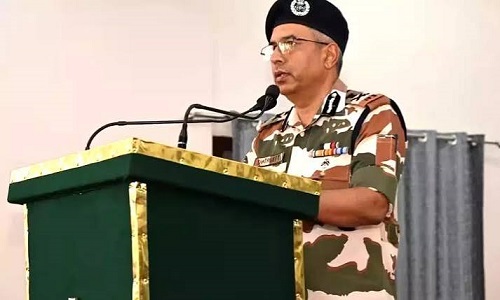
The continuing face-offs along the Line of Actual Control (LAC) in Arunachal Pradesh underline the persistent challenges confronting Indian security forces along the disputed border with China. Addressing personnel at an investiture ceremony ahead of the ITBP’s 65th Raising Day on October 22, Director General Shatrujeet Singh Kapoor disclosed that confrontations with Chinese People's Liberation Army (PLA) troops had occurred at multiple locations in the state, with some situations remaining unresolved.
Kapoor commended the Shaurya commandos, the ITBP’s specialised combat teams, for their performance during the encounters. His remarks highlighted the importance of maintaining operational readiness in areas where differing territorial perceptions can lead to sudden face-offs between Indian and Chinese personnel.
“Recently, a situation developed in Arunachal Pradesh where face-offs took place at several locations, and some of these situations are still ongoing. Our Shaurya Commando teams deployed there have performed exceptionally well,” the ITBP chief said.
The disclosure is significant because Arunachal Pradesh remains one of the sensitive sectors along the India-China frontier. Although both countries have mechanisms to prevent localised confrontations from escalating, differences over the alignment of the LAC continue to create the potential for friction. In such circumstances, the ability of frontline forces to respond with discipline, coordination and operational preparedness assumes considerable importance.
Alongside acknowledging the performance of its personnel, the ITBP leadership is pursuing a substantial expansion of its commando structure. Kapoor said the force had already established one commando team in every battalion and was in the process of raising two additional teams. The longer-term objective is to establish a complete commando company within each battalion, thereby strengthening specialised capabilities across the organisation.
The force is also considering the creation of a separate battalion exclusively dedicated to commando operations. According to Kapoor, the ITBP’s Operations Wing is working on the proposal, with the framework expected to be finalised shortly.
“These elite commando units will become a distinctive identity for the ITBP,” he said, emphasising the importance attached to developing a specialised force capable of responding to demanding operational situations.
The proposed expansion reflects a broader emphasis on strengthening the capabilities of personnel deployed in challenging border environments. The ITBP operates across difficult Himalayan terrain, where extreme weather, difficult access and the distances separating forward positions from support facilities can complicate operational tasks. Dedicated commando units can provide additional specialised skills and flexibility in situations requiring rapid and coordinated responses.
The latest developments in Arunachal Pradesh also bring renewed attention to the military and diplomatic mechanisms established by India and China to manage their border disputes. The two sides have continued to use military-level discussions to address differences along the LAC, particularly since the deadly clashes in the Galwan Valley in 2020, which resulted in casualties on both sides and sharply deteriorated bilateral relations.
In September, the Indian and Chinese armies held a Corps Commander-level meeting, with sources indicating that the Indian Army had adopted a firm position regarding the conduct of Chinese troops in the area associated with the latest issues. The discussions assume added significance because the two countries have historically relied on established military channels to address border-related disagreements and prevent local incidents from developing into wider confrontations.
Until now, Corps Commander-level meetings have largely been associated with the Chushul-Moldo meeting point in the Ladakh sector. The decision to hold such discussions concerning the eastern sector reflects the importance of addressing the specific challenges emerging along the Arunachal Pradesh frontier.
The geographical differences between the two sectors also make it important to address local circumstances rather than assume that arrangements developed for one part of the border will automatically resolve issues elsewhere. Sustained communication between military commanders remains essential to reducing the risk of misunderstandings and ensuring that encounters between patrols do not trigger an escalation.
The diplomatic dimension has also remained active. National Security Adviser Ajit Doval's visit to China was followed by the announcement of several measures intended to preserve peace and tranquillity along the LAC. Such initiatives underline the shared interest in preventing border tensions from undermining wider bilateral relations, even as significant differences remain.






















Leave Your Comment