


In a startling revelation that has sent shockwaves through geopolitical circles, former Central Intelligence Agency (CIA) officer John Kiriakou has claimed that the United States once held de facto control over Pakistan's nuclear arsenal in the immediate aftermath of the 9/11 attacks. The allegation, if true, paints a picture of extreme vulnerability in a nation that has always projected an image of absolute command over its "crown jewel" nuclear program.
Kiriakou, who spent 15 years with the CIA and is known for being the first to publicly confirm the use of waterboarding by the agency, made these claims in an interview with the news agency ANI. He stated that during his posting in Pakistan in 2002, it was an open secret among officials that the Pentagon, not the Pakistani military, was in control of the country's nuclear weapons.
"Purchasing" a Dictator's Cooperation
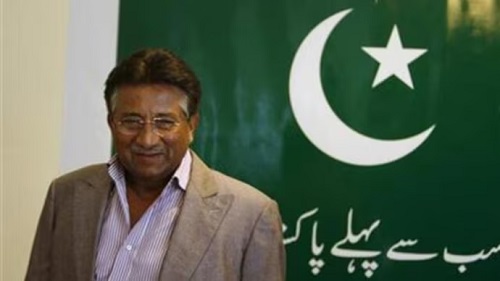
The linchpin of this alleged control was former President Pervez Musharraf. According to Kiriakou, the Bush administration, terrified that the political instability in a nuclear-armed Pakistan could lead to weapons falling into the hands of terrorists, essentially "purchased" Musharraf's cooperation.
“When I was stationed in Pakistan in 2002, I was told unofficially that the Pentagon controlled the Pakistani nuclear arsenal because Musharraf was afraid of what could happen,” Kiriakou said. He added, “We gave millions and millions and millions of dollars in aid, whether it was military aid or economic development aid.”
This arrangement, Kiriakou argued, is emblematic of a long-standing and cynical U.S. foreign policy preference. “Let's be honest here. The United States loves working with dictators. Because then you don't have to worry about public opinion and you don't have to worry about the media anymore.”
Saudi Interference and the A.Q. Khan Saga
The former CIA operative also delved into the controversial network of Pakistani nuclear scientist A.Q. Khan, who confessed in 2004 to running a global nuclear proliferation ring. Kiriakou claimed that the U.S. investigation into Khan was hampered by direct intervention from Saudi Arabia.
“If we had taken the Israeli approach, we would have just killed him. He was easy enough to find. But he had the support of the Saudi government,” Kiriakou stated. “The Saudis came to us and said, 'please leave him alone'.”
He suggested that the U.S. acquiesced due to the simple, transactional nature of the relationship with Riyadh: "we buy their oil and they buy our weapons." This claim provides a provocative backdrop to the close, yet often opaque, strategic ties between Pakistan and Saudi Arabia, which Kiriakou highlighted by noting that the "entire Saudi military is Pakistanis" who "protect Saudi Arabia on the ground."
Implications and Denials
Kiriakou’s claims stand in direct opposition to the official and vehemently stated position of both the U.S. and Pakistani governments. Islamabad has consistently maintained that its nuclear arsenal is under the complete, secure, and sovereign control of its military, a narrative it has fiercely protected for decades.
The former officer ended his comments on a note of concern, pointing to the current political landscape in Pakistan. “But in recent years, Pakistanis have denied this. If Pakistani generals are in control, I would be very worried about who is in charge politically,” he said.
While Kiriakou’s assertions remain unverified and are likely to be dismissed by officials, they come from an insider with a track record of revealing uncomfortable truths. His account opens a window into the shadowy deals and desperate contingencies that may have defined one of the most perilous chapters in the War on Terror, raising disturbing questions about who truly controlled the world’s first Islamic nuclear bomb during a moment of extreme global crisis.




















Leave Your Comment