


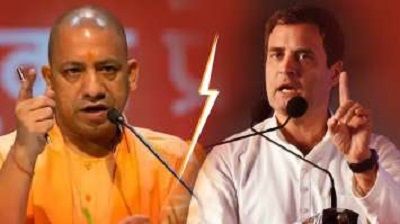
Uttar Pradesh Chief Minister Yogi Adityanath on Monday launched a sharp attack on Leader of Opposition Rahul Gandhi, accusing the Congress leadership of undermining constitutional institutions whenever electoral outcomes go against it. Calling for a change in what he described as the party’s “distrustful leadership,” Adityanath argued that repeatedly questioning the Election Commission and electronic voting machines risks eroding public confidence in democratic processes.
Uttar Pradesh Chief Minister Yogi Adityanath’s criticism of Rahul Gandhi reflects the BJP’s broader strategy of challenging the Congress over its repeated allegations of electoral manipulation. By questioning the opposition party’s leadership and accusing it of creating political instability, Adityanath has sought to shift the debate from the substance of the ‘vote chori’ allegations to the Congress’s approach towards democratic institutions.
Speaking to reporters on Monday ahead of the INDIA bloc’s proposed march to the Supreme Court, Adityanath accused the Congress leadership of attempting to create an atmosphere of anarchy and repeatedly questioning constitutional bodies. He argued that the party accepts electoral outcomes when it wins but raises doubts about electronic voting machines and the Election Commission when it loses.
The chief minister’s remarks underline the BJP’s attempt to portray the opposition’s electoral allegations as politically motivated rather than as evidence of institutional shortcomings. For the ruling party, the central argument is that democratic institutions must be respected and that electoral defeats cannot automatically become grounds for questioning the legitimacy of the process.
For the BJP, Adityanath’s intervention serves to reinforce a familiar message: political parties should accept electoral verdicts and avoid casting doubt on institutions without convincing evidence. The larger challenge is to prevent political polarisation from replacing substantive examination of electoral concerns. If allegations are unsupported, they should be challenged with facts and transparent explanations. If credible irregularities are identified, they should be investigated and corrected through due process. Neither blanket dismissal nor unsubstantiated accusation can provide a durable foundation for public trust.





















Leave Your Comment