


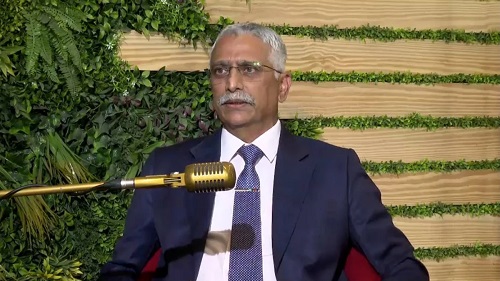
Nearly a month after his unpublished memoir sparked a political storm, former Army Chief General Manoj Mukund Naravane has issued a strong clarification, asserting that the government provided him complete operational freedom during the 2020 India-China standoff along the Line of Actual Control (LAC) in eastern Ladakh.
Speaking to multiple news channels on Thursday, Naravane rejected claims that the military leadership was constrained during the crisis. Instead, he emphasized that the Centre gave him a “free hand” to respond to the evolving situation on the ground, including the authority to take decisive action against Chinese forces if required.
“The way I interpret it is that I was given total freedom of operation to do as I deem fit, having better knowledge of the ground situation and what my troops are capable of,” Naravane said. He explained that the phrase “jo uchit samjho, woh karo” reflected the government’s deep trust in the Indian Army’s leadership. “It only goes to show the level of confidence that the government has in its armed forces,” he added.
The clarification comes in the backdrop of a controversy triggered earlier this year when Congress leader Rahul Gandhi cited excerpts from Naravane’s unpublished memoir Four Stars of Destiny during the Parliament Budget Session. Gandhi alleged that the former Army Chief had been “abandoned” by the government during the 2020 standoff, a claim that intensified political debate.
The situation escalated further when Gandhi carried the memoir into Parliament, prompting sharp reactions. Subsequently, a probe was initiated by the Delhi Police, and a notice was issued to Penguin Random House India, the book’s publisher, seeking clarification over the alleged leak.
In response, the publisher released a statement clarifying that no version of the book—print or digital—had been published, distributed, or made available to the public. Naravane also shared this statement, distancing himself from the controversy.
Amid the row, Naravane has shifted focus to a new literary project. Inspired by Congress MP Shashi Tharoor, he has authored The Curious and the Classified: Unearthing Military Myths and Mysteries. Unlike the memoir that stirred political debate, this book explores lesser-known and intriguing aspects of military life.
According to the publisher, the book delves into stories ranging from the legend of Baba Harbhajan to the fate of INS Khukri, along with accounts of airmen, their call signs, and even tales of extraordinary animals like Pedongi, a military mule. It promises a mix of research, folklore, and human interest narratives from within the armed forces.
Naravane’s latest remarks appear aimed at putting to rest speculation about civil-military dynamics during one of India’s most sensitive border confrontations in recent years. By underlining the autonomy granted to the Army, he has sought to shift the narrative away from राजनीतिक विवाद and toward institutional trust and operational clarity.
As debates over national security continue to intersect with politics, the former Army Chief’s clarification reinforces a key message: decisions during critical military situations were guided by professional judgment on the ground, backed by the government’s confidence.



















Leave Your Comment