


India is charting a bold course in space exploration, with an array of visionary missions and projects approved by the Union Cabinet. These initiatives, led by the Indian Space Research Organisation (ISRO), signal the nation's commitment to becoming a leader in space technology and research. From the upcoming Chandrayaan-4 mission and Venus Orbiter Mission to the ambitious Bharatiya Antariksh Station (BAS) project, the Government of India is significantly expanding its space program during the Amrit Kaal. These projects aim to enhance India's technological capabilities, foster industry collaboration, and strengthen the country's position in global space exploration.
Chandrayaan-4 Mission
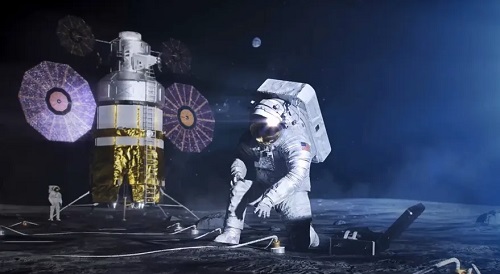
Chandrayaan-4 mission, aims at developing and demonstrating key technologies required for returning to Earth after a successful lunar landing. This mission will also focus on collecting samples from the Moon and analyzing them on Earth. Chandrayaan-4 is a critical step toward establishing India's capabilities for a human mission to the Moon, planned for 2040. The mission will showcase advanced technologies for docking, undocking, landing, and returning safely to Earth, alongside lunar sample collection and analysis.
The successful soft landing of Chandrayaan-3 demonstrated vital technologies that only a few nations possess. Building on this, Chandrayaan-4 will focus on returning lunar samples safely to Earth, a critical capability in future manned missions. The mission, managed by ISRO and expected to be completed within 36 months of approval, will have strong participation from industry and academia. All critical technologies will be developed indigenously, creating high employment potential and technological spin-offs for other sectors. The total funding requirement is Rs. 2,104.06 crore, covering spacecraft development, two launch vehicle missions of LVM3, external deep space network support, and special tests for design validation.
The mission will empower India to achieve self-reliance in key technologies essential for manned space missions, lunar sample retrieval, and the scientific examination of lunar materials. A significant collaboration with Indian industries is planned, fostering broad engagement in the mission. Additionally, Indian academia will be actively involved through Chandrayaan-4 science meetings and workshops, creating opportunities for knowledge sharing. The mission will also establish specialized facilities for the preservation and analysis of the lunar samples brought back, turning them into valuable national assets for future research and development.
Venus Orbiter Mission
The ambitious Venus Orbiter Mission (VOM) marks a major step forward in India's planetary exploration efforts beyond the Moon and Mars. Venus, the planet closest to Earth and believed to have formed under conditions similar to our own, presents a unique opportunity to study how planetary environments can evolve in dramatically different ways. This mission aligns with the government's long-term vision of advancing space exploration capabilities.
The Venus Orbiter Mission, led by the Department of Space, will place a scientific spacecraft in orbit around Venus. The mission aims to improve our understanding of the planet's surface, subsurface, atmospheric processes, and the Sun's influence on its atmosphere. Investigating the causes behind Venus’s transformation from a potentially habitable planet to its current state will provide crucial insights into the evolutionary paths of both Venus and Earth. ISRO will oversee the development and launch of the spacecraft, following its well-established project management practices. The data collected from the mission will be shared with the scientific community, fostering further research. The mission is expected for launch in March 2028, offering significant scientific insights and various outcomes, particularly in answering unresolved questions about Venus.





















Leave Your Comment