


The successful conclusion of the BRICS Summit in New Delhi has been described by Defence Minister Rajnath Singh as a significant milestone in India’s growing role on the world stage, with the landmark New Delhi Declaration reflecting the country’s expanding diplomatic influence under Prime Minister Narendra Modi.
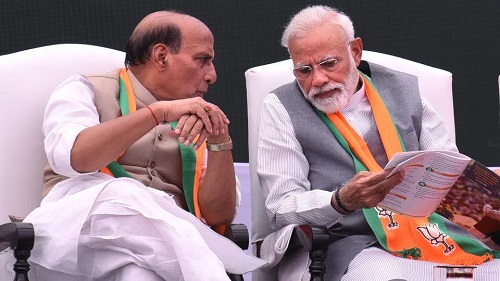
Defence Minister Rajnath Singh has congratulated Prime Minister Narendra Modi for the successful hosting of the 2026 BRICS Summit in New Delhi, saying the event has left an “indelible mark” on the global stage. He said the summit demonstrated India’s ability to bring diverse nations together around a shared agenda of cooperation, development and peace.
In a social media post following the conclusion of the historic summit, Singh highlighted the adoption of the New Delhi Declaration as one of the major achievements of India’s BRICS chairship. According to him, the declaration should not be viewed merely as another diplomatic document. Rather, it represents a reflection of India’s increasing weight in international affairs and the growing confidence of the global community in New Delhi’s leadership.
Singh credited Prime Minister Modi’s leadership for giving India’s BRICS presidency a clear and people-oriented direction. He said India placed four central priorities at the heart of its chairship—resilience, innovation, cooperation and sustainability. These themes, he noted, were not confined to diplomatic discussions among governments but were connected with issues that directly affect ordinary citizens.
The Defence Minister underlined the importance of this human-centric approach. India, he said, sought to ensure that BRICS cooperation translated into tangible benefits for people rather than remaining restricted to high-level policy discussions. This emphasis on inclusive development gave the New Delhi summit a distinctive character and strengthened the relevance of the grouping in an increasingly complex international environment.
Another major aspect highlighted by Singh was India’s effort to put the Global South at the centre of the BRICS agenda. Instead of treating developing countries as peripheral participants in global decision-making, India sought to give their concerns and aspirations greater prominence.
The approach assumes particular significance at a time when questions over the fairness and representation of existing international institutions are becoming increasingly prominent. India has consistently argued for a more representative global order in which developing countries have a greater voice in shaping decisions that affect the international community.
Singh said India’s position was rooted in the civilisational philosophy of Vasudhaiva Kutumbakam—the belief that the world is one family. This principle, he suggested, informed New Delhi’s approach to diplomacy and cooperation, particularly in its engagement with countries across the Global South.
Singh’s remarks also underscore the broader diplomatic message India sought to convey through its BRICS presidency: that its vision of global leadership is based not only on strategic influence but also on cooperation, inclusiveness and consensus-building.
The New Delhi summit has thus emerged as an important chapter in India’s expanding international engagement. By placing the Global South, sustainable development and people-centric cooperation at the forefront, India has sought to redefine what effective multilateral leadership can look like.




















Leave Your Comment