


Sanatana Dharma, often referred to as Hinduism, represents eternal and absolute duties incumbent upon all Hindus, regardless of caste or sect. Rooted in values such as honesty, purity, goodwill, patience, self-restraint, forbearance, and generosity, Sanatana has neither beginning nor end, symbolizing an everlasting order of peace and universal love. Dharma is often translated as duty such as the dharma of sugar is to be sweet, fire is to be hot and sun is to spread heat and light. Sanatana is the oldest religion that originated in the Indian subcontinent comprising several and varied systems of philosophy, belief, and rituals. Sanatana never tells wrong about any other religion of the world and does not believe in one God. It is a religion of peace with the aim to distribute love to the world. Its core scriptures include two great epics, four Vedas, eighteen Puranas and 108 Upanishads, which embody its spiritual and philosophical depth. Ramcharitmanas has been included in UNESCO’s Memory of the World (MOW) regional register due to its enduring worldwide appeal. The Bhagavad Gita, a part of Mahabharata, remains timeless, inspiring people worldwide with its teachings on truth, purpose, and overcoming self-doubt. Sanatana advocates respect for all forms of life including nature, animals, and the elements. It does not endorse any type of violence or radicalism. On the contrary it emphasizes on ‘Ahimsa Parmo Dharma’, ‘Satyamev Jayate’, ‘Vasudhaiva Kutumbakam’, ‘Athiti Devo Bhav’ etc. Yoga, meditation, and Ayurveda, rooted in Sanatana Principles, have gained worldwide recognition. Sanatana, the oldest Dharma, originated in Indian sub-continent, is now shrinking and unfortunately the neighboring countries which were once the part of India and embraced Islam are in deep unrest. Afghanistan is struggling with terrorism and Hindus have been eliminated from there. Pakistan is known as the epicenter of terrorism and the population of Hindus is rapidly decreasing and Bangladesh is following the same path. The minority Hindus are attacked and their population is on decline. The Mughal invaders attempted to spread Islam, demolished hundreds of temples, and persecuted Hindus.
Rama or Ram is a major deity in Hinduism. He is worshiped as the seventh and one of the most powerful avatars (incarnation) of Lord Vishnu. According to ancient Indian epic, the Ramayana composed by Maharshi Valmiki, during the Treta-Yuga, Rama was born to King Dashrath and Queen Kaushalya in Ayodhya, a town on the banks of river Saryu. In Rama-centric Hindu traditions, he is considered as the Super Being. Also exemplified as the Maryada Purushottama (ideal man), he is the male protagonist of the epic Ramayana. His reign in Ayodhya is described as Ram Rajya (just and fair rule). Ramcharitmanas, also known as Manas or Tulsi Ramayana, is an epic composed by Goswami Tulsidas, describing the life of Ram. It is one of the greatest books of devotional Hindu literature and the most trustworthy to popular living faith of Indian people. It made available the life of Ram to the common man to sing, meditate, and perform on. Manas consists of seven kands (chapters) offering spiritual guidance. Sundar Kand is a widely recited chapter in the Indian families.
Arriving in India in 1915, Gandhiji travelled throughout India with a copy of Ramayana in his hand. Perhaps influenced by the Ramayana, Gandhiji wore minimal clothes, stayed in poor colonies, and began his discourses with the bhajan ‘Raghupati Raghav Raja Ram, Patita Pawan Sita Ram’. Inspired by Ram embarking on Vanavasa, Gandhiji marched to Dandi with his followers singing the same bhajan en route. In Ram, Gandhi discovered the truth of power and how different it is from the power of truth. To Gandhi, Ram is ‘Patita Pawan’, the uplifter of down trodden. To ‘wipe the tears of the last man’ was the goal and purpose of Gandhi’s political freedom and self-governance. He once said ‘whether the Ram of my imagination ever lived or not, the ancient ideal of Ram Rajya is undoubtedly true democracy, which ensures equal rights alike to a pauper and a prince’. The ideology of Gandhi is to be understood in the context of Ram’s ideology of truth and righteousness. The last words uttered by him before passing away were ‘Hey Ram’, underscored his spiritual connection with Lord Ram. The original copy of our Constitution also has a photograph of Ram.
In the 16th century, the original temple at the birthplace of Ram was attacked and demolished by Babur, a Mughal invader (who defeated Ibrahim Lodhi in 1526 in the first battle of Panipat), in his series of temple raids in northern India. Babri Masjid was constructed at the site believed to be Ram Janmabhoomi, the birthplace of Lord Ram. It was a focus of dispute between the Hindu and Muslim communities. After a long struggle, the Supreme Court of India in its judgement in 2019 decided that the disputed land be handed over to a trust formed by the government of India for the construction of Ram temple, with five acres of land be allocated separately for a new mosque. As the compliance of the court’s verdict the magnificent temple of Lord Ram, the identity of India, being built in Nagar style, is nearing completion at his birth place, a joyous return indeed for the whole nation. The first phase of the temple got completed one year ago and the idol of Lord Ram was installed on the ground floor. Special emphasis has been put on eco-friendly practices, 70% of temple complex area is kept for greenery, symbolizing harmony with nature. The consecration ceremony (Pran Pratishtha) was performed with Vedic rituals on 22nd January 2024, with PM Modi as the Chief Guest.
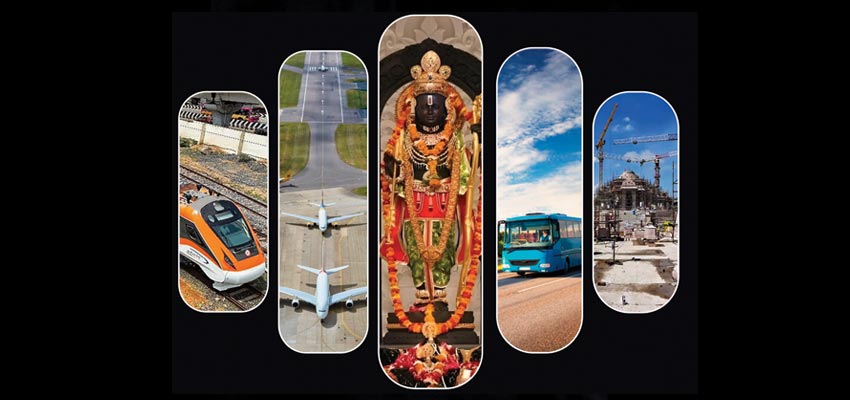
The city of Ayodhya is undergoing a remarkable transformation with improved infrastructure including widened roads and better electricity network. The Railway station has been revamped with modern facilities and renamed as Ayodhya Dham with many new trains being introduced. Maharshi Valmiki International Airport has become operational in the city. This revered temple has laid the foundation of modern Ayodhya while preserving its ancient traditional culture. Tourism infrastructure with better connectivity, including hotels, resorts, theme parks, ghats, riverfronts, is flourishing, creating jobs, and boosting the local economy and will also have cascading impact on neighboring towns and cities. The temple reflects the cultural and spiritual heritage with Lord Ram and holds immense religious significance for Hindus. The city will attract scholars, historians, and pilgrims from around the world, boosting cultural tourism. The temple will inspire moral and ethical values among younger generations, creating a ripple effect across society. It will reignite interest in Indian spiritual traditions, including the teachings of Ramayana and the philosophy of Sanatan Dharma. Ayodhya is becoming a model city that balances tradition with modernity, echoing the principles and Gandhi’s vision of Ram Rajya. More than being just a temple, it represents a confluence of faith, history, and architectural brilliance. It will serve as a beacon, guiding the spiritual and cultural aspirations of the future generations. Ayodhya will soon become the spiritual center like Vatican City and Mecca.
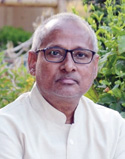
By Manoj Dubey
Principal (Retd.)
Delhi Public Schools
(The content of this article reflects the views of writers and contributors, not necessarily those of the publisher and editor. All disputes are subject to the exclusive jurisdiction of competent courts and forums in Delhi/New Delhi only)




















Comments (8)
A
A real topic, based on personal experience. This place reflets a tourist cum religious place.
D
Brief description of Sanatana Dharma and significance of Ram in Sanatan Dharma made the article more informative. Well written.
N
A comprehensive and well researched article. Indeed, the grand temple and surroundings are buzzing with activities of various kinds. However, the tragedy is, we have to RECLAIM all that was forcibly taken away from us. The amount of effort put in by Mr. Dubey is highly commendable. Keep up the good work Sir.
H
Wonderful article on Satya Sanatan Dharma. You have elaborated the same from very beginning till today presisely. In fact the glory of Sanatan is beyond imagination that is why it still persists despite all round attacks on it. Not only in our country, followers of Sanatan are found almost in all other countries of the world. All the best dear Manoj.
S
The worldly view of Sanatan Dharma , Ram Charit Manas and Ayodhya has been beautifully described. The prevailing situations are well documented. The efforts applied is indeed praise worthy.
S
Sanatan Dharma delivers the message of love peace and brotherhood. It is correct the values of Sanatan are shrinking in present society. Author has beautifully defined it.
S
A masterly analysis. The concept of Sanatan has been explained with philosophical intricacies by the writer, Mr. Dube.
S
What a article, it truly represents our dharma and gives us a picture how temples were demolished in Mughal era, amazing work congratulations