


There is enough protection for genuine citizen under the rules and Laws
India is recognized by the international society as a major stable democracy in the world. The election commission of India has ensured peaceful transfer of power through fair elections. The drafting committee of our constitution kept it out of the executive control. The well-developed Nations are following 5 well-recognized electoral models, Countries like India, U.K, Australia, Canada, Srilanka, South Africa adopt the first one i.e. the Independent electoral model. Above all, the Supreme Court has strengthened the independence of the election commission by its several landmark judgements.
The basic framework provided by the constitution:
India has welcomed the Tibetan refugees in early 1950 and Bangladeshi refugees before the 1971 war. The same constitution has shown no mercy to illegal migrants. An unbiased analysis of our democracy indicate;
1. To purify the voter list is essential for electoral integrity.
2. Resistance to voter list verification, when motivated by narrow political interests rather than genuine concerns, undermines free and fair elections—a stance detrimental to national democracy.
3. Opposing voter list purification without evidence of misuse may weaken the public trust in the electoral process and play into the hands of those who benefit from voter fraud.
4. Any resistance to lawful and transparent verification efforts must be scrutinized for ulterior motives that may run counter to national interest.
5. Systematic opposition to legitimate voter list purification, aimed at ensuring electoral transparency, may serve the interests of those hostile to democratic stability—raising concerns about anti-national intent.
6. Blocking voter roll verification for partisan gain risks enabling fraud, subverting democracy, and acting against the national interest.
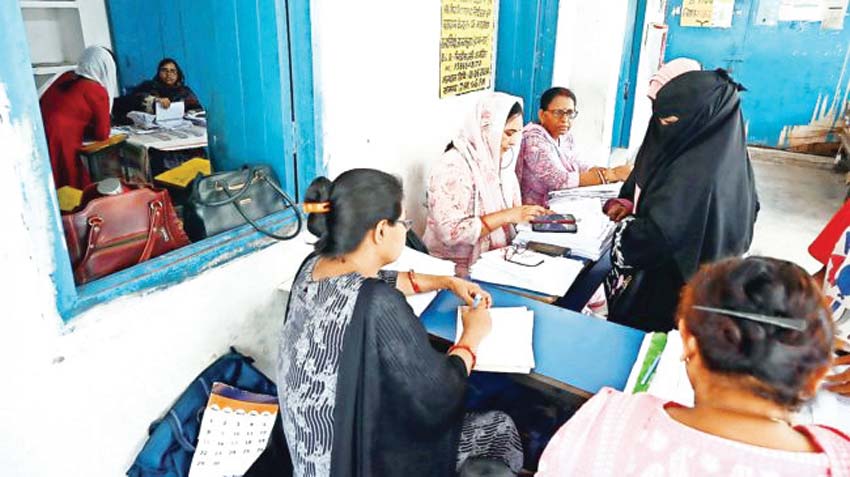
Baseless Opposition to Voter List Purification: A Threat to National Interest
The integrity of electoral rolls is a basic need to ensure free and fair elections.This process is essential not only for electoral accuracy but also for public trust in democratic processes. Baseless and systematic obstruction of such electoral reforms have damaging consequences like, the facilitation of electoral fraud, manipulation of results, and erosion of public confidence in democratic institutions.
Serious malpractices have been uncovered, threatening the integrity of elections.
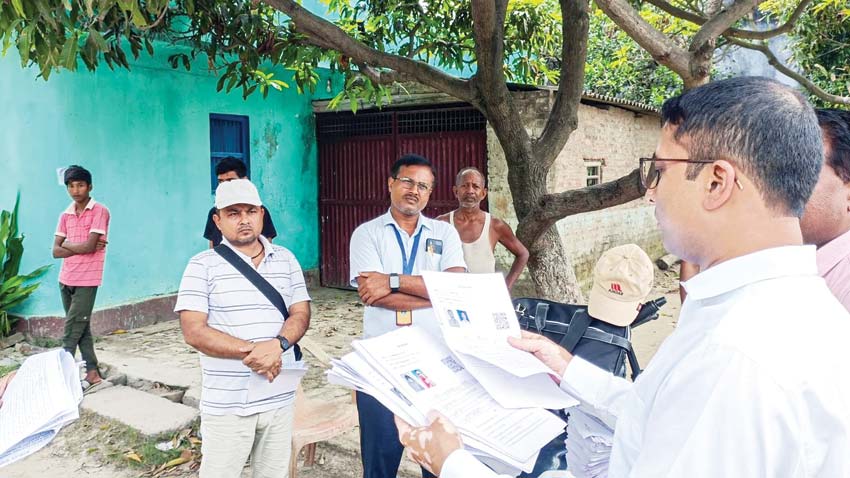
During various voter list purification drives across India, especially in sensitive border states, several serious malpractices have been uncovered,These include:
The Border Paradox: Who We Choose to Fight?
Why do the political parties with myopic vision support invasion by illegal migrants, attempting to destroy the host nation’s peace and sovereignty?
The irony is stark: a single hostile soldier brings war; thousands of unauthorized migrants may bring eventual citizenship! It raises uncomfortable questions. Are our borders truly about security—or about the stories we tell to justify power? If sovereignty matters, shouldn’t the law be consistent? The way we handle these contradictions will shape not only immigration policy and foreign affairs, but the meaning of citizenship in the years to come. What will happen to a nation when immigrants become citizens and take over governance as done in Lebanon.

National Security and Electoral Integrity of India is at risk.
The subversion of the voter roll verification process does not merely affect domestic politics but it has implications for national security and sovereignty also. Electoral fraud or manipulation can open avenues for external interference, inflame social tensions, and disrupt peaceful democratic transitions. Hence, organized and unfounded resistance to voter list purification must be scrutinized through the lens of national interest.
"Opposing purification of the voter list by the Election Commission is done by anti-national elements"— seems quite strong and politically charged but historical suffering in Assam, West Bengal and Kashmir provide enough data to believe the same. Let's examine the issue with more nuance and legal precision, about the motives behind opposition to voter list verification.
Role of Investigation Agencies
It is recommended that investigative agencies be authorized to probe individuals or organizations which obstruct lawful voter list purification. Where evidence suggests that such opposition is driven by ulterior motives—such as shielding fraudulent voters, enabling vote-bank politics, or undermining democratic institutions—prosecution under relevant provisions of the law should be pursued.The agencies should also investigate whether outside forces are influencing these acts politically, digitally or financially. Knowing the problem will help in finding solutions legally as well as through diplomatic interventions.
To realise this goal Election Commission, law enforcement, and intelligence units must collaborate to identify patterns of coordinated disinformation or sabotage against voter list purification. If such acts are found to aid electoral fraud or compromise national security, they should be deemed conduct detrimental to national interest.
Consequences of Non-Indians Entering the Voter List
The inclusion of non-citizens—whether illegal immigrants, foreign nationals, or others lacking Indian citizenship—into the voter list is not just an administrative lapse but a serious threat to national sovereignty and democratic integrity. The voter roll is constitutionally reserved for Indian citizens only (Article 326 of the Constitution and Section 16 of the Representation of the People Act, 1950). Any violation of this mandate has far-reaching consequences.
1. Erosion of Electoral Legitimacy
When non-Indians vote in elections, the outcome is distorted, subverting the democratic will of the rightful citizens. This can lead to illegitimate governments being formed, whose policies may not reflect the interests of Indian nationals.
2. National Security Threat
Non-citizens on voter rolls, from hostile nations or regions with geopolitical tensions, pose a security risk. Their participation in elections can be used as a tool for foreign interference, destabilization, or influence operations.
3. Vote Bank Politics and Internal Discord
Political parties exploiting such entries for vote bank gains compromise the integrity of the system. This fosters identity-based politics, triggers social tensions, and weakens national unity.
4. Legal Consequences
According to the Representation of the People Act, 1950 and 1951, any non-citizen who registers or votes is guilty of electoral fraud and may face imprisonment and fines. Officials facilitating such entries can also be prosecuted for dereliction of duty and abetment. It is an irony that despite millions of such offenders the cases registered are scarce.
5. Undermining Public Trust
Widespread knowledge or suspicion that non-Indians are influencing election results leads to loss of faith in democratic institutions, voter apathy, and social unrest.
6. Resource Drain and Policy Misalignment
Illegitimate voter inclusion often leads to misallocation of government resources and policy distortions, where benefits meant for Indian citizens are diverted, impacting welfare and development.
Real-World Examples: How Illegal Immigrants Have Distorted Democracy
1. Assam – A Case of Demographic Infiltration and Electoral Distortion
Assam provides us a notorious and impactful example where illegal immigration from Bangladesh has deeply altered the state’s demographic and electoral landscape. Since the 1970s, large-scale infiltration by illegal immigrants—especially after the 1971 Indo-Pak war and the creation of Bangladesh—has led to millions of non-Indians settling in Assam. Over the decades, many of them illegally entered the voter list, causing:
● Skewed election results in border districts like Dhubri, Barpeta, and Goalpara.
● Indigenous communities becoming minorities in their own homeland.
● Persistent demands for identifying and deporting illegal voters, which led to the Assam Agitation (1979–1985) and the signing of the Assam Accord (1985).
Despite these measures, illegal voters continued to influence elections, compelling the Supreme Court in 2014 to describe illegal immigration as "external aggression" and a threat to national security. The National Register of Citizens (NRC) process was an attempt to correct this, though still incomplete. The culprits and their supporters have the guts to challenge the decision of Supreme Court by staging protests blocking the roads and the government meekly watched the suffering s of legitimate citizens.
2. West Bengal – Silent Demographic Shift and Voter Fraud Allegations
It is alleged that in districts like Malda, Murshidabad, and North 24 Parganas, illegal immigrants from Bangladesh have allegedly been added to voter rolls. Political observers and security agencies have warned that vote bank politics has encouraged such illegal inclusions. Consequences include:
● Growing demographic imbalances.
● Rise of identity-based politics and communal tensions.
● Alleged manipulation of electoral outcomes in border regions.
3. Jammu & Kashmir – Security Risk through Voter Manipulation
Again it is alleged that there have been attempts to illegally include Rohingya migrants and other non-state subjects in voter lists in sensitive regions like Jammu, which has raised serious national security concerns, given the proximity to international borders and ongoing terrorism threats.
How did hizabulla extremists take over the political power in Lebanon ?
Hezbollah (often transliterated as Hizbullah or Hizbollah) did not take over Lebanon in a classic military coup, it gained power gradually through a combination of military strength, political participation, and regional alliances. A clear breakdown of how Hezbollah rose to power in Lebanon:
Resistance & Popular Support
● In the 1980s and 1990s, Hezbollah gained legitimacy among Lebanese Shi’a by:
● Fighting the Israeli occupation in the south.
● Providing social services (hospitals, schools, aid).
● It branded itself as the "resistance" movement, gaining popularity beyond just Shi’a communities.
3. Political Integration (2000s Onward)
● After Israel withdrew from southern Lebanon in 2000, Hezbollah claimed victory, boosting its status.
● In 2005, following the assassination of former PM Rafik Hariri, Syria withdrew from Lebanon under popular pressure (Cedar Revolution).Hezbollah opposed this movement and aligned with pro-Syrian forces.
● In 2005 and 2009 elections, Hezbollah and its allies (including the Christian Free Patriotic Movement led by Michel Aoun) gained significant seats in parliament.
● Hezbollah entered official government coalitions, controlling ministries and influencing key decisions.
The land of Lebanon and its people are suffering for no reason other than the alliances made by Hezbollah with caring for the well-being of the host nation.
It is not a piece of wild imagination as India had its own experience in January 1990 when Kashmiri pandits were forced to leave their homeland.
Alice Guo controversy in the Philippines.
● De facto Mayor: Alice Guo served as the de facto mayor of Bamban, Tarlac, from June 30, 2022, to August 13, 2024.
● Citizenship Questioned: Her Filipino citizenship was questioned, and in June 2025, a court ruled she was a Chinese citizen, nullifying her term as mayor.
● Controversies: Guo faced investigations related to alleged involvement in illegal gambling, connections with POGOs, and accusations of being a Chinese spy.
A National Wake-Up Call
These examples highlight how illegal immigration, when coupled with voter list manipulation, not only destroys the democratic fabric but also fuels social unrest, communal disharmony, and security threats. The inclusion of non-citizens in voter rolls—whether for vote bank politics or deliberate sabotage—represents a long-term assault on the sovereignty of India.
● The in-depth investigation will expose the motive of illegal migrants but also the countries who are using these people to defeat and destroy India without waging a costly war.. It will plug the loopholes in the legal and financial framework.
● The world is facing the threat of cyber wars, illegal immigration and financial takeover through money laundering. A sovereign nation must defeat the enemy without waging a war.

By Rakesh kumar
(The content of this article reflects the views of writers and contributors, not necessarily those of the publisher and editor. All disputes are subject to the exclusive jurisdiction of competent courts and forums in Delhi/New Delhi only)














Comments (1)
R
Very rational, unbiased,crisp article by Rakesh Kumar ji