


A fresh legal controversy has emerged in Karnataka over the singing of the national song Vande Mataram at government functions, with a Public Interest Litigation (PIL) challenging the state government's decision to restrict its rendition to the first two stanzas. The petition raises a larger constitutional question: can an executive order determine how a national symbol should be performed, or does such a decision require a broader legal and national framework?
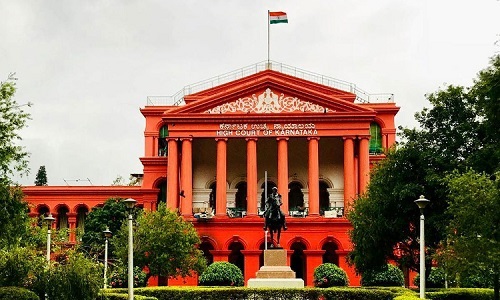
The Karnataka High Court is set to hear a challenge to the state government's directive governing the singing of Vande Mataram at official functions. The PIL has been filed by advocate Girish Bharadwaj, who has questioned the authority of the state government to prescribe the form and content in which the national song should be rendered.
Under the government order, Vande Mataram is to be sung only in its first two stanzas during government programmes and official functions. However, the directive reportedly makes an exception for events attended by the President, Vice President, Prime Minister or Governor. At such occasions, all six stanzas of the national song can be sung.
The distinction has become the central issue in the legal challenge. The petitioner argues that a state government cannot, through an executive direction, decide which portions of a national symbol can or cannot be used at public functions. According to the plea, the matter goes beyond the organisation of government programmes and touches upon questions of national importance and the appropriate treatment of symbols associated with India's freedom movement and national identity.
The petition seeks judicial scrutiny of the government's decision and questions the legal basis on which the restriction has been imposed. At the heart of the challenge is the contention that executive instructions should not be used to alter or prescribe the content or manner of observance of a national symbol without clear statutory or constitutional authority.
The controversy also highlights the continuing sensitivity surrounding Vande Mataram, which has historically occupied a significant place in India's nationalist movement. Written by Bankim Chandra Chattopadhyay, the song became closely associated with the freedom struggle and was later accorded the status of India's national song.
The petitioner has described the Karnataka government's order as being contrary to national interest and has sought the intervention of the High Court. The case is expected to be mentioned before the Karnataka High Court, following which the court may decide how the plea should proceed.






















Leave Your Comment