


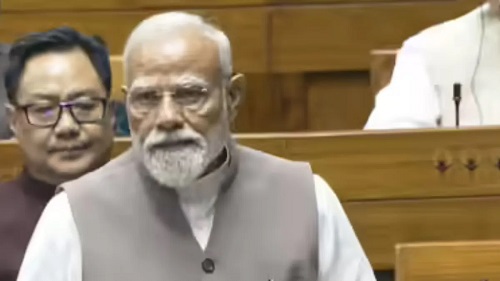
Prime Minister Narendra Modi on Monday addressed the Lok Sabha, expressing deep concern over the escalating conflict in West Asia. Calling the situation “worrying,” he said the ongoing tensions between Iran and the US-Israel alliance are not confined to the region but are having far-reaching consequences across the globe.
“Crisis in West Asia created negative impact on world economy, people,” the Prime Minister said, underlining how the conflict has disrupted economic stability and affected millions worldwide.
Highlighting the seriousness of the situation, Modi noted that the war has presented unprecedented challenges for India. He pointed out that the country is grappling with both economic and security concerns amid the volatile geopolitical environment.
“West Asia war set unprecedented challenges for India too… India is facing economic and security challenges amid war in West Asia,” he said, emphasizing the ripple effects of the crisis on India’s economy and strategic interests.
The Prime Minister also drew attention to the safety of Indian citizens residing in Gulf nations, noting that nearly one crore Indians live in the region. He assured Parliament that the government is taking all necessary steps to safeguard their interests.
“Government is providing all help to Indians living in the Gulf,” Modi said, adding that he has personally spoken to leaders in the region, who have assured him of the safety of Indian nationals.
He further elaborated that Indian missions in affected countries are working round the clock to assist citizens, including workers and tourists. Emergency helplines, outreach centres, and regular advisories have been put in place to ensure timely information and support.
“In times of crisis, the safety of Indians in India and abroad is crucial,” he stated.
Providing updates on evacuation operations, the Prime Minister informed the House that around 1,000 Indians have safely returned from Iran, including over 700 medical students.
He added that since the conflict began, more than 3.75 lakh Indians have been brought back safely from affected regions, reflecting the government’s proactive response.
To mitigate the impact on education, Modi also announced that CBSE has cancelled Class 10 and 12 exams in Gulf countries and is working to ensure that students’ academic progress is not disrupted.
A major concern arising from the conflict is the disruption of key global trade routes, particularly the Strait of Hormuz, through which a significant portion of India’s crude oil, gas, and fertiliser imports pass.
“Movement of ships through the Strait of Hormuz has become very challenging,” Modi said, noting that attacks on commercial vessels and disruptions in international waterways are unacceptable.
Despite these challenges, he assured that the government has taken steps to maintain a steady supply of essential fuels. India, which imports nearly 60% of its LPG requirements, has prioritised domestic consumers while also ramping up local production.
“Domestic LPG production is being increased… efforts have been made to ensure that the supply of petrol and diesel remains smooth,” he said.
Reassuring citizens, Modi emphasized that the government remains vigilant and prepared to handle any fallout from the crisis.
“Government is sensitive, alert and ready to help,” he said, highlighting coordinated efforts across ministries to manage both external and domestic challenges.
He also stressed the importance of diplomacy in ensuring safe passage for Indian vessels and maintaining stability in international trade routes.
In a forward-looking move, the Prime Minister noted that India is reducing its dependence on fossil fuels through initiatives such as ethanol blending.
“Ethanol blending in petrol has reached 20 per cent,” he said, indicating progress toward energy diversification and sustainability.



















Leave Your Comment