


International law was designed after the devastation of the Second World War to restrain the unilateral use of force and replace power politics with a system governed by rules. The United Nations Charter, adopted in 1945, established a clear framework: states are sovereign, the use of force is prohibited, and war is permitted only under narrow exceptions such as self-defence or collective authorisation by the UN Security Council.
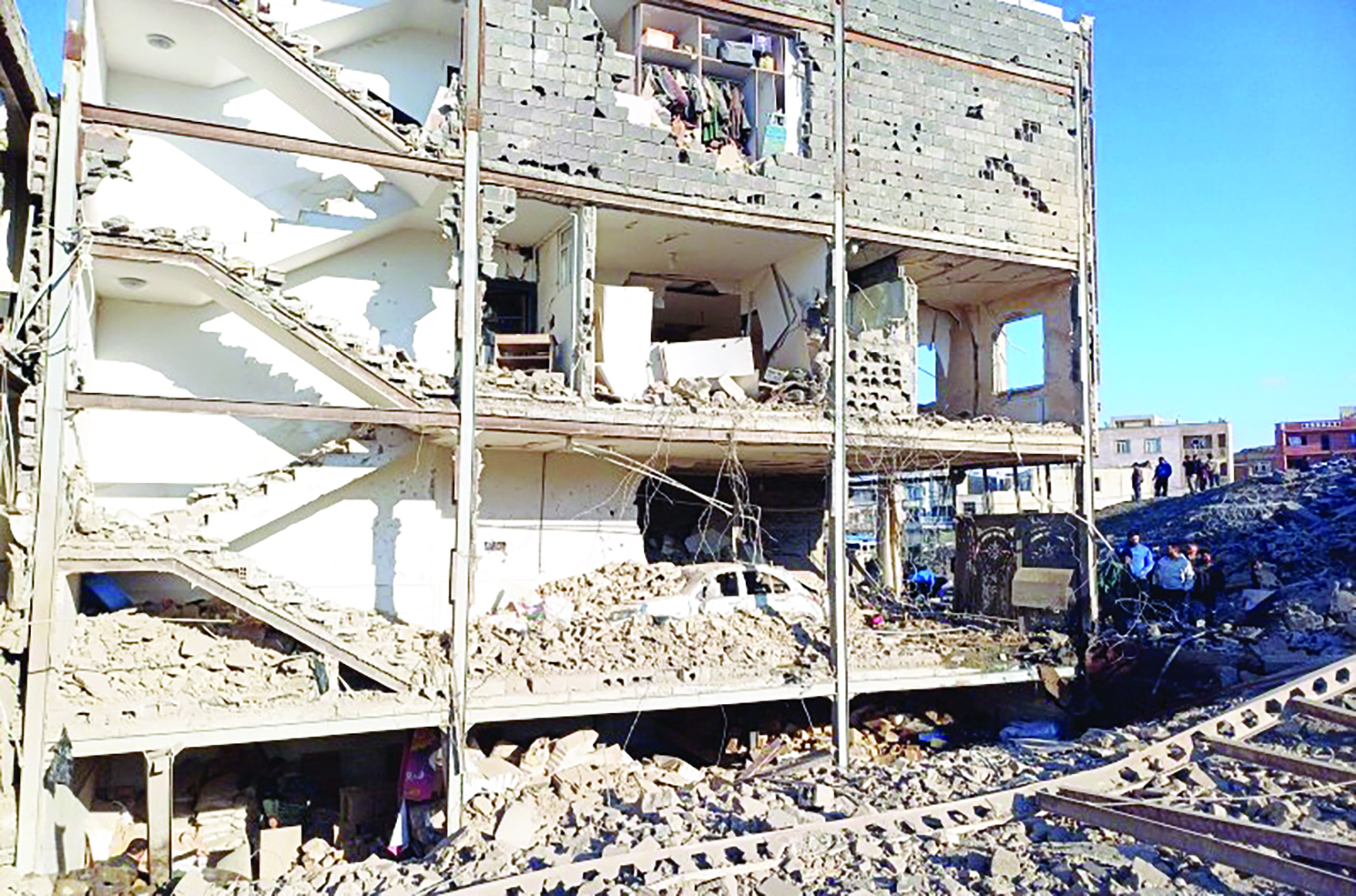
Yet the contemporary geopolitical landscape repeatedly tests these principles. The recent military strikes by the United States and Israel on Iranian targets have revived fundamental debates in international law about state sovereignty, anticipatory self-defence, and humanitarian intervention.
At stake is not merely the legality of a particular military action but the broader credibility of the rules-based international order. When powerful states interpret legal doctrines expansively to justify military operations, the boundary between lawful self-defence and unlawful aggression becomes increasingly blurred.
To understand the implications of the current crisis, one must revisit the jurisprudence of international courts and tribunals that have shaped the law governing the use of force, particularly the decisions of the International Court of Justice (ICJ). These cases collectively establish the legal parameters within which any assessment of the US–Israel actions must occur.
The Premise of Sovereignty
The prohibition on the use of force under Article 2(4) of the UN Charter is widely regarded as one of the most fundamental norms of international law. It protects the territorial integrity and political independence of states, reinforcing the principle that sovereignty remains the organising foundation of the international system.
However, the Charter also recognises that states retain an “inherent right of self-defence” under Article 51 if an armed attack occurs. The precise meaning of this provision has been shaped primarily through international jurisprudence, particularly decisions of the ICJ.
The controversy surrounding the US–Israel strikes on Iran, therefore, hinges on a central question: do these actions fall within the legal scope of self-defence, or do they represent an unlawful use of force against a sovereign state?
Clarifying Armed Attack, Necessity, and Proportionality
Any discussion of the legality of the use of force inevitably begins with the landmark ICJ judgement in Military and Paramilitary Activities in and against Nicaragua (Nicaragua v. United States, 1986 ICJ 14).
In that case, Nicaragua accused the United States of violating international law by supporting the Contra rebels, mining Nicaraguan ports, and conducting military operations against its territory. The United States attempted to justify its actions as collective self-defence in support of neighbouring states allegedly threatened by Nicaragua.
The ICJ rejected this argument and ruled that the United States had violated fundamental principles of international law, including (i) the prohibition on the use of force, (ii) the principle of non-intervention, and (iii) the sovereignty of Nicaragua.
More importantly, the Court articulated key doctrinal principles that remain central today. First, it clarified the threshold for an armed attack, holding that not every use of force qualifies. Only acts of sufficient scale and effect trigger the right of self-defence. Second, the Court emphasised that support for insurgent groups, even when substantial, does not automatically constitute an armed attack. Third, the Court reaffirmed the traditional requirements of necessity and proportionality as essential conditions for lawful self-defence.
Applied to the present situation, the Nicaragua precedent raises difficult questions for the legal justification of the US–Israel strikes. Unless Iran had conducted an armed attack of significant scale against either state, the legal basis for invoking Article 51 of UN Charter becomes highly contested.
The Limits of Defensive Force
Another crucial precedent is the ICJ decision in Oil Platforms (Islamic Republic of Iran v. United States of America, 1996). The case arose after the United States destroyed Iranian oil platforms during the Iran-Iraq War, claiming the action was necessary to protect its vessels from Iranian attacks. Iran challenged the legality of these strikes before the ICJ.
Although the Court ultimately ruled on treaty grounds, it conducted an extensive analysis of self-defence under international law. The ICJ held that the United States failed to demonstrate that the attacks against its vessels constituted an armed attack attributable to Iran. Furthermore, the Court concluded that destroying oil platforms was not necessary or proportionate to the alleged threat.
The judgment reinforced a critical point that states cannot invoke self-defence on the basis of speculative or insufficiently substantiated threats. In the context of the US–Israel strikes on Iran, the Oil Platforms case highlights the difficulty of proving that a military response is proportionate to the alleged threat posed by Iranian activities.
Sovereignty Versus Humanitarian Justification
The Kosovo Advisory Opinion (2010) revived debates on humanitarian intervention and the doctrine of Responsibility to Protect (R2P). Although the ICJ did not rule on the legality of NATO’s earlier intervention in Kosovo, the crisis highlighted a fundamental tension in international law between state sovereignty and humanitarian necessity. Supporters argue that rigid respect for sovereignty may allow governments to commit atrocities without international response, while critics warn that humanitarian justifications can be selectively used by powerful states to legitimise military action.
Although the strikes against Iran are not framed as a humanitarian intervention, the broader question about the limits of sovereignty in a security-driven international order remains highly relevant.
Anticipatory Self-Defence and the Problem of Imminence
Perhaps the most controversial legal issue raised by the current situation is the concept of anticipatory self-defence. Traditional interpretations of Article 51 require that an armed attack must already have occurred.
However, some states argue that modern threats, particularly nuclear proliferation, necessitate preventive action. Israel has historically relied on this argument in cases such as the 1981 strike on Iraq’s Osirak nuclear reactor and the 2007 attack on a suspected Syrian nuclear facility. The US has similarly advanced the doctrine of pre-emptive self-defence, particularly in the context of the 2003 invasion of Iraq.
However, international courts have consistently approached such claims with caution. The jurisprudence of the ICJ suggests that anticipatory self-defence remains highly controversial and lacks clear legal acceptance. If the strikes on Iran are justified primarily on the basis of preventing a future threat rather than responding to an actual armed attack, their legality under international law becomes deeply contested.
Geopolitical Consequences
Beyond the legal debate, the strikes on Iran have profound implications for global geopolitics.
First, they risk accelerating the erosion of the prohibition on the use of force, one of the core principles of the post-1945 order. If major powers increasingly rely on expansive interpretations of self-defence, the distinction between lawful and unlawful uses of force may gradually collapse.
Second, the conflict could intensify great-power competition. Iran maintains strategic relationships with Russia and China, both of which have repeatedly criticised unilateral military interventions.
Third, the escalation could reshape the security architecture of the Middle East, strengthening military alliances while simultaneously increasing regional instability.
Finally, the crisis highlights a deeper structural problem in international law: its enforcement mechanisms remain weak when powerful states are involved. The Nicaragua case demonstrated that even when international courts clearly identify violations of international law, political realities often determine whether those judgments are implemented.
The Future of International Law
The US–Israel strikes on Iran highlight a growing tension between the normative framework of international law and the realities of geopolitics. Although the post-1945 legal order was designed to restrain unilateral uses of force and uphold sovereignty, evolving security threats have led states to reinterpret doctrines such as self-defence.
The jurisprudence of the International Court of Justice, from Nicaragua to Oil Platforms, Armed Activities in the Congo, and the Wall Advisory Opinion (2004), consistently emphasises restraint, legality, and respect for sovereignty. Yet repeated unilateral military actions suggest that these principles are increasingly challenged by strategic interests.
The real issue, therefore, is not only the legality of the strikes on Iran but also whether the international community remains committed to defending the legal framework governing the use of force; otherwise, the global order risks shifting from rule-based legitimacy to power-based justification of war.

Md. Tauseef Alam
(The content of this article reflects the views of writer and contributor, not necessarily those of the publisher and editor. All disputes are subject to the exclusive jurisdiction of competent courts and forums in Delhi/New Delhi only)


















Leave Your Comment