


Polling for the crucial assembly elections in Kerala, Assam, and Puducherry concluded on Thursday, witnessing an impressive voter turnout across all three regions and setting the stage for closely watched electoral outcomes.
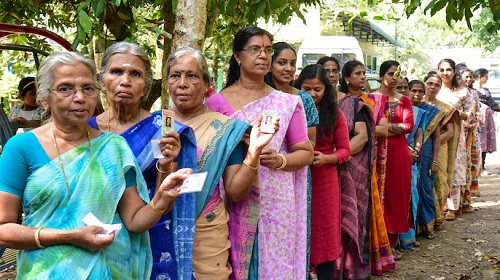
According to the Election Commission of India (ECI), voter participation remained robust till the end of polling hours. As of 5 pm, turnout figures stood at 84.42% in Assam, 75.01% in Kerala, and an impressive 86.92% in Puducherry. Voting began at 7 am, concluding at 5 pm in Assam, while Kerala and Puducherry continued polling till 6 pm.
In Kerala, the elections carry significant political weight as the ruling Left Democratic Front (LDF), led by Chief Minister Pinarayi Vijayan, aims to secure a historic third consecutive term. The state saw participation from a diverse electorate, with approximately 1.32 crore men, 1.39 crore women, and 273 transgender voters eligible to decide the fate of 883 candidates contesting across 140 assembly constituencies.
Meanwhile, Assam witnessed a high-voltage contest between the Bharatiya Janata Party-led National Democratic Alliance (NDA) and the Congress-led opposition alliance. Chief Minister Himanta Biswa Sarma is seeking a third straight term for the NDA. The state’s electorate, comprising around 2.50 crore voters, will determine the political future of 722 candidates contesting in 126 constituencies.
In Puducherry, the electoral battle is primarily between the NDA and the opposition bloc consisting of the Congress and the Dravida Munnetra Kazhagam (DMK). Chief Minister N. Rangasamy is aiming to retain power for a second consecutive term. The union territory recorded strong voter enthusiasm, with 294 candidates contesting for 30 assembly seats. Over 9.5 lakh voters were eligible to cast their ballots.
The high turnout across all three regions reflects strong democratic participation and heightened political engagement among citizens. With key incumbents seeking to retain power and opposition alliances mounting significant challenges, the results are expected to have far-reaching implications for regional as well as national politics.
As counting day approaches, all eyes remain on the verdict of the electorate, which will determine whether continuity prevails or change reshapes the political landscape in these diverse regions of India.



















Leave Your Comment