


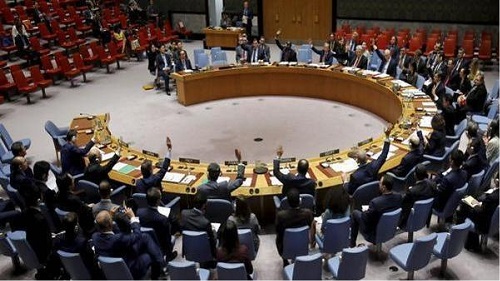
In a pivotal session marked by geopolitical tensions, the United Nations Security Council (UNSC) adopted a resolution drafted by the United States concerning the ongoing conflict in Ukraine. The resolution, which notably omitted explicit mention of Russia's aggression, garnered 10 votes in favor, with five nations, including France and Britain, abstaining from the vote.
The US-drafted resolution's adoption comes amidst intensified efforts by President Donald Trump to facilitate peace negotiations in the protracted three-year war. However, concurrently, President Trump's stance on Ukraine has hardened, characterized by recent remarks labeling Ukrainian President Volodymyr Zelenskyy as "a dictator without elections."
Simultaneously, the United Nations General Assembly (UNGA) witnessed a separate resolution demanding the immediate withdrawal of all Russian troops from Ukrainian territories. This resolution, backed predominantly by European nations, received widespread support with 65 member states voting in favor, 18 against, and a significant 65 abstentions, underscoring global divisiveness on the issue.
India, adhering to its longstanding diplomatic posture, chose to abstain from the UNGA vote, emphasizing its cautious approach amidst the escalating tensions.
Notably, the voting dynamics at the UNGA highlighted a notable departure from previous resolutions, where over 140 nations had unequivocally condemned Russia's actions and demanded the reversal of its annexation of Ukrainian regions. This shift underscores a nuanced global sentiment and varying perspectives on the conflict's complexities.
In a separate development, the US faced a setback at the UNGA when a competing resolution, initially tabled by the US but subsequently amended by European allies to explicitly identify Russia as the aggressor, did not receive American support, resulting in an abstention from the vote.
However, in a strategic maneuver, the US successfully navigated its original draft through the UNSC, securing its adoption. This move underscores the divergence between European and American approaches towards addressing the Ukrainian crisis, reflecting broader transatlantic discord on international security issues.
The series of resolutions and their divergent receptions at the UNGA and UNSC underscore the intricate diplomatic landscape surrounding the Ukraine conflict. As global powers navigate differing geopolitical interests and strategic alliances, the implications of these resolutions extend far beyond their immediate legislative impact, shaping future international responses and alliances in the face of ongoing global instability.




















Leave Your Comment