


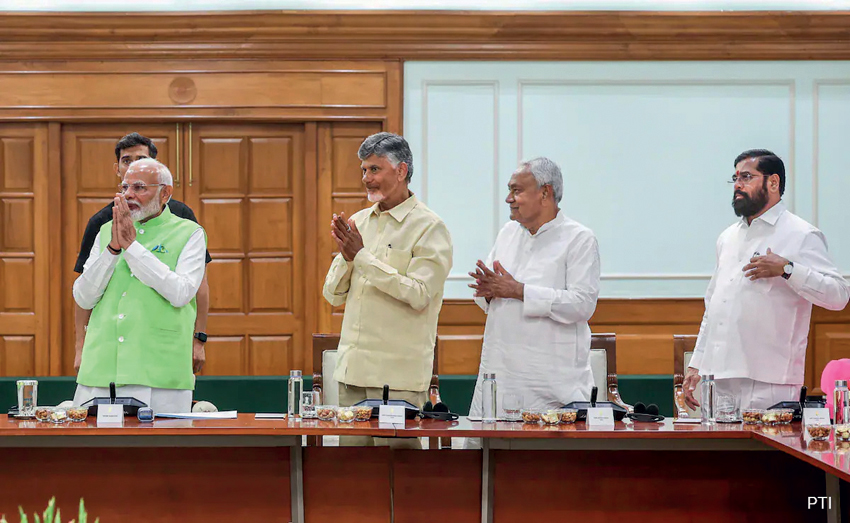
Results of 2024 Lok Sabha elections are in, marking a historic moment in India's political landscape. For the first time since 1962, a single party or coalition has secured a clear majority for the third consecutive term. Under the leadership of Prime Minister Narendra Modi, the National Democratic Alliance (NDA) is set to form the government once again. Despite the scorching summer heat, voters turned out in large numbers to cast their ballots. The removal of Article 370 led to a record voter turnout in Jammu and Kashmir. The election process, spanning nearly two months, initially saw a lower voter turnout, causing concern among political parties. Historically, low voter turnout in India has often been seen as a precursor to a change in government. However, this trend did not hold true this time. Although the Bharatiya Janata Party (BJP) did not secure a majority on its own due to results in states like Uttar Pradesh, Rajasthan, Maharashtra, and Haryana, the NDA's overall performance was strong. The elections were largely peaceful, with the exception of West Bengal, which saw some tensions. The Indian electorate has once again demonstrated its role as the ultimate arbiter in a democracy. This time, the BJP-led alliance, which had campaigned with the slogan "400+ under Modi," received 292 seats, enabling it to form the government. However, the opposition, led by the Congress's India Alliance, also put up a significant fight, ensuring a strong opposition presence in the Lok Sabha.
The 2024 election results suggest a return to the politically tumultuous times of coalition governments. However, there is a sense of stability given the strong leadership of Prime Minister Narendra Modi. Alongside the Lok Sabha elections, four state assembly elections were also held, resulting in historic victories for the BJP and its allies. In Odisha, the BJP is set to form the government for the first time with a clear majority. In Andhra Pradesh, a coalition with the Telugu Desam Party (TDP) will see them in power, while in Arunachal Pradesh, the BJP will form the government for the third consecutive time. Despite these successes, the mood in the NDA is mixed. While they have secured victory, there is a sense of subdued celebration. Conversely, the opposition is vocal, claiming a decline in Modi's popularity despite the NDA's win. The reality, however, is that Modi's appeal remains strong, driving the BJP's successes across various states, including Madhya Pradesh, Gujarat, Rajasthan, Himachal Pradesh, Uttarakhand, the southern states, and the northeastern regions. The BJP also made significant inroads in Kerala, winning a seat for the first time, and saw an increase in its vote share in Tamil Nadu, with ten candidates finishing in second place. These are positive signs for the party's future. However, West Bengal remains a significant concern for the BJP. Despite raising issues like the inhumane treatment of women in Sandeshkhali, the party's seat count decreased rather than increased. The BJP will need to focus on West Bengal in the coming days to address this setback. In summary, the 2024 Lok Sabha election results highlight the resilience of Indian democracy and the continued influence of Prime Minister Narendra Modi. As the NDA prepares to govern for a third term, the political landscape remains dynamic, with both challenges and opportunities on the horizon.

By Deepak Kumar Rath














Leave Your Comment