


Recently Prime Minister Narendra Modi attacked the Congress, claiming that the BJP transformed the "loot east" policy of Congress into the "Act East" policy, and brought the North East closer to mainland India.
Speaking at a local election rally, the prime minister said that the BJP government had brought about ground-breaking changes in Tripura.
PM Modi stated, "The grand old party did not do any justice to the Northeast and turned the region into a 'adda of bhrastachar' (hub of corruption), while the communists spoiled the state's prospects." "The Congress had adopted the 'loot east' policy while the BJP turned it into the Act East policy," the prime minister said.
Nestled in the verdant hills and valleys of the Indian subcontinent lies a region often overlooked in the country's mainstream narrative: the North East. Historically marginalized and geographically isolated, the North East of India has long struggled to find its place on the national stage. However, the visionary leadership of late Atal Bihari Vajpayee and Narendra Modi, has heralded a new era of development and integration for this vibrant region. Today we will delve into the transformative journey of the North East under the stewardship of the Vajpayee and Modi administrations, exploring the evolution of the Look East policy and the pivotal role played by the BJP in winning the hearts of the region's people.
The Vajpayee Era: Laying the Foundation
Atal Bihari Vajpayee's tenure as Prime Minister from 1998 to 2004 marked a crucial phase in India's engagement with its eastern neighbours and the North East region. Vajpayee's government recognized the strategic importance of the North East in fostering closer ties with Southeast Asia, laying the groundwork for what would later evolve into the Look East policy. The initiation of infrastructure projects such as the East-West Corridor and the construction of bridges and roads bolstered connectivity within the region and with neighbouring countries like Myanmar and Bangladesh.
Moreover, the Vajpayee government's emphasis on peace and development paved the way for dialogue with various insurgent groups in the North East, leading to several landmark peace agreements. The ceasefires and peace accords signed during this period brought a semblance of stability to the region, fostering an environment conducive to economic growth and social progress.
The Look East Policy: Modi's Continuation and Expansion
Building upon the foundation laid by the Vajpayee government, Prime Minister Narendra Modi has propelled India's engagement with the East to new heights. Renaming the Look East policy as the Act East policy, Modi's administration has not only continued the focus on economic integration but also expanded the scope to include strategic cooperation and cultural exchanges with Southeast Asian nations.
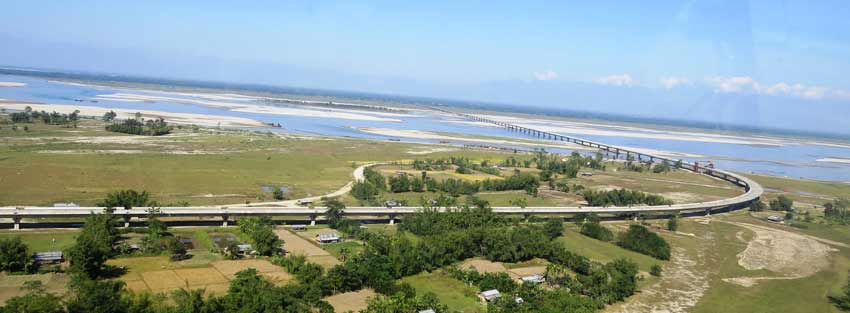
One of the key initiatives under the Act East policy has been the enhancement of connectivity infrastructure, including the development of roadways, railways, and waterways. The inauguration of the Dhola-Sadiya Bridge in Assam, the longest river bridge in India, exemplifies the government's commitment to improving connectivity in the region. Additionally, the Modi government's emphasis on digital connectivity through initiatives like the BharatNet project has further facilitated access to technology and information in remote areas of the North-East.
Furthermore, the North East has emerged as a linchpin in India's efforts to counterbalance China's influence in the region. Strengthening diplomatic ties with countries like Japan, Vietnam, and Indonesia has not only bolstered India's strategic position but also opened avenues for investment and collaboration in the North East. The recent signing of the Quadrilateral Security Dialogue (Quad) framework involving India, the United States, Japan, and Australia underscores the region's growing importance in the geopolitical landscape.
Economic Development and Empowerment In addition to infrastructure development and strategic engagement, the Modi government has focused on promoting economic growth and empowerment in the North East. Initiatives such as the North East Special Infrastructure Development Scheme (NESIDS) and the North East Industrial Development Scheme (NEIDS) aim to incentivize investment and industrialization in the region, creating employment opportunities and fostering entrepreneurship.
Furthermore, the promotion of tourism in the North East has unlocked the region's immense potential as a travel destination, attracting both domestic and international tourists. The 'Destination North East' initiative launched by the Modi government has showcased the cultural diversity and natural beauty of the region, contributing to its economic development while also fostering a sense of pride and identity among its inhabitants.
Favored Party in the North East: BJP's Winning Formula
The Bharatiya Janata Party's (BJP) unprecedented success in the North East can be attributed to a combination of strategic political maneuvering, developmental initiatives, and astute coalition-building efforts. By cultivating local leaders and forging alliances with regional parties, the BJP has successfully expanded its footprint in a region that was traditionally dominated by Congress and its leftist allies.
Moreover, the Modi government's proactive approach towards addressing the long-standing grievances of the North East populace, including issues related to identity, infrastructure, and security, has resonated with the people of the region. From the implementation of the Assam Accord to the signing of the Bodo Peace Accord, the BJP has demonstrated a willingness to address the aspirations and concerns of various ethnic groups in the North East, earning their trust and support in the process.
Looking Ahead: The Future of the North East
As India continues its journey towards economic prosperity and regional integration, the North East is poised to play an increasingly pivotal role in shaping the country's destiny. With its strategic location, abundant natural resources, and cultural richness, the region holds immense potential for growth and development. However, realizing this potential will require sustained efforts on the part of the government, private sector, and civil society to address the challenges of infrastructure deficit, social inequality, and environmental sustainability.
In conclusion, the transformative impact of the Vajpayee and Modi governments on the North East of India cannot be overstated. From laying the foundation for closer ties with Southeast Asia to spearheading initiatives for economic development and empowerment, successive administrations have brought the region into the national spotlight and set it on a trajectory of growth and prosperity. As India embraces its role as a leading power in the Indo-Pacific region, the North East stands ready to emerge as a beacon of progress and opportunity, enriching the nation's cultural tapestry and contributing to its global standing.
By Nilabh krishna
(The content of this article reflects the views of writers and contributors, not necessarily those of the publisher and editor. All disputes are subject to the exclusive jurisdiction of competent courts and forums in Delhi/New Delhi only)














Leave Your Comment