


Considering the recent economic crisis and happenings in general, there is a pressing need to take up serious consideration of how to generate income in Manipur. In doing so, one seeks new ways; at this juncture, the instance of China efficiently harnessing the powers of wind and solar energies is very encouraging. It became self-sufficient in energy and generated substantial income out of the excess renewable power sold by it. Like China, Manipur can also adopt the same roadmap towards economic independence and stability by tapping its renewable energy potential.
Vision for Renewable Energy in Manipur
Manipur is a place where these natural resources are easily exploited to meet both wind and solar power generation. Here, a movement towards locating projects that previously failed due to hydroelectric assets can provide the economic fillip the state badly needs. Not only are renewable projects like these sustainable and eco-friendly, but they also have a local employment effect, driving economic growth from the ground up.
The geographical location of Manipur works as an added advantage. Sun rays are abundant for most part of the year and the varied terrain could be used for both wind and solar energy generation. But, the road from potential to reality needs to be tread carefully. The failure of the hydroelectric project in the past has undoubtedly scarred this region; thus, any new venture must have a judicious mix of caution and ambition. And, if neurotically learned from past fiasco, adopting new technologies may let Manipur translate its potentials at renewable energy into a cornerstone of economic revival.

Li Daxiong, a wind energy specialist from Hunan, China and extensive researcher on Manipur, is quite illuminating on the feasibility of generating wind power in the region. Li Daxiong feels that despite being cheaper than wind power, solar alone may not be able to meet the vast energy requirements of Manipur. He suggests that this large requirement of energy could be more reliably and robustly met by mixing wind and solar power.
Steps to Develop Wind and Solar Power in Manipur
An in-depth feasibility study regarding the identification of optimal sites for wind and solar farms has to be conducted. It involves analysing the pattern of winds, solar irradiance, and geographical factors so that the maximum efficiency with least environmental impact is ensured.
The assessment will be broad in nature and comprehensive. It must include a review of meteorological data to identify the areas with the highest wind speeds and solar irradiance. It must go further to review the terrain in terms of its ability to host wind turbines and solar panels. It has to address environmental impact assessments so that it does not harm local ecosystems or biodiversity.
In addition, it should also consider the social impacts of the projects respecting communities and social impacts concerning the changes of land uses and benefits and associated risks for local population in the long term. This phase would also need to engage stakeholders to address their concerns and present oneself as considerate to gain support of the community.
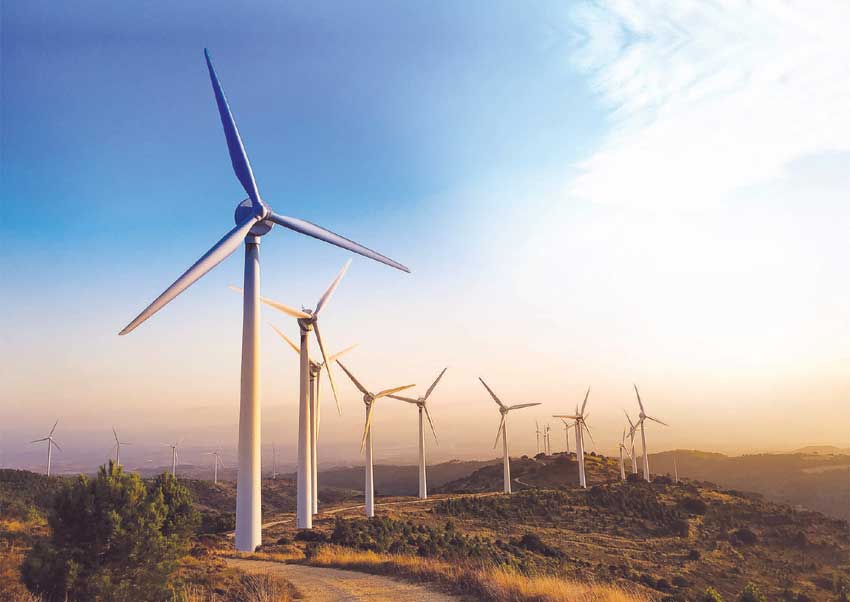
Li Daxiong said that Manipur currently consumes 700 million kilowatt-hours of electricity each year, and the current Loktak Hydropower Project cannot support a quarter of the demand in Manipur, the rest of the electricity is most likely to be purchased by the people of Manipur from elsewhere. So, the first phase of the 25 4.0-megawatt wind turbines installed in Manipur will guarantee more than 2,000 usable hours of wind power in areas with abundant wind power, which means that the total annual power generation will exceed 200 million kilowatt hours. This is a huge guarantee for Manipur power generation, and the wind power generation will last for 20 years. Calculated at 0.5 yuan / kWh, the project will pay off in 8 years, making the project a net profit for the next 12 years.
Investment and Funding
Ensuring there is enough finance is vital. The funds can come from government grants, international aid, and private investments. Collaboration with some renewable energy companies with experience would be able to provide the finance and technical expertise needed.
Of course, renewable energy investments, like any other infrastructure, are capital-intensive but long-term beneficial much more than the cost one incurs to put them up. The role that would probably be most important is providing subsidies, fiscal incentives, and low-interest loans to attract investors, from which governments have the biggest share. Although international organisations and development banks also can do it, the projects might contribute significantly to global climate goals.
Public-private partnerships can attract private investment. By partnering with existing renewable energy companies, Manipur can take advantage of skills and resources. Such partnerships can be resorted to, in order to share the risks and ensure the completion of the project within time and budget.
The total budget for the wind power project is estimated by Li Daxiong at around 675 million RMB, or about Rupees 800 crore. This includes the cost of the wind turbines (375 million RMB), the transportation cost of Rupees 173 Crores, a labour cost of Rupees 58 crores, and the installation cost of Rupees 116 crores. Taking its total to be very high, this area seriously needs to be probed with various funding options, which may include governmental support, private investments, and international aids. Li Daxiong also hints that smaller-scale projects might be more accessible for private investments, taking into consideration very low costs and quicker returns on investments.
Li Daxiong further explains that individual entrepreneurs or smaller investors may be more interested in setting up small-scale wind power projects. These small projects take a capital investment of merely about 20 million RMB—roughly Rupees 23 Crores —which can repay their investment in the first 10 years, and subsequent to this, they are pure profit. Doing so can guarantee an independent reliable power supply for self-use and, subsequently, sell excess power for added profit.
Infrastructure Development
This is followed by infrastructure construction, ranging from installing wind turbines to solar panels. Equally significant is the development of infrastructure grids able to carry and distribute the power generated.
Infrastructure construction commences with site preparation to setting equipment in place. In wind power, the erection of such structures is for the purpose of turbine setting and establishing access roads. Solar power projects involve placing photo-voltaic panels, inverters, and mounting systems.
A robust grid is a key element in an effective power distribution infrastructure and should include, wherever necessary, upgrading transmission lines and constructing new lines. Smart grid technologies must be integrated into it. In addition to dealing with intermittency, grid stability and reliability are basic to the idea that more and more use of renewable energy sources is made. Further, energy storage helps smoothen out fluctuations in supply and demand.
According to Li Daxiong, transportation and installation of wind turbines are likely to be substantial cost factor drivers. Transport logistics of large wind turbine components to various sites in remote areas of Manipur and building of access roads and other required infrastructure can increase project costs considerably. This again underlines the great importance of proper planning and efficient implementation in order to cost efficiently make the project realistic.
Energy storage power stations could play a very critical role in ensuring that the renewable energy sources, such as wind and solar, are stable and reliable. Such stations can store excess energy generated during high production periods to later release it when generation is low, hence offering a constant flow of energy and avoiding reliance on fossil fuels at peak periods. Implementing energy storage solutions like batteries or pumped hydro storage can significantly enhance the efficiency and resilience of Manipur's renewable energy infrastructure.
Regulatory Framework
Of paramount importance for establishing a supporting environment for renewable energy projects is the enactment of policies and regulations that are supportive of such projects. Collaboration with local and national governments can ensure compliance with environmental and safety standards while providing incentives for renewable energy investments.
An unambiguous and empowering regulatory framework is very important for the success of these projects. The development of policies encouraging investment may be subject to fast track permitting and pre-estimating adherence to environmental and safety standards. Some the measures that the government can put in place in order to promote renewable energies include setting of targets for renewable energies, feed-in tariffs, and net metering policies.
Besides community involvement regulations, other regulations should pertain to land use and zoning. Transparent and inclusive decision-making processes can help in building trust and attaining support for the development and implementation of renewable energies. In the process of establishment, enforcement of mechanisms for monitoring and compliance should be in place to ensure that the projects meet all the related laws and regulations.
Li Daxiong says it is all about government support and partnership. By policies and incentives set by the government, investments are attracted into projects and make it certain that a renewable energy project will be a success. On top of that, he indicates that if to meet the objective of energy independence and sustain developmental plans of Manipur, then the government has to play an active role in terms of support and resources required to make this happen.
Training and Employment
Providing training programmes in the renewable energy sector to the local employees will help develop the workforce with skills, hence creating jobs. The local value from this goes not only to the local economy but also empowers the communities in a big way.
Training and education are much required to create the workforce required for the renewable energy sector. These will include technical and vocational programmes, apprenticeships, partnership with institutions of learning, and the necessary training opportunities. Manipur shall acquire a workforce with relevant operation and maintenance skills in renewable energy installations.
Employment opportunities in renewable energy fall under areas such as engineering, construction, operations, and maintenance. The construction of renewable energy projects in the mentioned areas serves to provide a way in which jobs can be created within the local economy and can be regarded as a solution to high unemployment. The development further creates an experienced workforce that, in turn, attracts increased investment and innovation.
Li Daxiong emphasises that wind power projects in Manipur can provide a significant opportunity for local communities in terms of employment. Opportunities for employment either can be in terms of construction, installation, maintenance, and services over the life of these projects. Human resources development in form of extending training opportunities may even be associated with educational institutions.
Community Engagement
It is more and more crucial to still engage with local communities, involve them in the process, and reassure them with their concerns. Emphasizing the benefits, like job creation or caring for the environment, maybe, coupled within a way, harbour a sense of ownership and spontaneous cooperation.
Community engagement is a cornerstone of any renewable energy project. The process includes open and transparent communication, participatory decision-making, and addressing concerns from the community. Engaging local communities early on in a process can help projects build trust and gain a social license to operate.
By emphasising the areas of benefits that shall be derived from the renewable energy projects, such as creation of opportunities for employment, development of infrastructure, and environmental cleanliness improvement, the people can support the projects. Involvement of communities in these planning and implementation phases will bring a sense of ownership and cooperation.
Li Daxiong believes in community participation so that the local communities are brought on board, and their concerns are heard. A lot of benefits come with renewable energy projects for communities, including opportunities in employment, infrastructure development, and sustainability. Proper engagement may create a sense of ownership and cooperation contributing to the success of the projects in the long run.
Marketing and Sales
What is more important adding salt to the income is the need to develop selling strategies for this excess energy either to the neighbours or integrating it into the national grid. Export opportunity may also be checked further with an intention of increasing the revenue.
Effective marketing and sales strategies are key for generating income from renewable energy projects. This will help in identifying potential buyers while negotiating on the power purchase agreements (PPAs) and getting around export ventures. Infusing the generated power in the national grid will allow Manipur to sell excessive electricity to other regions, thus earning money and contributing to enhanced national energy security.
Exporting renewable energy also makes a good area for tapping, especially where the neighbouring region is an energy deficit area or has renewable energy targets. Creation of cross-border transmission lines to foster regional collaboration will help Manipur tap into enhanced revenue streams and bigger markets.
Li Daxiong remarks that selling surplus power can bring huge revenue for Manipur. He suggests such sale can be done by assimilating the generated power into the national grid or even exporting power to neighbouring states. Proper marketing and sales strategy build-up is required to finalise these modalities to realise substantial benefits and make the project financially viable.
Learning from China's Success
The major factors behind these achievements made by China in the renewable energy sector comprise strong support from the government in terms of policies and incentives. In Manipur, strong government support through subsidies, tax breaks, and favourable tariffs will definitely help.
The growth of China in renewable energy is faster. Strong support from the government and strategic plans assists in this growth. Implemented policies and strategic national plans established on that basis.
There are incentives, which materialise in the forms of subsidies, tax concessions, and preferential tariffs for attracting investments in renewable energy; Manipur stands to gain by formulating nil policies to this effect, so it can start attracting investments and energies which will be part of the Growth process of renewable energies.
Secondly, China has channelled its efforts towards R&D, leading to technological innovations and cost reductions in renewables. Expenditure on R&D should give Manipur access to newer technology, with more efficient and economical improved structures for projects related to renewable energy.
The scale at which China operates on mega-sized projects derives economies of scale from that scale, which decreases costs and ensures efficiency. Manipur can also scale up smaller projects initially for the development of necessary infrastructure in the state till it becomes able to compete with the rest of the world in the renewable energy market.
Meeting the Challenges of Manipur
The need to have sustainable economic solutions for Manipur has just cropped up, especially tied to the very recent violence on May 3rd, 2023. Much economic activity and community involvement in peacemaking and stability will come with projects on renewable energy sources. Lastly, with these projects placed at the local level, community ownership and engagement will be developed, putting a clear sign of improved development and stability.
The current state of violence and instability in Manipur is putting a challenge to find long-term economic solutions to tackle social economies. Such renewable energy projects can be definitely proved very effective since they draw lots of jobs and also stimulate the local economy, with lots of community participation.
Such economic opportunities brought by projects in renewable energy sources can reduce the poverty that normally fuels instability. Renewable energy projects offer jobs and the stimulation of local economy so that they can lead to peace and stability.
This will also include community involvement in developing renewable energy projects. With this, the participation of the local community will make a sense of ownership and cooperative spirit with the projects. For this, it may go a long way in improving overall support and trust in the projects; thus, participation could result in better development activities that cement homeostasis for long-term development and stability.
Conclusion
With the success of China, strategic steps for implementation, and facing the local problems head-on, at last, light at the end of a tunnel offers a sustainable green and prosperous future. Renewable energy projects provide a beacon, a way toward economic independence, environmental sustainability, and social stability.
Renewable energy projects open avenues for a stream of income that is sustainable and creates jobs for Manipur. By harnessing the potentials of wind and solar power, Manipur can bring change, bring in an income stream, and create jobs and promote environmental sustainability. Following China's lead and taking strategic actions will allow Manipur to tap into its renewable energy potential.
The success of renewable energy projects in addressing local challenges, such as the recent violence and instability, is very important. Projects based on renewable energy can contribute to the creation of peace and stability in this region due to the economic opportunities and community presence among its people.
Such renewable energy projects bring new hope into Manipur and light the way into economic independence, environmental sustainability, and social stability. If Manipur turns towards renewable energy, the economic landscape will be transformed and sustainable, and a prosperous future would begin to be carved out.
(The content of this article reflects the views of writers and contributors, not necessarily those of the publisher and editor. All disputes are subject to the exclusive jurisdiction of competent courts and forums in Delhi/New Delhi only)
By Dr Atom Sunil Singh














Leave Your Comment