


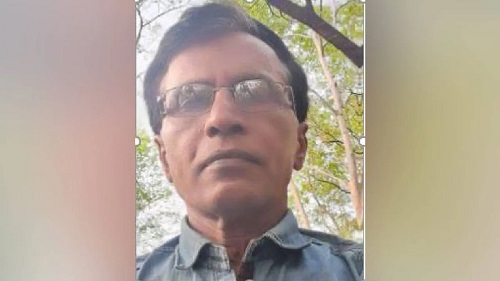
In one of the most significant blows to the left-wing extremist movement in recent years, Malloujula Venugopal Rao, widely known by his alias Sonu, a senior politburo member of the banned Communist Party of India (Maoist), surrendered to authorities in Maharashtra's Gadhchiroli district on today (October 14).
The surrender is not an isolated event. Sonu, a key figure in the Maoist hierarchy, was accompanied by approximately 60 Naxal cadres, signaling a mass exodus from the insurgent group and potentially triggering a domino effect within its ranks.
This development is being hailed as a major victory for the government's sustained counter-insurgency and outreach efforts. Officials attribute the success to a multi-pronged strategy of relentless police pressure and a well-orchestrated surrender policy, coordinated across state lines and guided by the Union Home Ministry under Amit Shah.
The surrender did not come as a complete surprise. In a telling move back in September, Sonu had circulated a press release declaring his intention to lay down arms and abandon the decades-long armed struggle. His disillusionment with the Maoist cause appears to have resonated deeply within the organization.
Following his public statement, Sonu managed to garner the support of a substantial number of cadres from the Maoist heartland of Chhattisgarh and other affected regions. This collective decision to follow him out of the jungles and into the mainstream underscores a growing internal crisis of ideology and morale within the CPI (Maoist).
A Significant Setback for the Maoist Movement
As a member of the politburo—the apex decision-making body of the CPI (Maoist)—Sonu possessed intimate knowledge of the group's military strategy, leadership structure, and financial networks. His surrender is not just a symbolic loss but an operational catastrophe for the insurgents.
The loss of a leader of his stature, along with dozens of committed cadres, severely cripples the Maoists' capabilities in the vital "Dandakaranya" region, spanning parts of Chhattisgarh, Maharashtra, and Telangana. Security analysts suggest this could create a leadership vacuum and accelerate the decline of the movement in one of its core zones.



















Leave Your Comment