


Recently, the author came across a Sanskrit shloka that seems surprisingly relevant to today’s political climate:
मूर्खस्य पंच चिह्नानि गर्वो दुर्वचनं तथा।
क्रोधश्च दृढवादश्च परवाक्येष्वनादर:॥
“The five signs of a fool are arrogance, harsh speech, anger, endless argument, and contempt for others’ opinions.”
Over the past decade, we have seen many voices in public life exhibiting exactly these symptoms. Consider the pattern:
● A Citizenship Amendment Bill, meant to protect persecuted minorities from neighbouring countries, was opposed most fiercely by those not even mentioned in the bill.
● The Farm Bills, aimed at reform, faced the same resistance.
● Rumours about Chinese encroachment were spread only to portray India’s valiant army as weak.
● The surgical strikes were mocked, Operation SINDOOR was ridiculed, and the credibility of our armed forces was repeatedly questioned.
And now, people with vested interests, are up in arms against the 130th Constitutional Amendment.
What Does the Amendment Say?
The proposed provision is simple and precise:
“A Minister, who for any period of 30 consecutive days during holding the office as such, is arrested and detained in custody, on allegation of committing an offence under any law for the time being in force, which is punishable with imprisonment for a term which may extend to five years or more, shall be removed from his office by the President on the advice of the Prime Minister to be tendered by the 31st day after being taken in such custody.”
In plain language, if a minister—including a Prime Minister or Chief Minister—is arrested and remains in custody for 30 days on serious charges, he or she automatically loses office.

Who Should Be Worried?
The logical answer: only corrupt ministers, including any PM or CM facing grave allegations which may lead to arrest for the stipulated period.
And yet, ironically, it is not the ministers but the Opposition benches that are protesting the loudest.
A wise Opposition should have welcomed such a law. In fact, they could have celebrated its passage and then—with the help of a sympathetic media and perhaps even foreign intelligence interests—worked to unearth serious charges against the ruling leadership. Imagine: if such a law had existed in 2014, there would have been no need for veteran diplomat Mani Shankar Aiyar to publicly appeal to Pakistan to “remove Modi.” Finding a sustainable serious charge would have done the job? The system itself would have taken care of it.
The irony is stark: a bill designed to clean politics and ensure accountability is being opposed not by those who may actually be threatened by it, but by those who should have seized it as an opportunity.
The resistance, therefore, says less about the bill—and more about the failure to understand, arrogance, and misplaced priorities of its critics.
The other possibility!
There might be another assumption possible in the minds of the leaders of the opposition that the present government will collapse tomorrow and the opposition will get majority the day after and then BJP will use this amendment to put the would-be PM in jail for 30 days and then remove him as PM. BJP will not stop with one PM and will keep on jailing PM after PM. The author is confident that the readers must be smiling now and have understood why the article started with a shloka defining the five weaknesses of the fools.
Why has the need to propose such an amendment been raised?
The golden era of the Indian subcontinent was built on a profound principle: the higher the position, the greater the punishment for misconduct. Power was seen not as privilege but as responsibility.
Chanakya put it succinctly in the Arthashastra (1.4.13):
“Rājā dharme sthito dharmaḥ sarvaṃ bhavati rājasu.”
If the king is rooted in righteousness, the people too remain righteous. But if the king is corrupt, the entire state becomes corrupt.
Centuries later, Mahatma Gandhi envisioned Ram Rajya, an ideal state where even a stray dog could expect justice. While it is true for stray dogs even today, sadly politics in independent India has moved in the opposite direction. Instead of embodying moral responsibility, our politicians have crafted a new unwritten code: if the Prime Minister, Chief Minister, or senior leaders are corrupt, the entire machinery of governance follows suit.
History provides stark examples. The UPA-II government, led by the otherwise mild and scholarly late Prime Minister Manmohan Singh, became infamous for unprecedented corruption scandals. More recently, the AAP government in Delhi achieved the dubious distinction of having more ministers behind bars than inside the Assembly.
The lesson is unmistakable: when leaders set low standards, corruption cascades downwards, infecting every layer of governance.
The only effective remedy is this—those who hold the highest offices must face punishments harsher than ordinary citizens. Only then will accountability flow downward, restoring faith in democracy and governance.
Who will bell the cat?
● 40% of sitting MPs have declared criminal cases; 25% face serious charges such as murder, attempted murder, kidnapping, and crimes against women. Recently a news made headlines;
“40% of Chief Ministers face criminal cases: ADR”
The Hindu, August 23, 2025 01:19 am IST - New Delhi
It will surprise many and they will ask the question, how is it possible that the alleged criminals can succeed in becoming chief ministers. The true answer will surprise them. The members of the drafting committee of the present constitution were sincere, altruist and used to practice high moral values; they could not think of a situation where a politician ( freedom fighter) can be corrupt! Therefore they provided immunity to legislators from false cases.
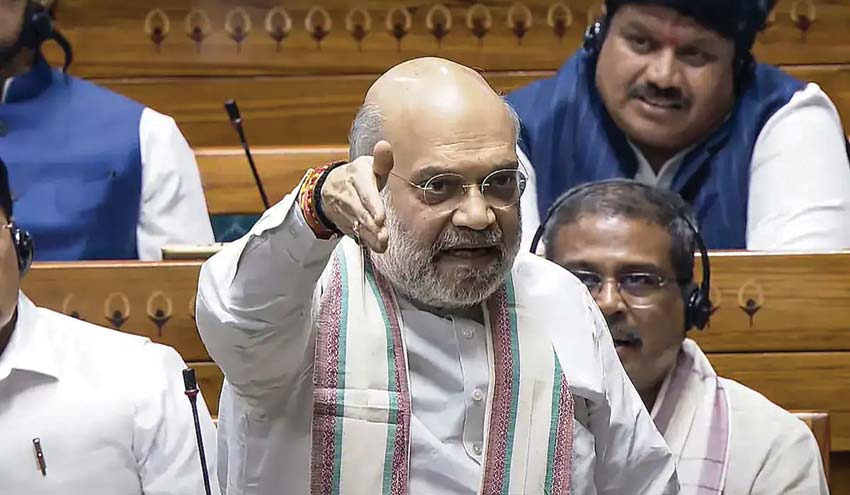
Immunity Turned Into Impunity
Articles 105 and 194 of the Indian Constitution grant MPs and MLAs parliamentary privileges, including immunity for their speeches and votes inside legislatures. Similarly, the Representation of the People Act allows convicted politicians to appeal and often secure a stay on disqualification.
These provisions were originally designed to protect honest and upright representatives from harassment by corrupt forces. But over time, the very safeguards meant for the noble have been hijacked by the corrupt. Today, criminals actively enter politics to enjoy immunity. It has become common for gangsters to secure tickets, win elections, and even dictate governance, with political parties supporting them to terrorize the honest.
The results are disturbing:
● Undertrials in jail live in luxury, often enjoying facilities that put five-star hotels to shame, while honest officers who try to resist such power are punished.
● Convicted politicians and elites enjoy endless parole—from Lalu Prasad Yadav to Manu Sharma and Sanjay Dutt—continuing business or political life almost uninterrupted. Meanwhile, thousands of poor prisoners languish in jail for petty offences, sometimes serving longer than their actual sentences because of systemic failures.
This distortion reached its peak during Indira Gandhi’s Emergency, when the infamous 42nd Constitutional Amendment sought to shield politicians from prosecution altogether. Fortunately, the Janata Government later repealed it, restoring at least a measure of accountability.
The irony is sharp: what began as a shield for democracy has become a sword against it. Unless these privileges are curbed, immunity will keep breeding impunity.
It took five decades and a pragmatic government to even propose removing a corrupt PM or CM—an overdue step in a long battle. The world has a shining example in Singapore, where Lee Kuan Yew understood early on that the nation’s survival depended on staying clean and corruption-free. India, unfortunately, ignored this golden rule.
Corruption surfaced as early as 1948, when V.K. Krishna Menon, then High Commissioner to Britain, bypassed protocol to sign an ₹80 lakh army jeep deal. Surprisingly in 1955, Home Minister Govind Ballabh Pant dismissed the scandal, ignoring the inquiry committee’s recommendation for judicial review, saying, “If the opposition is not satisfied, they can make it an election issue.” That attitude set the tone—and the list of scandals since is endless.
Today, a small but significant beginning is underway. The backlash from corrupt netas, bahubalis, and paid media is expected. If India truly aims to become a superpower, every loophole must be sealed. Subsidy leakages have been curbed to some extent, and initiatives like Aadhaar, digital payments, and Make in India are promising—but they’ll falter if corrupt politicians continue to dictate terms in Parliament and state assemblies.
Discrimination Among Criminals: A Violation of the Right to Equality
Article 14 of the Indian Constitution guarantees the Right to Equality, promising that every individual is equal before the law and entitled to equal protection under it. Yet in practice, this principle is often undermined. Criminals are treated differently depending on their political clout, social standing, or the strength—or weakness—of institutions meant to uphold justice.
Politicians vs. Common Citizens
A glaring example: a legislator facing serious criminal charges can still contest elections, while a government employee may be suspended for far less. This disparity exposes a deep flaw in our democratic framework.
The 2G Spectrum Case
Between 2007 and 2010, the 2G spectrum allocation scandal rocked the nation. Political leaders were accused of manipulating allocations to benefit select companies, allegedly causing losses worth lakhs of crores.
● Politicians: The then Telecom Minister resigned, but after years of trial, most senior politicians were acquitted due to lack of direct evidence.
● Civil Servants: Senior bureaucrats in the ministry were arrested, suspended, and publicly vilified. Many spent years defending themselves, despite acting under ministerial direction.
The Coal Block Allocation Case ("Coalgate")
This controversy (2004–2009) centered on the discretionary allocation of coal blocks.
● Politicians: Decisions were made at the highest levels, including by the Prime Minister, who held the coal portfolio. Yet no political leader was convicted.
● Civil Servants: Several IAS officers and ministry officials were prosecuted, some convicted in lower courts. Careers were ruined, pensions withheld, and families stigmatized. Politicians, meanwhile, deflected blame, claiming they merely followed bureaucratic advice.
The Constitutional Irony
In theory, ministers are accountable to Parliament, and civil servants are executors of policy. In reality, bureaucrats face trials and conviction, while politicians escape scrutiny through political maneuvering.
Democracy Beyond the Ballot
True democracy doesn’t end at the ballot box. Power without accountability breeds arrogance, corruption, and public disillusionment. India’s political class must be reminded: leadership is not a privilege—it’s a responsibility. Until politicians are held accountable not just during elections but every day in office, India’s democracy will remain incomplete.
The Ruler Is Not Above the Law
The time has come to close the loopholes in our political system. It’s a now-or-never moment—because if we don’t act, these Raktabeej-like forces will continue to multiply. Just as the demon Raktabeej spawned clones from every drop of his blood, corrupt elements in politics replicate and spread unless decisively stopped. Goddess Kali’s strategy was to drink every drop before it touched the ground. India needs a similar resolve to eliminate corruption.
What will happen to democracy when alleged criminals form the majority in our legislatures? The very foundation of justice and equality will begin to crumble. It’s time to restore the values once championed by Chanakya.
“Rājā yadi anyāyaṃ kuryāt, tasya daṇḍaḥ api tat-samo bhavet.” If a ruler commits injustice, he must face the same punishment as any offender. — Arthashastra 3.1.41 (paraphrased)
Another shloka recommended higher punishment to corrupt officials in position of power;
“Dravyaharaṇaṃ rājñāṃ daṇḍa-dviguṇaḥ syāt.” If a minister or high official embezzles wealth, the punishment should be double that of a common man. — Arthashastra 4.13
This principle must be enforced. A petty thief harms individuals—but a corrupt politician loots the nation and threatens its sovereignty. The damage is systemic, not just personal.
Conclusion: The Churning of Democracy
Yes, there may be chaos in Parliament. But remember: nectar emerged only after Lord Shiva consumed the halahal, the deadliest poison. Today, India is undergoing its own samudra manthan—a great churning of democratic ideals.
From this process, precious outcomes have already surfaced: plugging subsidy leakages, digitisation, UPI, Aadhaar. These are the ratnas of reform. If the ruling party and the nation continue this churning—eliminating the post-independence malpractices—there is only one path forward: India rising as a true superpower.
By Rakesh Kumar
(The content of this article reflects the views of writers and contributors, not necessarily those of the publisher and editor. All disputes are subject to the exclusive jurisdiction of competent courts and forums in Delhi/New Delhi only)


















Comments (2)
R
Very deep, very well researched and an excellent article.Congratulations to the writer Shri Rakesh Kumar ji
M
A very well researched and articulated article touching the crucial gaps in the system which are being exploited by cunning politicians and advocating the efforts to plug the loopholes. Congratulations Rakesh ji for an enlightening article.