


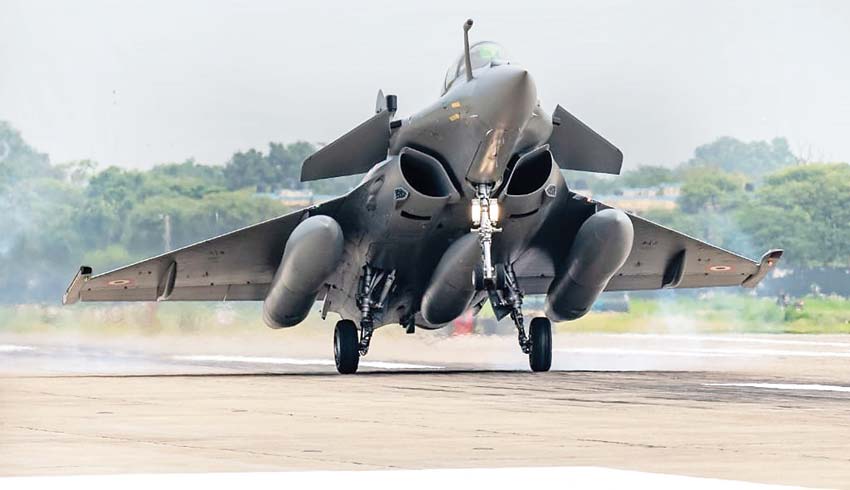
In the wee hours of May 7, 2025, India started an ambitious operation under the decisive leadership of global statesman Prime Minister Narendra Modi and Defence Minister Rajnath Singh. The Indian Airforce with the help of Dassault Rafale fighter jets armed with Scalp missiles and Hammer bombs launched airstrikes on nine targets consisting of terrorist training camps, Islamic seminaries and madrasas located deep inside Pakistan and PoK (Pakistan Occupied Kashmir) leading to the death of at least 100 Islamic jihadi terrorists. The military campaigned christened as Operation Sindoor also witnessed the Indian military launching kamikaze drone strikes on Pakistan’s air defence units using Israeli made IAI Harop loitering munitions the next day, after Pakistan escalated the conflict by launching missiles and Turkish drones targeting civilian areas in Jammu and Punjab. Now Pakistan has decided to escalate the matter more by launching counter-strikes against Indian military as well as civilian targets on May 8 evening. This is nothing but an act of war and full-fledged provocation by the Islamic terrorist state.
A tit for tat reaction required
Pakistan has also deliberately spread misinformation and rumours that India has hit structures on the Neelam and Jhelum rivers inside PoK, which seems to be a pretext of a conspiracy by the Pakistani state for finding an excuse to hit civilian infrastructure in India, as was stated by Foreign Secretary on May 8 during a press conference. Well, this must be taken seriously since Pakistan targeted 27 towns of India on the night of May 8 using drones and missiles. The areas targeted include Jammu, Samba, RS Pura, Arnia, Srinagar, Baramulla, Uri, Kupwara, Pathankot, Amritsar, Jalandhar, Hoshiarpur, Mohali, Chandigarh, Gurdaspur, Sangroor, Barnala, Bathinda, Panchkula, Barmer, Jaisalmer, Jodhpur, Bikaner, Sri Ganganagar, Kutch, Banaskantha, and Patan. Blackouts had to be enforced in all these cities causing great harassment to panicked civilians. Military sites in Jammu, RS Pura, Arnia, Jalandhar, Udhampur, Samba and Pathankot were also targeted by the Pakistan air force. If this is not an act of war against India, then what is?

Now that the Islamic terrorist nation has crossed all limits of its lunacy, it is time for the Indian government to show Pakistan it’s place once again. The Western fleet of the Indian Navy is already active in the Arabian Sea with aircraft carrier battle group (INS Vikrant). The Indian Navy’s Kalvari-class submarines are also armed to the teeth with Exocet cruise missiles. The time is opportune to unleash hell on the Pakistani port of Karachi, just like the way it was done during the 1971 war. This will quickly wipe out a vast chunk of Pakistan’s fuel reserves and leave the nation’s military drained out.
Moreover Pakistan has 57 coal and gas-based operational power plants which include TPS Jamshoro, TPS Guddu, TPS Quetta, TPS Muzaffargarh, TPS Nandipur, Lal Pir Power, Pak Gen. Power, Kohinoor Energy Ltd, Fauji Kabirwala, Hub Power in Balochistan, KAPCO, Rousch Power, TPS Jamshoro, Saba Power Company Ltd, Uch Power, TNB Liberty Power, Attock Gen, Atlas Power, Engro Power Gen, Saif Power Sahiwal, Orient Power, Nishat Power, Nishat Chunian, Xenel Sapphire Electric, Halmore Power, Narowal Energy, Liberty Power Tech., Foundation Power, Sahiwal Coal Power Plant, QATPL (Bhikki), NPPMCL (Haveli Bahadur Shah), NPPMCL (Balloki), Qasim Electric Power Port Qasim, China Power Hub , Engro Powergen, Bin Qasim, Korangi Town, Gul Ahmed, Tapal Energy, SNPCL, Intl. Steel Limited, FFBL Power, Lotte Chemicals, Lucky Cement, Lucky Electric Power Co. Ltd, Thar Energy, Punjab Thermal (PTPL), Thar Coal Block-1 Power and ThalNova Power.
Pakistan also has a total of 33 hydroelectric powerplants which include Renala, Jabban, Rasul, Dargai, Kurram Garhi, Chichonki Malian, Warsak, Shadiwal, Nandipur, Mangla, Chitral, Tarbela, Chashma, Jagran, Ghazi-Barotha, Malakand-III, Khan Khwar, Pehur, Jinnah, Garam Chashma, Allai Khwar, Gomal Zam, New Bong Escape, Duber Khwar, Patrind Hydro, Golen Gol, Neelum–Jhelum, Marala Hydro (PPDCL), Gulpur Hydropower Plant, Daral Khwar, Ranolia, Karot, and Suki Kinari.
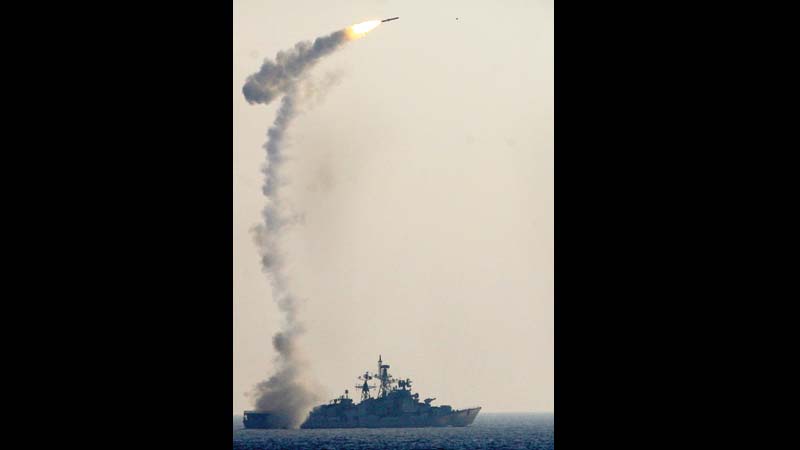
India should launch massive barrages of cruise missiles and surface-to-surface tactical range ballistic missiles for permanently destroying these infrastructures so that the Pakistani people feel the pinch of how it feels to live without electricity for hours and days. Now that Pakistan has brought the war directly into our homes in India, the ambitious infrastructure projects of Pakistan like the Lahore Metro Rail system and airport terminals in Lahore, Karachi and Islamabad shouldn’t be spared too. A volley of cruise missiles and drones should take out these pricey pieces of Pakistani infra which took years and possibly decades to build.
Cruise missile barrages required
The continuous barrages of cruise missiles like Nirbhay and BrahMos, drones like IAI Harop loitering munition, precision-guided rocket artillery shells like Pinaka and Smerch, glide-bombs like SAAW (Smart Anti-Airfield Weapon) and Sudarshan laser-guided bomb, and air-to-surface missiles like BrahMos, Meteor, etc. should be such that Pakistan’s top leadership in Islamabad and the shadow leadership in Rawalpindi should remember the Indian retaliation for many generations to come. The target should be to kill as many terrorists as possible, numbering at least in thousands or even tens of thousands and also destroy the Pakistani military’s offensive and defensive capabilities. The intention should be to totally wipe out Pakistan’s war fighting capabilities and strategic infrastructure and literally send Pakistan back to the medieval times after making it radar blind. India’s rocket artillery systems like Pinaka, Smerch and Grad will also be very helpful in these offensive operations.
Time of reverse the Shimla Agreement
The 1972 Shimla Agreement, while aimed at establishing peace between India and Pakistan, resulted in India's territorial losses in several key areas. Pakistan regained a significant amount of territory, including over 13,000 square kilometres seized by India during the 1971 war. Specifically, Pakistan retained Chumb City, while India retained a few strategic areas within the captured territory. India returned a substantial portion of Pakistani territory it had occupied during the 1971 war. This included areas captured in the Kashmir region, as well as other parts of Pakistan. The agreement also established the Line of Control (LoC) as the boundary between India’s Jammu & Kashmir state and PoK, replacing the previous ceasefire line. Now, it is high time that India abolishes this agreement permanently and starts an armoured incursion for gaining back all the territory which was ceded to Pakistan under the Shimla pact. India’s Cold Start Doctrine will come in handy here with all the resources and logistics to rapidly mobilise ground forces readily available. This must be simultaneously followed by Indian armoured incursions deep into PoK as well as Baluchistan and parts of Sindh.

A naval blockade must be enforced
While the ground war approaches, a plan to execute a naval blockade of Pakistan through the Arabian Sea must be enforced. This will cut off Pakistan’s sea trade routes from the rest of the world and will prevent Turkish and Chinese ships from supplying the nation via sea. This will leave Pakistan with only a few land routes of trade through Iran and Afghanistan available.
Pakistani nuclear threats don’t work
The Pakistani nuclear arsenal consists of small tactical nuclear weapons. The maximum explosive yields of these bombs are up to 5kt (kilotons) of TNT. Some weapons have yields ranging between 0.5kt and 1kt, as was proved during the Chagai series of tests in 1998. The bombs dropped on Hiroshima and Nagasaki (Little Boy and Fat Man) had yields of 16kt and 21kt respectively. India’s first atomic bomb test in 1974 (Smiling Buddha) had a yield of around 10kt. India’s two-stage thermonuclear bomb (Hydrogen Bomb) tested in 1998 under Prime Minister Atal Bihari Vajpayee had a test yield of 45kt. Dr. APJ Abdul Kalam had later clarified that the Hydrogen Bomb had a design yield of 200 kt to 250 kt and that the test data has given India enough room for designing nuclear bombs with much higher yields. India’s Agni and Prithvi series of ballistic missiles are now armed with these high-yield strategic nuclear warheads. Hence, Pakistani politicians should refrain from issuing hollow nuclear threats to India. Any attempt by Pakistan to escalate the matter into the nuclear domain through tactical nukes will ensure a ten times bigger Indian retaliation with dozens of Indian Hydrogen Bombs raining down on Pakistani metropolitan cities and literally vaporising hundreds of millions of Pakistani citizens into thin air. We have dozens of such kind of missiles and nuclear bombs pointed at Pakistan as of today. Hence any such escalation will lead to absolute obliteration of Pakistan from the map of the world. Only a lunatic may attempt to take such a suicidal step by starting a nuclear war with India.
Reversing the no first use policy
The current policy is, by nature, reactive. So, Pakistan knows it does not have to fear any pre-emptive nuclear strike. A mere change in this policy would add a big deterrence value, especially as India has completed its Nuclear TRIAD, i.e. the capability to launch nuclear missiles by air, land and sea. This was already mulled by former defence minister Manohar Parrikar. Now is the right time for its implementation.
The cost of war is payable
Some cost always needs to be paid for achieving everlasting peace. Today, Israel has become a much safer place to live in, thanks to the Israeli military actions in Gaza and Lebanon against Hamas and Hezbollah terrorists. US and Israel are also vying for the safe transits of vessels by bombing Houthi terror targets in Yemen. Russians cleansed Chechnya of Islamic terrorists by a long military campaign during the 1990s and 2000s. China wiped out the Uyghur terrorists. Iran wiped out Pakistan-based terrorist organisations like the Jundallah. Now is the right time for us as Indians to show the desired willpower to show the world what we can do when it comes to our national security and citizens’ safety. And it is time to show the Pakistani state what is India’s strength by making the Pakistani citizens suffer like the Gazans and the Lebanese without food, electricity, water and fuel for a very long time. There should be a mass uprising by Pakistani citizens against their government and military establishment so that the Pakistani state and non-state actors don’t get the audacity to mess with India again.
No more ‘Pakistan’ in South Asia
India’s military actions Pakistan will also send a clear signal across the Line of Actual Control (LAC) to Beijing that when it comes to national honour, India doesn’t even fear hostile nuclear threats while guarding her pride and dignity. This rabid cancerous tumour called ‘Pakistan’ must be treated well and put to permanent sleep now. Disintegration of the Pakistani state into various independent nations of Baluchistan, Waziristan and Sindh is an idea whose time has come.

By AMARTYA SINHA
(The writer is a Delhi-based defence journalist.)
(The content of this article reflects the views of writers and contributors, not necessarily those of the publisher and editor. All disputes are subject to the exclusive jurisdiction of competent courts and forums in Delhi/New Delhi only)















Leave Your Comment