


The Urgent Need for the Government of Odisha to Address Illegal Bangladeshi and Rohingya Infiltration through an Internal Security Lens
Odisha stands at a critical juncture in addressing an emerging security dilemma—one that, while largely under-recognised in public discourse, poses a growing threat to the state’s demographic stability, internal coherence, and security. The illegal infiltration of Bangladeshi migrants and Rohingya refugees, often camouflaged till date as humanitarian issue, requires an urgent and structured reassessment—not through the conventional humanitarian or administrative lenses but through the uncompromising perspective of national security steered by strategic foresight.
Historically, Odisha has remained relatively insulated from illegal trans-border migration compared to neighbouring states such as West Bengal, Assam, and Tripura, which have long grappled with similar security challenges. However, a closer examination of recent trends reveals a markedly different pattern—one that appears to be part of a deliberate, covert strategy aimed at altering the state's demographic composition under the pretext of economically motivated migration. What is unfolding on the ground, however, is the systematic establishment of sleeper networks, large-scale land encroachments, and the gradual socio-political embedding of these infiltrators—together posing a silent yet deeply consequential threat to the demographic sanctity and composition.
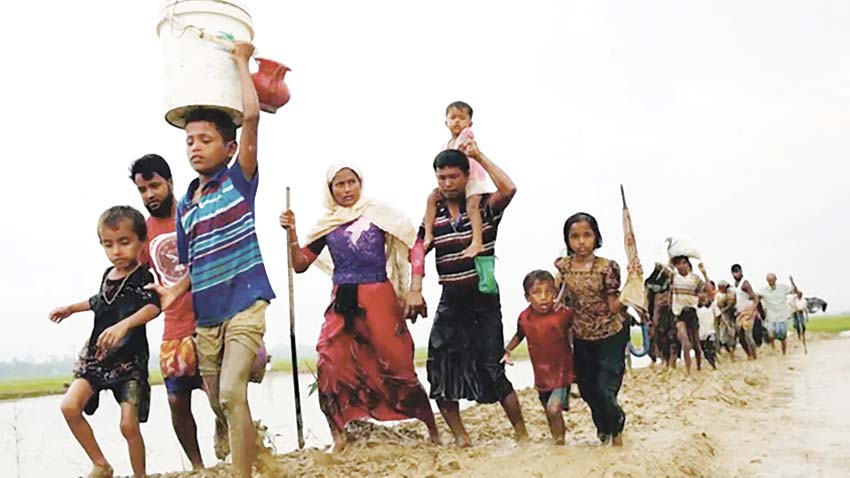
The increasing influx of Rohingya refugees, many of whom have remained operational in conjunction with radical ideologies and extremist networks, compounds this threat. Their potential yet unaccounted presence in Odisha's unmonitored areas creates both an immediate security risk and a long-term vulnerability, gradually pushing the peaceful Odia society towards the approaching environment of radicalisation. As Odisha's coastline development expands, industrial sectors grow, and socio-economically fragile districts attract migrant labour, the state has inadvertently become a new frontier for demographic engineering, not less than aligning with the objectives of Ghazwa-e-Hind. The growing sense of communal disturbances in areas influenced by this influx signals a deeper ideological infiltration that could destabilise Odisha's socio-political, economic, and cultural fabric.
Urgent Measures to Confront this Threat
The growing influx of illegal migration, coupled with the unchecked spread of radical ideologies, has become an urgent and overwhelming threat to Odisha. While neighbouring states have already borne the brunt of such crises, Odisha can no longer afford to be passive. The unchecked rise of undocumented migrants, often with links to extremist groups, and the targeted occupation of government and tribal lands, is not only threatening the very integrity of the state but is also eroding its socio-political fabric. This is no longer a distant problem—it is a direct assault on Odisha's stability and future. The time for complacency is over. Immediate, decisive action is required on multiple fronts: from mapping the spread of illegal settlements and addressing encroachments, to tightening surveillance over informal labour markets and safeguarding vulnerable sectors. Odisha must act with urgency, drawing vital lessons from the experiences of its neighbours, and create a robust, comprehensive strategy to protect its demographic integrity and secure its future. The stakes are far too high to ignore:
Mapping Demographic Spread and Settlement Pockets: The state must undertake a comprehensive demographic audit to identify regions and urban clusters where illegal settlement has occurred. Specific attention is required for urban slums, minority-dominated pockets, vast tracts of land in tribal belts, forest areas, riverine and coastal lands, embankments, roadside government properties, and distant, sparsely inhabited patches. Priority districts such as Kendrapara, Bhadrak, Balasore, Cuttack, and Ganjam—historically linked through coastal and railway routes—are increasingly reflecting patterns of unregulated migration. Informal settlements, often masquerading as slums or labour housing, must be mapped and scrutinised for harbouring undocumented populations. Odisha can draw critical lessons from West Bengal and Assam, where unchecked settlements along railway corridors have evolved into zones of strategic concern. The state government must also reflect upon the demographic engineering witnessed in Jammu and Kashmir, as well as the unfolding realities in West Bengal, where long-term radical planning and capacity building are now becoming visible.
Addressing Land Encroachment and Acquisition Networks: Illegal migrants frequently target government, forest, and reserved lands—including those allocated to Scheduled Castes and Tribes—by using forged documents like fake Aadhaar cards. Odisha must initiate a state-wide land audit, especially in peri-urban and economically sensitive areas, to detect and prevent such encroachments. Beyond the physical occupation, dismantling the local networks facilitating these land grabs—including agents, brokers, and politically protected operatives—is equally vital. The land disputes in Assam’s Kaziranga serve as a stark reminder of how swiftly encroachments can ignite communal tensions.
Infiltration into Labour and Informal Sectors: Odisha’s informal labour markets—particularly in construction, fishing, and domestic work—are becoming hotspots for undocumented migrants. This not only displaces local, especially tribal and Dalit, populations economically but also foster networks susceptible to trafficking and criminal exploitation. Targeted labour surveys, conducted in collaboration with local unions and contractors, must ensure proper registration and protection of migrant workers. Mandatory background verification systems, linked to Aadhaar and employment registries, should be enforced across sectors.
Internal Security and Radicalisation Assessment: Intelligence agencies must prioritise the scrutiny of unauthorised colonies, camps, and settlements, especially near strategic assets such as ports, communication hubs, and defence establishments. Marginalised tribal areas, historically vulnerable, are being increasingly exploited for radicalisation efforts. With the expansion of illegal settlements, there has also been a rise in unauthorised madrassas—often veiled as religious institutions but in reality, functioning as hubs for sleeper cells and demographic manipulation. These madrassas often operate as strategic facilitators for long-term objectives of subversion. The government must proactively examine religious centres suspected of harbouring radical elements, drawing vital lessons from Kerala and Jammu & Kashmir, where similar institutions transformed into logistical bases for radical activism and terrorism—particularly targeting the Hindu majority.
Enhancing Digital and Financial Surveillance: The growing use of encrypted messaging, VPNs, and transnational fintech services complicates the monitoring of undocumented networks. Odisha must strengthen its cybersecurity apparatus to track suspicious financial flows, encrypted communications, and foreign linkages. Migrant-heavy slums are emerging as fertile grounds for digital radicalisation and must be closely monitored. Bangladesh’s clampdown on digital extremism offers relevant insights for Odisha. Additionally, telecom companies and distributors have repeatedly been found complicit in issuing SIM cards against forged documents. Odisha, in particular, remains vulnerable to such breaches. Telecom fraud, digital crime, and transnational offences like drug trafficking often operate in close coordination. Therefore, a centralised intelligence-sharing mechanism must be established, bringing together telecom operators, cyber cells, financial investigators, and law enforcement under a unified security command for real-time surveillance and coordinated action.
Political, Organisational, and External Facilitators: Illegal Bangladeshi and Rohingya migration is sustained by a nexus involving local political actors, administrative enablers, and foreign-linked organisations. NGOs, religious charities, and advocacy groups operating in sensitive zones must be investigated—particularly those promoting narratives of religious victimhood or entitlement, which may be subtly legitimising illegal settlements. A strict regime of registration and financial audits must be enforced for such entities, especially foreign-funded ones, to uncover hidden agendas and ideological influence.
Surveillance of Combat and Insurgency Exposure: The potential threat posed by combat-trained elements within the Rohingya population must not be ignored. Shelters and informal housing must be rigorously vetted for signs of weapons training, militant mobilisation, or ties to banned outfits. Seemingly benign settlements often act as silent footholds for asymmetric tactics—including armed and narcotics smuggling, foreign ideological penetration, and radical funding networks. These structures pose a grave challenge to Odisha’s social fabric and internal sovereignty.
An Urgency for Systemic Action
Tackling the mounting threat of illegal migration and radicalisation demands more than ad hoc departmental measures or episodic crackdowns. A coherent, institutionalised, and coordinated response is imperative. Intelligence units, law enforcement agencies, revenue departments, labour bureaus, and cybersecurity divisions must be converged into a dedicated State Task Force focused on monitoring and mitigating the threats posed by illegal migration and ideological subversion.
Internal security is not solely determined by physical might; it is often undermined by covert tactics such as document falsification, unauthorised settlements, and ideological reprogramming. Odisha must act with urgency before the slow erosion of its societal equilibrium and security becomes irreversible.
Proposal for a Dedicated Task Force: To counter the layered and evolving threats posed by illegal migration, demographic manipulation, and radicalisation, the Odisha Government must establish a multi-tiered internal security apparatus comprising:
This integrated framework should synchronise the efforts of critical departments and ensure a unified, systemic response:
Operational Framework and Accountability
The Task Force should operate under a defined mandate with deliverables, including quarterly public reporting. A centralised data intelligence cell must be created to integrate telecom metadata, biometric entries, immigration logs, and field intelligence. A Standing Committee chaired by the Chief Secretary should review operational metrics and recommend administrative or legal reinforcements as needed.
The gravity of these internal security threats necessitates not just vigilance but structural determination. Odisha’s capacity to pre-empt destabilisation today will define whether it remains a resilient eastern bulwark or becomes a point of vulnerability in India’s national security architecture.
Suggested Methodologies for the Task Force
To ensure results-oriented functioning, the Task Force must adopt rigorous, evidence-based methodologies to identify, verify, and neutralise security threats. A combination of traditional intelligence and advanced technologies is vital.
Demographic and Spatial Mapping
Identity and Document Verification
Land Encroachment and Property Control
Labour Sector Profiling
Digital and Cyber Surveillance
Human Intelligence Network
Conclusion
The Government of Odisha must act swiftly to deal with the rising threats of illegal migration, infiltration, and radicalisation—issues that are beginning to seriously impact the state’s internal security, social fabric, and overall governance. To address these challenges effectively, there’s an urgent need to set up a dedicated Task Force that brings together the Odisha State Police, Intelligence Unit, Revenue and Disaster Management, Forest and Tribal Welfare, Labour, and Urban Development departments. This team should work in close coordination, using tools like demographic mapping, identity and document checks, land encroachment reviews, labour profiling, and digital surveillance to develop a timely and well-rounded response.
At the same time, the government must make better use of existing legal provisions—like those in the Bharatiya Nagarik Suraksha Sanhita (BNSS), Bharatiya Nyaya Sanhita (BNS), and the Citizenship Acts—to provide a legally sound foundation for identifying citizenship status. Introducing a State Register of Citizens (SRC) can further help in streamlining the process and making it more transparent.
By taking this integrated, evidence-based approach, the Task Force can not only detect and defuse emerging threats but also build the kind of long-term institutional capability that Odisha—and indeed the country—needs. This proactive, intelligence-driven strategy, underpinned by legal frameworks and modern technology, along with the suggested methodologies, will facilitate a more productive and seamless execution of security measures, reinforcing the state’s commitment to safeguarding its citizens and thereby maintaining national security and sovereignty infallible.
By Dr. Padmalochan Dash
(The content of this article reflects the views of writers and contributors, not necessarily those of the publisher and editor. All disputes are subject to the exclusive jurisdiction of competent courts and forums in Delhi/New Delhi only)




















Leave Your Comment