


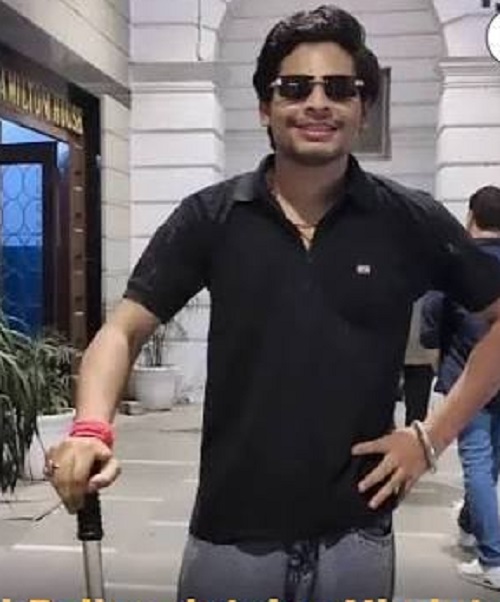
Influencer Swatantra Bhardwaj, arrested in connection with the alleged assault on the father of a student activist during a protest at Delhi’s Jantar Mantar, has been granted interim bail for three weeks by the Patiala House Court. The development comes a day after the court reserved its order on his bail plea, amid arguments over the circumstances of his arrest, the allegations against him and the subsequent addition of provisions under the SC/ST (Prevention of Atrocities) Act.
The Patiala House Court has granted influencer Swatantra Bhardwaj interim bail for three weeks in a case arising from an alleged assault during a protest associated with the Cockroach Janta Party (CJP) at Jantar Mantar.
Bhardwaj had been in judicial custody since September 7 after his detention in Bulandshahr on September 4. His arrest followed a complaint by Nishu Aazad, a CJP worker, who alleged that her father, Sanjay, was assaulted during the protest.
The case has attracted attention because of competing claims from the accused and the complainant's side. Bhardwaj’s lawyer told the court that his client was arrested following what he described as “political developments” and argued that the complainant had herself attacked Bhardwaj during the June protest.
The court had earlier reserved its decision on the bail plea for September 15. During the proceedings, Additional Sessions Judge Saurabh Pratap Singh Laler questioned the Delhi Police about the allegation that Bhardwaj had used a casteist slur during the incident.
The police informed the court that the original complaint did not contain any allegation of a casteist slur. According to the prosecution, the allegation was subsequently included when another statement was recorded, following which provisions of the SC/ST (Prevention of Atrocities) Act were added to the case.
Bhardwaj’s counsel challenged the manner in which the case had developed, pointing out that an FIR had been registered against his client on June 23 and that police had issued a notice on June 27 asking him to appear for questioning.
The controversy intensified after Nishu Aazad publicly alleged that police had initially failed to register an FIR against Bhardwaj. In a video appeal, she sought intervention from Congress MP Rahul Gandhi and accused the authorities of not acting against the influencer.
The allegations were further fuelled by a video interview attributed to Bhardwaj in which he allegedly claimed that he had “cracked the skull” of Sanjay and referred to the seriousness of the injuries. The statement became a key point of discussion surrounding the case and intensified calls for police action.
Bhardwaj, who describes himself as a “Kattar Hindu”, was subsequently detained in Bulandshahr before being brought into the judicial process.
The police have added several provisions to the FIR as the investigation progressed. These include provisions of the SC/ST (Prevention of Atrocities) Act and criminal intimidation. The case also invokes BNS Sections 351(3), 78 and 79, relating respectively to criminal intimidation, stalking and insulting the modesty of a woman, along with Section 67 of the Information Technology Act.
The addition of the SC/ST Act provisions has emerged as one of the significant legal issues in the bail proceedings, particularly after the court sought clarification from the police about the timing and circumstances in which the alleged casteist remark was reported.
With the court now granting Bhardwaj interim bail for three weeks, the immediate question will be how the investigation proceeds during this period and whether the competing allegations made by both sides are substantiated by evidence.
The case also highlights the increasingly contentious atmosphere surrounding street protests and political activism, where confrontations can quickly escalate into criminal proceedings and online statements can become an important part of the controversy. The final outcome, however, will depend on the evidence gathered during the investigation and the judicial proceedings that follow.



















Leave Your Comment