


How Disinformation Hijacked the Pahalgam Tragedy?
"In wars of the mind, facts fall first."
When terrorists struck the meadows of Pahalgam, they were not alone. These were not ordinary killings, the killer challenged the nation. They wanted to set a perimeter to limit the rights of Indian citizens for travelling in Kashmir. The exodus of Kashmiri Pandits round 2 was in the offing. As the nation mourned and the military mobilized, another battlefront exploded— much more dangerous: the war of disinformation. Behind the headlines, a digital battlefield raged—fueled by bots, trolls, and algorithmic chaos.
Within hours, social media feeds and partisan newsrooms got flooded with conflicting claims—some accusing Pakistan-backed terror outfits, others suggesting false-flag operations, and still more pushing conspiracies designed to blur truth and inflame emotion.
DGMO and the defence minister of Pakistan are quoting these Indian sources to prove that India is raising a hoax call.
Amid this chaos, India launched “Operation SINDOOR,” striking deep into Pakistani territory. But behind every missile fired, there lurked a narrative war—crafted by non-state players, viral in seconds, and immune to verification.This wasn't just a battle of armies but a battle of stories, some true, most not—stories that misled and hardened public opinion, inflamed international tensions, and nearly pushed the decision maker to play to the tunes of the galleries. Let’s analyse:
I. Timeline: Attack, Reaction, and Retaliation
● April 22, 2025: Terrorists targeted Hindu tourists, near Pahalgam, killing 26.
● Within 1 hour: Graphic footage spreads online. Claims of Lashkar-e-Taiba involvement clash with posts blaming Indian agencies.
● April 23-24: Prominent influencers and fake accounts amplify unverified narratives. Hashtags like #FalseFlagKashmir and #RevengeForPahalgam trend simultaneously.
● Same day the prime minister took a pledge to punish the culprits wherever they may hide.
During the following two weeks, social media, electronic media and print media were full of reports, questioning the efficiency and integrity of our defence forces. Claims were being made that the incident was initiated by the Indian government to win an election in Bihar. Media was quoting politicians and politicians were quoting media reports to cook stories. The Pakistani PM and defence minister were quoting these statements in their assembly as well as press briefings.
On May 7 India launched retaliatory airstrikes (Operation Sindoor). Government cites “conclusive proof” of cross-border terror camps. At this stage also the disinformation infrastructure worked overtime to influence public opinion and pressurise decision-making.
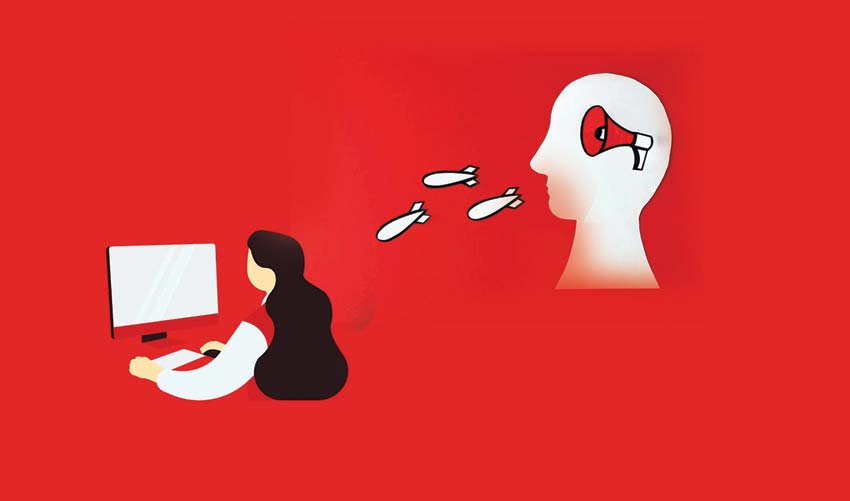
II. The Anatomy of a Disinformation war.
● Source manipulation: Fake news sites and fringe influencers peddled conflicting theories, often using deep fakes and doctored screenshots.
● Cross-border digital warfare: Coordinated efforts traced to troll farms in both India and Pakistan flooded platforms with inflammatory content.
● Media complicity: In a rush to break news,
many channels aired unverified claims, later proven false or misleading.
● Emotion over evidence: The public, still reeling from the brutality of the attack, latched onto emotional narratives, not facts.
III. Social Media: The Algorithmic Battlefield
Platforms like X (formerly Twitter), YouTube, and WhatsApp became primary weapons of disinformation:
● X: Trending topics were hijacked by bots to amplify pro-war or conspiratorial content.
● YouTube: sensational Videos with unsubstantiated claims racked up millions of views in hours.
● WhatsApp: Recklessly forwarded messages with misleading photos, old videos, and edited voice notes created panic in border regions.
These platforms, with little real-time moderation, allowed falsehoods to outrun the truth by miles. Several studies, including one by the Oxford Internet Institute in 2020 (page 20 discusses the strategy) have documented that Pakistan runs one of the most organised state-sponsored disinformation campaigns in South Asia, targeting India consistently. This time also it was no different.
Triggers which fueled disinformation explosions.
Triggers were provided by leaders willingly, accidently or foolishly. Major were:
● Trump’s tweet which made the claim that he has made India Pakistan to agree for a ceasefire.
● Indian politicians who questioned the religious angle.
● Many social media influencers who blamed security forces
Did it happen earlier?
Right from the time of Modi becoming Prime Minister the opposition, section of media and Pakistan China and a few western new papers had indulged in this campaign.
Maoist violence.
Disinformation served the Maoist agenda by manipulating perception, halting development, and maintaining fear. It blurs the line between truth and propaganda, especially in remote areas with poor media penetration. Combating Maoist violence wasn’t just about security forces—it also required digital vigilance, tribal engagement, and grassroots truth-telling.
Unfortunately they had their reach in universities, media and political circles. It was so powerful and shameless that they celebrated the deaths of security force personnel and top politicians. The public started calling these ‘urban naxals’
Demonetisation.
During demonetisation campaign 2016 the rumour was spread that the new 2000 rupee note has some inbuilt tracking device. Government has to clarify that it is not so.
Citizenship Amendment Act (CAA)
Disinformation spread by vested groups, led to mass protests, communal tensions, and international criticism. While the act itself was a legislative change with defined legal implications, viral misinformation—both domestic and international—amplified fears, created false narratives, and pushed the government onto the back foot politically and diplomatically.
Several foreign-based social media campaigns, allegedly backed by Pakistani ISI-linked handles, portrayed the CAA as an “anti-Muslim law.
Farmers agitation.
Celebrity Interference Without Context.
● Tweets by Rihanna, Greta Thunberg, and others were based on selective, exaggerated narratives, many amplified by disinformation networks.
● Greta’s toolkit leak exposed how foreign groups were planning protest amplification strategies well in advance, not always aligned with the farmers’ objectives.
Khalistani and Anti-India Agendas:
● Pro-Khalistan elements tried to merge their agenda with the protests.
● Many social media handles spreading farm protest hashtags had IP traces outside India—Canada, the UK, and Pakistan in particular.
Delaying Dam construction using disinformation, in the north east:
It has hampered India’s ability to assert upstream rights on trans-boundary rivers, especially as China
Disinformation has become a major non-technical barrier to dam construction in India’s North-East—contributing to project delays, local unrest, and recurring floods that devastate states like Assam and Arunachal Pradesh. While environmental and tribal concerns deserve serious attention, disinformation has warped legitimate debate into fear-driven resistance, undermining both development and disaster mitigation efforts.
There are credible reports of foreign influence campaigns, especially from China, attempting to slow India’s dam-building along border rivers like the Siang and Dibang.
Hoax rumours during the election.
The anti India ‘Disinformation network’ Claimed:
● “The Constitution will be amended to remove SC/ST/OBC quotas.”
● “RSS and BJP have already planned a ‘Manuwadi’ agenda post-2024.”
● “A secret policy will replace reservations with merit-based hiring.”
Kumbh 2025: Disinformation led to stampedes and further created anxiety among millions of devotees.
During my one month long stay in the 2025 Kumbh Mela I witnessed a tragic stampede that claimed dozens of lives, the disinformation gang launched a tsunami of distorted facts and deepened public panic. False claims alleging death toll cover-ups, blaming specific religious groups, and spreading doctored videos that exaggerated chaos. Verified reports were drowned out by viral posts that misused old footage and AI-generated visuals, eroding trust in both authorities and the spiritual sanctity of the event.
The public suffered due to unrest, agitations and riots due to these never ending disinformation campaigns.Government had to withdraw benevolent Acts slowing down reform and failing to improve the life of the aggrieved. Rumours against COVID 19 vaccine endangered the health of the common men.
We are taking it too casually.
One can see that the disinformation war is on for a long period but the government has not invested enough time, money and resources to combat this menace effectively.Had we calculated the financial losses and pain suffered by our country we would have developed an anti disinformation missile system better than S400. Let's examine what we have lost.
Disinformation has impacted Policy and Military strategies. Loss of lives, damage to infrastructure and that of future growth prospects has led to;
● Public pressure: The virality of revenge narratives arguably attempted to accelerate India’s military response.
● Diplomatic fallout: Global powers struggled to assess the situation accurately, given the flood of misinformation.
● Strategic miscalculation risk: Disinformation distorted perceptions on both sides, increasing the chance of unintended escalation.
National emblem of India and the way forward.
The National Emblem of India, is a representation of the Lion Capital of Ashoka at Sarnath. The words "Satyameva Jayate" are (Truth Alone Triumphs) are inscribed below the emblem in Devanagari script.
The operation SINDOOR has proved that the three wings of Indian armed forces are fighting like lions, but the phrase “truth alone triumphs” is yet to be proved. False narrative is hurting the interest of progressive India. Time has come to create a resourceful, competent and omnipresent framework to combat and destroy disinformation at the grassroots. Author is not an expert on this subject however a pilot project has been created by summarising the good work done around the world.
Creation of National Framework to Fight Disinformation.
1. National Media & Digital Literacy Mission (NMDLM)
Finland has an effective weapon to combat fake news: education. It tops a list of European countries deemed as the most resilient to disinformation. We can take inspiration;
Empowering citizens—especially youth and rural communities with the ability to detect and reject fake news.
● Integrate media literacy into CBSE/State Board curricula (starting from Class 6).
● Launch public campaigns in multiple languages through AIR, DD, OTT, and YouTube.
● Partner with NGOs to deliver workshops in panchayats, colleges, and madrassas.
2. Institutionalized Fact-Checking Network to Establish a real-time, high-trust ecosystem for fact verification.
● Expand Press Information bureau (PIB) fact-checking unit into a national consortium involving independent platforms. Corporates should be encouraged to do pioneer work in this field by using CSR funds. Presently many disinformation portals are getting support from industry under the disguise of free speech.
● Mandate public retractions by mainstream media & political handles for proven false claims.
● Launch something like "India Check" mobile app for reporting and verifying viral content. We have the skills and resources as we have created similar infrastructure to monitor vaccination during COVID.
Fact-checking is most effective when done timely, credible, and decentralized.
3. Prebunking: National Inoculation Campaigns to Build resistance against disinformation spreads.
● Launch prebunking videos and memes showing how fake news works—run during elections, festivals, and crises. This will reduce cyber frauds as a bonus.
● Partner with ed-tech firms and YouTubers to gamify this (e.g., “Spot the Fake”).
Cambridge University and the University of Bristol, have shown that prebunking can reduce belief in misinformation by 25–40%.
4. Regulatory Reform: Precision Without Overreach to Establish clear rules without infringing free speech.
● Update IT Rules (2021) to:
○ Define “coordinated disinformation campaigns” clearly.
○ Hold platforms accountable for delayed takedowns. India should have its own social media platform, Koo generated hope but has failed. With 1400 millions India should have its own awards like Nobel and Maggassay etc along with social media platforms to promote truth.
○ Require transparency reports on misinformation takedown.
● Create a quasi-independent Disinformation Oversight Council (DOC) under the Ministry of Electronics and Information Technology (MeitY) with media, legal, and civic representation.
Blanket bans fail to serve the purpose . Precision prevents censorship abuse.
5. Election Integrity Protection Protocol to Shield elections from viral falsehoods and hate campaigns.
● EC should develop a pre-election “Disinformation Risk Radar” ( A real-time, multi-agency system that identifies emerging disinformation campaigns)
● This can be done by collaborating with Indian Computer Emergency Response Team CERT-IN & civil society.
● Political ad virality via bots/AI amplification should be capped, in final week of polling.
● A code of conduct for political parties on digital claims should be enforced by EC and grievance panels.
6. Algorithm Accountability & Tech Platform Obligations should be enforced to Reduce systemic amplification of harmful content. With specific mandate:
a. Downranking of flagged fake content across all Indian user feeds.
b. Clear visibility of source verification tags.
c. Flagged users to see a “Why am I seeing this?” label for politically boosted content.
Penalize repeat offenders and bot networks. The nation must demand algorithm transparency under the Digital India Act.
7. To create Strategic Counter-Disinformation Unit (CDU) for Monitoring and countering foreign psy-ops & extremist propaganda which should include.
○ OSINT (Open Source Intelligence) specialists
○ Linguistic analysts
○ Social media forensics
● Real-time detection of foreign bot networks, deep fakes, and narrative manipulation targeting communal harmony or national interests.
8. Civic Collaboration & Trusted Voice Amplification to use grassroots and cultural influencers to dismantle echo chambers.
● Mobilize community leaders, teachers, comedians, athletes, and regional YouTubers.
● Distribute counter-narrative toolkits to local institutions (mosques, churches, gurudwaras, temples, schools and madrasas etc)
● Reward "Truth Champions" annually—those who fight misinformation with integrity and creativity.
Conclusion:
Disinformation is not just a nuisance—it’s a national security threat, a democratic vulnerability, and a public health hazard. India's strength lies in its diversity. Let our information ecosystem reflect truth, not fear; facts, not manipulations.
The nation should invest sufficient funds, manpower under competent leadership to protect our growing economy and culture from digital invasions to avoid the trauma the country had undergone for the last 1400 year.
Renee Diresta said,” The information war is about territory—-just not the geographic kind. In a warm information war, the human mind is the territory”
The strategic imperative is clear: this territory must be protected at all costs.
By Rakesh Kumar
(The content of this article reflects the views of writers and contributors, not necessarily those of the publisher and editor. All disputes are subject to the exclusive jurisdiction of competent courts and forums in Delhi/New Delhi only)














Leave Your Comment