


Reconfiguring Energy Sovereignty, Strategic Resilience, and Technological Sufficiency through an Atmanirbhar Nuclear Ecosystem
The thorium-centred trajectory of Viksit Bharat is emerging as a decisive pathway for reconfiguring India’s energy sovereignty and strategic autonomy within an increasingly contested multipolar order, where persistent dependence on external fuel cycles constrains long-term national capability. What long-term research has progressively achieved is movement toward greater fuel control, where thorium-based systems integrated within the national three-stage nuclear programme seek to convert domestic resource abundance into sustained energy capability across extended time horizons. The remarkable contribution of India’s nuclear scientists is reflected in advancing this pathway from experimental validation toward deployable reactor engineering, ensuring that thorium is not remaining a passive reserve but functioning as a strategic resource shaping future energy system. India’s policy establishment aims to embed nuclear energy as a foundational layer within the national resilience architecture, linking energy generation with strategic manufacturing and uninterrupted industrial continuity. What the Government of India is visibly pursuing is accelerated institutional and technological alignment that moves the programme from long-term vision toward phased infrastructure deployment, extending beyond electricity generation into advanced reactor systems capable of delivering secure low-carbon power aligned with developmental and environmental priorities. The government envisions a nuclear ecosystem where progressive thorium utilisation strengthens baseload stability and reinforces India’s position within the global nuclear landscape through indigenous capability, integrating energy security, strategic resilience, and technological sovereignty within a cohesive national framework.
PFBR as a Strategic Milestone
The Prototype Fast Breeder Reactor represents a decisive structural shift in India’s nuclear energy trajectory, marking the transition from a resource-constrained, consumption-oriented model toward a closed and expanding fuel cycle architecture in which fuel is progressively multiplied. What long-term research has achieved is the establishment of a system where the conversion of non-fissile uranium-238 into fissile plutonium and the reintegration of reprocessed fuel expand the usable energy derived from limited uranium resources, directly addressing structural constraints on nuclear growth and gradually transforming the logic of energy planning from scarcity management toward resource amplification. The remarkable contribution of India’s nuclear scientists is reflected in this indigenous capability developed largely within the national research ecosystem, ensuring that critical knowledge and fuel cycle management remain under domestic control. India’s policy establishment aims to reduce structural dependence on external fuel markets and insulate long-term energy planning from geopolitical disruptions while steadily advancing a closed fuel cycle in which each stage reinforces the next. What the Government of India is advancing is the operational progression of the three-stage nuclear programme, where present fuel utilisation is systematically linked with future thorium-based potential, ensuring continuity of energy supply across decades rather than confined to short planning cycles, positioning nuclear energy as a stabilising pillar of national resilience where energy security, technological autonomy, and industrial capability operate in a coordinated and mutually reinforcing framework.
Operationalisation of the Three-Stage Nuclear Programme
The operationalisation of India’s three-stage nuclear programme reflects a carefully structured response to the country’s resource realities, where limited uranium reserves and abundant thorium deposits are systematically reorganised into a long-term optimisation framework that transforms structural limitation into strategic advantage. What long-term research has progressively achieved is the development of a closed and reinforcing fuel cycle system in which pressurised heavy water reactors generate plutonium from natural uranium, fast breeder reactors multiply fissile material, and thorium-based systems progressively produce uranium-233, ensuring continuity across stages rather than fragmentation. The remarkable contribution of India’s nuclear scientists is visible in sustaining this continuity, where each stage feeds the next and converts a constrained resource base into an expanding and sustainable energy system over time. This approach reduces dependence on imported nuclear fuel and mitigates exposure to external supply disruptions, aligning with India’s requirement for long-term industrial growth and electrification. What the Government of India, through institutions such as the Department of Atomic Energy, is sustaining is this long-cycle programme as an operational and evolving national capability rather than a theoretical construct, ensuring that resource optimisation steadily translates into national capacity and embeds energy security within a durable and self-reliant development trajectory.
Technological Architecture of Fast Breeder Systems
The technological architecture of fast breeder systems constitutes the operational core of India’s transition toward a closed and progressively expanding nuclear fuel cycle, where fuel is not merely consumed but regenerated through breeding mechanisms that extend resource longevity. What long-term research has achieved is the establishment of a circular fuel utilisation framework in which uranium-238 is converted into fissile plutonium within a fast neutron spectrum and reprocessed fuel is reintegrated into reactor operations, significantly expanding the usable energy derived from limited uranium resources while directly addressing structural fuel scarcity. The remarkable contribution of India’s nuclear scientists is evident in mastering complex domains such as sodium coolant systems, high-temperature materials behaviour, and safety-critical reactor engineering through sustained indigenous research and development, reducing reliance on foreign supply chains and strengthening long-term planning autonomy in a strategically sensitive sector. India’s policy establishment aims to ensure that advanced reactor ecosystems remain domestically controlled, linking fuel cycle efficiency with industrial depth across metallurgy, precision manufacturing, and complex system integration. What the Government of India is sustaining is these high-end technological capabilities as part of a broader national framework where nuclear engineering strengthens strategic sectors beyond energy, increasingly viewing fast breeder systems not only as reactors but as integrated technological platforms embedding self-reliance within the larger architecture of national resilience.
Positioning of Nuclear Energy in India’s Power Mix
The aim must be to gradually position nuclear energy as a stable base-load component within India’s national power mix, addressing the structural requirement for continuous and reliable electricity necessary to sustain industrial growth, large-scale electrification, and grid resilience. What long-term research and operational experience have established is a dependable energy backbone where high-capacity factor nuclear plants can deliver predictable output unlike intermittent solar and wind systems, ensuring uninterrupted supply to manufacturing, transport networks, data infrastructure, and expanding urban systems where disruptions carry measurable economic costs. The remarkable contribution of India’s nuclear scientists already reflected in maintaining such reliability across decades, enabling nuclear stations to function as steady balancing mechanisms within an evolving grid that is progressively integrating larger shares of renewable energy, thereby reducing dependence on coal-based backup generation while lowering emissions intensity and preserving system stability. India’s policy establishment now must be aiminig to integrate nuclear energy as a core stabilising force within a diversified power architecture, enabling expansion of electricity demand without compromising reliability as the economy becomes more electrified. What the Government of India is pursuing is the steady scaling of nuclear capacity alongside renewable growth, positioning nuclear power not as a marginal alternative but as a foundational pillar supporting energy security, economic continuity, and long-term system resilience within the national power framework.
PFBR as a Catalyst for High-Precision Manufacturing and Strategic Supply Chains
What long-term research and project execution have achieved is the strengthening of an indigenous industrial base capable of handling complex reactor technologies, where sodium coolant systems, reactor vessel fabrication, and safety-critical components operating under extreme thermal and radiation conditions have driven advancements in metallurgy, precision engineering, and stringent quality assurance practices across the manufacturing chain. The remarkable contribution of India’s nuclear scientists is reflected not only in reactor design but in nurturing an ecosystem where public sector units, private industry, and specialised MSMEs operate with nuclear-grade precision and reliability, producing components that meet demanding technical standards with observable spillover into defence production, aerospace engineering, and other high-technology sectors requiring comparable technical depth. India’s policy establishment aims to reduce dependence on foreign suppliers for critical components and ensure that manufacturing, maintenance, and future expansion remain under domestic control. What the Government of India, through institutions such as the Nuclear Power Corporation of India Limited, is strengthening is this indigenous industrial capability as part of a broader self-reliance strategy, increasingly viewing the nuclear sector not only as an energy provider but as a driver of advanced manufacturing, reinforcing supply chain resilience and long-term strategic capability across critical sectors.
Evolving Policy, Legal, and Institutional Frameworks for Nuclear Expansion
India’s nuclear expansion is gradually getting shaped by an evolving policy, legal, and institutional framework that balances scale, efficiency, and strategic control, marking a gradual shift from a purely state-driven model toward a more adaptive governance structure while retaining sovereign oversight over critical functions. What long-term institutional development must aim to achieve is the emergence of a coordinated policy ecosystem where capacity addition is supported through standardised reactor designs, improved execution pathways, and integrated planning across fuel supply, waste management, and grid systems. The remarkable contribution of India’s nuclear scientists is now reinforced by institutional mechanisms that carry technologies from controlled research environments into phased national deployment, while India’s policy establishment aims to address capital intensity and long gestation constraints through calibrated private participation in manufacturing, construction, and supply chains, enabling financial depth and execution efficiency without diluting sovereign control over safety, security, and the fuel cycle. What the Government of India, through institutions such as the Department of Atomic Energy, must be pursuing is closer synchronisation between domestic capability and selective international cooperation, where civil nuclear engagements expand access to advanced technologies and diversified fuel linkages while preserving strategic autonomy, reinforcing a governance framework where expansion proceeds at scale yet remains anchored to long-term national security and strategic priorities.
Implications of Emerging Reactor Technologies for India’s Future Energy Architecture
Emerging reactor technologies, particularly small modular reactors and thorium-based systems, are expected to influence India’s future energy architecture by introducing flexibility, scalability, and closer alignment with industrial and regional energy demand patterns. What long-term research and design development indicate is a gradual transition from exclusively centralised, capital-intensive nuclear deployment toward modular systems capable of being positioned nearer industrial clusters, remote regions, and infrastructure corridors, reducing construction timelines and easing site constraints as technological maturity improves. The remarkable contribution of India’s nuclear scientists is visible in advancing these designs from conceptual and pilot stages toward deployable configurations, expanding the potential role of nuclear energy beyond electricity generation into domains such as process heat and hydrogen production, while thorium-based systems reflect a strategic direction toward harnessing abundant domestic resources with the objective of reducing dependence on imported uranium and strengthening energy security through a progressively self-reliant fuel cycle. India’s policy establishment aims to integrate these technologies into a diversified energy framework supporting industrial expansion and decarbonisation requirements, while the Government of India is prioritising early-stage development and demonstration so that the nation remains prepared to participate in emerging global nuclear markets as technologies approach commercial readiness, envisioning an energy architecture where modular deployment and domestic resource utilisation collectively reinforce long-term stability, sustainability, and strategic autonomy.
Contribution of Nuclear Energy to India’s Long-Term Climate Commitments and Decarbonisation Pathways
Nuclear energy plays a critical role in advancing India’s long-term climate commitments by providing a stable low-carbon source of electricity aligned with the net-zero target timeline while sustaining economic growth and rising energy demand under conditions of accelerating electrification. What long-term operational experience and technological development have established is a dependable decarbonisation pathway where electricity generation remains continuous without direct carbon emissions during operation and without the variability associated with solar and wind systems, thereby supporting grid stability in an increasingly complex power system. The remarkable contribution of India’s nuclear scientists is evident in building systems capable of operating at high-capacity utilisation, supporting sectors such as heavy industry, transport infrastructure, and expanding urban systems where uninterrupted power remains operationally critical. India’s policy establishment must be aiming to reduce dependence on coal-based backup generation within renewable-heavy grids, thereby lowering overall carbon intensity while preserving supply reliability for energy-intensive sectors. What the Government of India is progressively integrating is advanced reactor capability, including fast breeder and future thorium-based technologies such as those linked to the Prototype Fast Breeder Reactor, positioning nuclear energy as a central component of the decarbonisation pathway where environmental responsibility converges with energy security and long-term development imperatives.
Nuclear Infrastructure within National Security
Nuclear infrastructure in India must be embedded within a comprehensive national security framework that recognises it as high-value critical infrastructure requiring continuous protection against physical, cyber, and insider threats. What long-term institutional development must establish is a multi-layered security architecture where major facilities operate under coordinated protection involving specialised forces, integrated intelligence mechanisms, and disaster management systems capable of responding to both conventional and asymmetric risks. The remarkable contribution of India’s nuclear scientists extends beyond reactor design into building secure operational environments where controlled access systems, perimeter defence, and engineered redundancies reduce the risk of systemic disruption, while cyber resilience increasingly occupies a central role through isolated control systems, dedicated monitoring frameworks, and strict network protocols protecting critical operational technologies. India’s policy establishment must also aim to institutionalise proactive risk management through stringent personnel reliability programmes administered under institutions such as the Department of Atomic Energy, ensuring background verification, continuous monitoring, and compartmentalised access to sensitive systems as standardised practices. What the Government of India must reinforce is the elevation of nuclear installations within national security planning, increasingly viewing nuclear infrastructure not merely as an energy asset but as a secured strategic node within the broader architecture of national resilience and continuity.
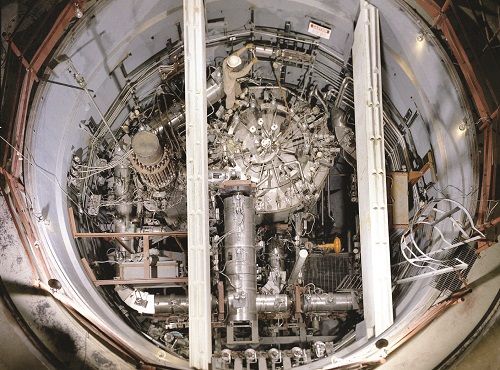
PFBR within Bharat National Resilience Objectives
Within the framework of Bharat National Resilience Objectives, the Prototype Fast Breeder Reactor functions as a systemic integrator aligning energy security, industrial capability, and strategic autonomy within a unified national architecture where technological depth directly reinforces national preparedness. What long-term research and engineering development are set to achieve is the capacity to convert limited uranium inputs into a progressively expanding fissile resource base through breeding mechanisms, strengthening long-term energy security while reducing exposure to external fuel dependencies and geopolitical disruptions. The remarkable contribution of India’s nuclear scientists is visible in building an indigenous ecosystem where advanced materials, precision manufacturing, and complex engineering supply chains converge around a single strategic asset, generating spillover capability across defence, aerospace, and high-technology sectors requiring comparable technical sophistication. It is for India’s policy establishment to position such infrastructure as a multiplier of national capability, where energy systems are designed not in isolation but as integrated components of industrial growth and strategic preparedness. What the Government of India is sustaining is the linkage between technological depth and national resilience through continued investment and institutional support, increasingly positioning the reactor as a cohesive node within a broader resilience framework where resource optimisation, industrial expansion, and strategic capability operate in convergence.
Evolving Policy, Legal, and Institutional Frameworks
India’s nuclear expansion is increasingly shaped by an evolving policy, legal, and institutional framework balancing scale, efficiency, and strategic control, marking a gradual shift from a purely state-driven model toward a more adaptive governance structure while retaining sovereign oversight over critical functions. What long-term institutional development needs to achieve is the consolidation of a coordinated policy ecosystem where capacity addition is supported through standardised reactor designs, improved execution processes, and integrated planning across fuel supply, waste management, and grid systems, enabling expansion without fragmentation. The remarkable contribution of India’s nuclear scientists can be reinforced by institutional mechanisms that translate laboratory advancements into deployable national infrastructure, while India’s policy establishment must address capital intensity and long gestation challenges through calibrated private participation in manufacturing, construction, and supply chains, strengthening execution efficiency without diluting sovereign authority over safety, security, and the fuel cycle. What the Government of India is aligning is domestic capability with selective international cooperation, expanding access to advanced technologies and diversified fuel pathways while preserving strategic autonomy, reinforcing a governance framework where nuclear expansion proceeds at scale under firm national control aligned with long-term security and national priorities.
Conclusion
The operational progression of advanced nuclear systems, led by the Prototype Fast Breeder Reactor and the national three-stage programme, reflects a decisive phase in India’s strategic evolution where energy, technology, and national capability are being reorganised under shifting geopolitical conditions and intensifying climate imperatives. What long-term research and engineering development have achieved is movement toward greater control over the nuclear fuel cycle, where domestic resources, particularly thorium, are positioned to sustain future energy systems while reducing exposure to volatile global fuel markets and external supply dependencies. The remarkable contribution of India’s nuclear scientists is evident in sustaining technological continuity and translating complex reactor science into operational national infrastructure, while India’s policy establishment must aim to integrate this capability with critical infrastructure development, resilient manufacturing, and secure supply chains recognising the convergence of energy security with industrial strength. What the Government of India is advancing is the steady expansion of nuclear capacity supported by institutional reforms and technological alignment with national priorities, increasingly embedding nuclear energy within climate commitments as a stable low-carbon pathway that supports economic growth without compromising grid reliability or industrial continuity, envisioning a future where nuclear capability, strategic manufacturing, and resilient infrastructure operate in durable convergence shaping a self-reliant and future-ready national system.

DR. PADMALOCHAN DASH
(The content of this article reflects the views of writer and contributor, not necessarily those of the publisher and editor. All disputes are subject to the exclusive jurisdiction of competent courts and forums in Delhi/New Delhi only)

















.jpg)




Leave Your Comment