


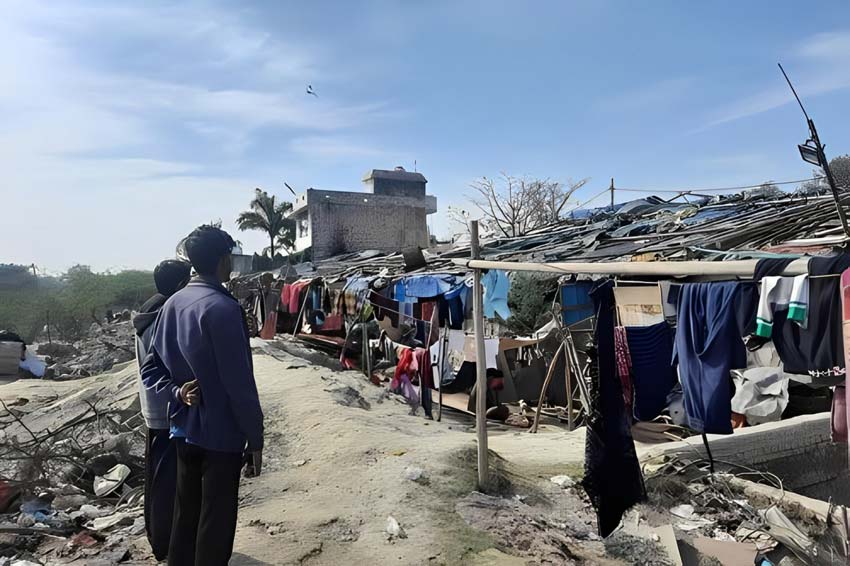
The recent altercation between Bangladeshi and Rohingya infiltrators and the Delhi Police in the Yamuna slums is a stark reminder of the dangers posed by unchecked illegal immigration. Reports indicate that law enforcement faced resistance while conducting verification and questioning, leading to clashes that necessitated immediate preventive action. This incident is not an isolated one but a direct consequence of years of political appeasement and misplaced priorities by the previous Congress and AAP governments in Delhi. By allowing these illegal settlers to proliferate across the capital, these administrations have directly contributed to the deteriorating law and order situation, endangering the lives of law-abiding residents.
The influx of illegal Bangladeshi and Rohingya migrants into Delhi has been a longstanding issue, with successive governments choosing to turn a blind eye rather than taking decisive action. Instead of implementing strict border controls and deportation measures, the Congress-led governments in the past adopted a policy of appeasement, granting these infiltrators unofficial sanctuaries in various parts of the capital. The AAP government, following a similar trajectory, has not only failed to curb their spread but has also provided them with essential amenities, indirectly legitimizing their illegal stay. This soft approach has emboldened these groups, who now operate in well-knit networks, engaging in a range of illicit activities, from petty crimes to organized criminal syndicates.
Government data clearly shows that Bangladeshi and Rohingya infiltrators have played a significant role in the rising crime rates in Delhi. Reports from various law enforcement agencies highlight their involvement in burglaries, human trafficking, drug peddling, and even violent crimes such as murder and assault. The Yamuna slums and other illegal settlements have become hotbeds of criminal activities, where law enforcement often faces stiff resistance during raids. These areas function as safe havens for criminals who take advantage of the administrative loopholes created by past governance failures.

The role of these illegal migrants in the Delhi riots of 2020 further underscores the security threat they pose. Investigative reports and intelligence inputs suggested that many Bangladeshi and Rohingya infiltrators were actively involved in the violence that rocked the national capital. Their presence in riot-hit areas, participation in mob violence, and involvement in arson and destruction of public property showcased the deeper dangers of unchecked illegal immigration. Their networks, allegedly backed by external anti-India elements, played a key role in escalating tensions and disrupting communal harmony. The failure of the AAP government to act decisively against these elements before the situation spiraled out of control further highlighted its administrative incompetence and misplaced priorities.
The growing insecurity in the capital is not just a consequence of the presence of these illegal immigrants but also of the political unwillingness to take decisive action against them. The AAP government, despite repeated warnings from security agencies, has continued to downplay the threats posed by these infiltrators. Instead of prioritizing the safety of Delhi's law-abiding citizens, it has chosen to extend welfare benefits to these groups, further encouraging their illegal stay. This has not only burdened the city’s resources but has also created an environment where crime flourishes unchecked.
Furthermore, the demographic shift caused by this unchecked infiltration has led to increased social tensions, affecting the peace and stability of local communities. Residents in affected areas have frequently reported feeling unsafe, citing incidents of harassment, theft, and gang-related activities. The presence of illegal settlers has also had economic repercussions, with local businesses suffering due to rising extortion and illegal encroachments. These infiltrators, having no legal standing, often engage in unauthorized activities that undercut the livelihoods of lawful residents.
The Delhi Police, now under renewed directives, have intensified their crackdown on these infiltrators through patrolling drives, arrests, and the seizure of illegal weapons. However, these measures, while necessary, are merely reactive and do not address the root cause of the issue. A long-term solution requires strong political will, including stricter border controls, a robust deportation policy, and stringent laws to prevent unauthorized settlements. The central government has taken steps towards addressing the issue, but its effectiveness is often hindered by local political resistance.
The reality remains that Delhi’s increasing crime rates are not just a matter of poor policing but a direct result of years of political negligence and misplaced priorities. If the city is to be made safer, it is imperative that past mistakes are corrected and that a firm stance is taken against illegal infiltration. The safety and security of Delhi’s residents must take precedence over politically motivated leniency, ensuring that the capital remains a city governed by law and order rather than by lawlessness and appeasement.
Uday India Bureau














Leave Your Comment