


India, a country renowned for its diverse and rich cultural heritage, has long been shaped by its deeply rooted Hindu traditions. Hinduism, which forms the religious foundation for nearly 80% of India's population, is not just a belief system but a way of life that transcends religious rituals and encompasses philosophy, culture, and ethics. Over millennia, the Hindu civilization has withstood numerous invasions, foreign rule, and social upheavals, yet it has remained resilient. However, recent developments—both political and social—pose significant challenges to the unity of Hindus, both in terms of religious identity and caste dynamics.
Recent attacks on Hindu festivals and the resurgence of divisive politics threaten not only the social fabric but also the religious harmony within the community. Given these circumstances, Hindu unity is not merely an abstract concept; it has become an urgent necessity for preserving the very ethos that has shaped India's identity for centuries. This article delves into the different aspects of why Hindu unity is crucial today, including the external threats to Hindu traditions, the internal caste divisions, and the political strategies that are widening these gaps.
External Threats: Attacks on Hindu Festivals
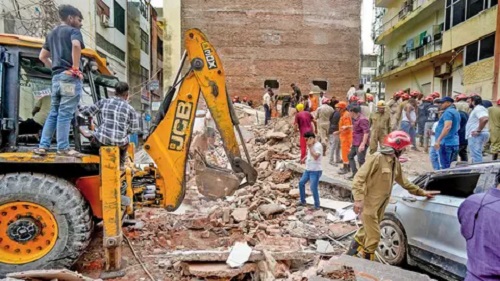
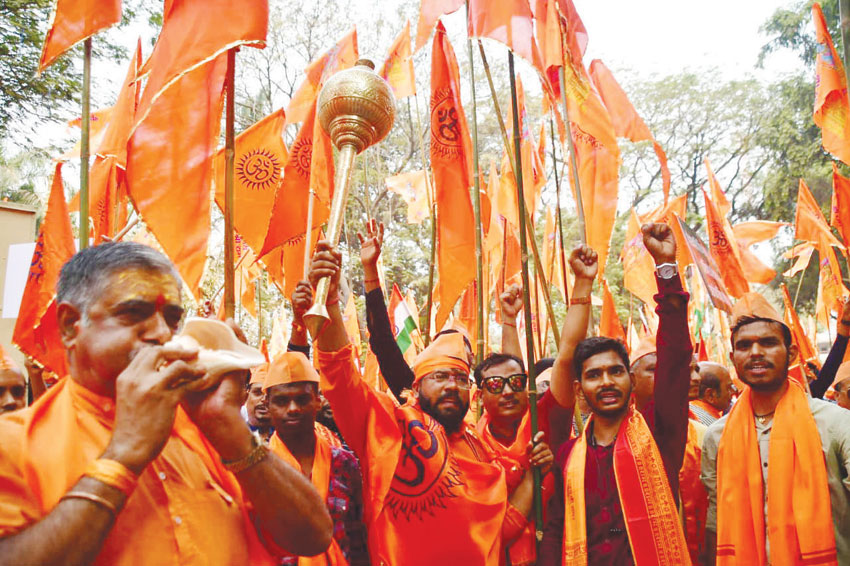
In recent years, India has witnessed a growing number of incidents where Hindu festivals and religious practices have come under attack. While religious tolerance has been a hallmark of Indian society, the targeted disruptions during Hindu celebrations like Holi, Diwali, Ram Navami, and Dussehra raise serious concerns. These festivals, which are integral to Hindu culture and spiritual identity, have become flashpoints for communal tensions.
The attacks range from violent disruptions to the demonization of Hindu customs. For instance, certain environmental or animal rights groups selectively target festivals like Diwali (citing pollution concerns) or Holi (focusing on water wastage), while ignoring similar issues during other religious festivals. The imbalanced criticism has led to a growing sentiment within the Hindu community that their traditions are under siege. The secular narrative of “equal respect for all religions” seems increasingly skewed against Hindus, especially when media and political discourse prioritize minority appeasement.
Moreover, in several regions, religious processions during Hindu festivals have been met with violence or forced restrictions. This external suppression of religious expression only serves to deepen the wounds of historical trauma, making Hindu unity not only desirable but also necessary for asserting their right to cultural and religious freedom.

The Role of the Media and Public Discourse
The portrayal of Hindus and Hinduism in mainstream media has also contributed to a sense of alienation. Some sections of the media, particularly in the urban intellectual circles, often paint Hinduism as regressive or backward. This negative stereotyping not only distorts the understanding of Hindu culture but also adds to the polarization within society. Media narratives are often driven by vested interests, which either vilify Hindu traditions or present them in a one-dimensional light. Festivals are projected as environmental hazards, traditional rituals are criticized as oppressive, and even temples are often painted as centers of superstition rather than spirituality.
This sustained attack on Hindu identity through selective criticism not only fuels resentment within the Hindu community but also weakens the sense of collective cultural pride. A media environment that encourages skepticism towards one’s own heritage only fragments the Hindu society further.
The Challenge of Caste Divisions
One of the most enduring challenges to Hindu unity is the caste system. Historically, the caste structure evolved as a form of social organization. However, over time, it became rigid and discriminatory, leading to social hierarchies that are deeply entrenched in the collective consciousness of the community. These divisions have been exploited by political forces to fragment Hindu society, thereby weakening its ability to unify around common cultural and religious values.
While Hinduism itself promotes the idea of oneness, the practice of caste-based discrimination has been a significant blot on the community. Political parties, particularly the Congress and various regional outfits, have often played the caste card for electoral gains. By offering caste-based quotas and reservations, they have deepened the divisions, turning different castes into vote banks. Instead of promoting social equality and upward mobility, these measures have fostered resentment between upper and lower castes, and even within the so-called "lower" castes.
In recent times, the Congress party has been accused of inflaming caste divisions further, especially through its focus on policies like caste-based census and reservation politics. Such divisive policies risk turning caste groups against each other, diluting the broader Hindu identity. The “divide and rule” strategy, which has its roots in colonial times, has found new expression in the caste politics of modern India. This threatens to undo the unifying fabric that Hinduism inherently offers—a sense of universal brotherhood, or “Vasudhaiva Kutumbakam.”
The Role of Caste-Based Violence and Resentment
Caste-based violence continues to be a serious issue in several parts of India, often leading to tensions between communities. Dalit groups, in particular, have been subjected to discrimination and violence, while upper-caste groups feel increasingly marginalized due to affirmative action policies. In this volatile atmosphere, political actors often find it convenient to fan the flames of caste resentment to secure their voter base.
For Hindu unity to become a reality, it is essential to confront this caste-based disunity head-on. Leaders within the Hindu community must champion reform, encouraging the erasure of caste-based barriers while promoting equality and fraternity across all sections of society. The teachings of saints like Swami Vivekananda, who envisioned a united Hindu society free from casteism, should be revived and internalized.
Political Exploitation of Caste Divisions
In the political arena, the Congress party and several regional parties have strategically used caste-based politics to divide Hindus. The rise of caste-based parties in states like Uttar Pradesh and Bihar, for instance, has turned elections into contests of caste allegiances rather than ideological or policy-driven debates. While caste-based reservations have indeed helped lift certain communities out of poverty, they have also entrenched divisions by creating a competition between different castes for limited resources and political power.
The Congress party’s recent calls for caste-based enumeration in a nationwide census could exacerbate these divisions further. While proponents argue that such a move would allow for better-targeted welfare programs, critics see it as a dangerous attempt to fracture Hindu society into smaller, more easily manageable groups.
Caste-based enumeration risks reducing individuals to their caste identity alone, rather than viewing them as part of the larger national and religious community. This reductionist approach feeds into a divisive narrative that pits one caste against another, while undermining the broader unity that is essential for any religious or cultural community to thrive.
Historical Precedents of Hindu Unity
The concept of Hindu unity is not new. Historically, Hindu kings and kingdoms have rallied together in times of foreign invasion and existential threats. The Marathas, under the leadership of Shivaji Maharaj, united various Hindu castes to resist the Mughal Empire. Similarly, in the 19th and 20th centuries, reformers like Dayanand Saraswati and social movements like the Arya Samaj sought to eradicate caste-based divisions and unite Hindus against colonialism.
The success of the Indian independence movement itself owes much to the solidarity of Hindus from different castes and regions. Leaders like Mahatma Gandhi, though a devout Hindu, worked to uplift the Dalits and other marginalized groups. At the same time, Hindu organizations like the Rashtriya Swayamsevak Sangh (RSS) and the Hindu Mahasabha played crucial roles in emphasizing the cultural unity of Hindus across caste lines.
If Hindu unity could be achieved during times of foreign oppression and colonization, it is imperative that this unity be reignited today when the internal and external challenges are equally formidable.
The Role of Religious Leaders in Bridging Divides
Religious leaders and spiritual institutions have an essential role to play in promoting Hindu unity. The vast network of Hindu temples, ashrams, and spiritual centers can serve as places where people from different castes and regions come together in worship, transcending their social identities.
Prominent spiritual leaders, like the Shankaracharyas, the heads of major Hindu sects, and modern gurus like Sri Sri Ravi Shankar and Sadhguru, have spoken out against caste discrimination and have called for unity within the Hindu fold. These voices are critical in shaping the discourse around caste and unity because they wield significant influence over millions of followers.
Moreover, Hindu religious practices inherently promote inclusivity. Pilgrimages to holy sites like Varanasi, Haridwar, Rameswaram, and Puri draw people from all walks of life, who come together in worship and devotion. Festivals like Kumbh Mela, which are among the largest religious gatherings in the world, see millions of Hindus from different castes and regions coming together in a collective expression of faith. These events, which are symbolic of the unity in diversity within Hinduism, should be celebrated and promoted as models for societal cohesion.
The Need for Cultural and Educational Reforms
Another important aspect of promoting Hindu unity is through cultural and educational reforms. The younger generation needs to be taught about the philosophical richness and inclusivity of Hinduism. The ancient Indian scriptures, like the Vedas and Upanishads, emphasize the oneness of all beings. The Bhagavad Gita, one of the most revered texts in Hinduism, speaks of the essential divinity present in every individual, regardless of caste or social standing.
Educational curricula need to reflect these values, focusing on Hinduism’s inclusive and humanistic aspects. Schools and universities should promote an understanding of Hindu philosophy that goes beyond rituals and ceremonies, emphasizing the deeper ethical and moral teachings that foster unity and social harmony.
Hindu organizations and religious leaders should also engage with the global Hindu diaspora, which plays an increasingly significant role in shaping India’s cultural and political discourse. The diaspora, which is often more progressive in its views on caste, can serve as a bridge to unite Hindus across geographic and social divides.
Political Reforms and the Need for Leadership
For Hindu unity to be achieved, political reforms are equally necessary. The Indian political system has, for far too long, thrived on the fragmentation of society into caste and religious vote banks. Leaders who genuinely seek to unite Hindus must rise above petty caste-based politics and focus on the larger issues that concern the community, such as economic empowerment, cultural preservation, and national security.
The Bharatiya Janata Party (BJP) has made strides in promoting Hindu unity through its emphasis on Hindutva, a form of cultural nationalism that seeks to transcend caste divisions and unite Hindus under a common cultural and religious identity. However, critics argue that the party has not done enough to address the deep-rooted caste inequalities that continue to divide Hindu society.
There is a need for new leadership within the Hindu community, one that can balance the quest for social justice with the larger goal of cultural unity. Leaders must promote policies that uplift marginalized groups while also fostering a sense of collective pride and belonging among all Hindus.

By NILABH KRISHNA
(The content of this article reflects the views of writers and contributors, not necessarily those of the publisher and editor. All disputes are subject to the exclusive jurisdiction of competent courts and forums in Delhi/New Delhi only)



















Comments (1)
V
Good,make book onthis pls