


Virgin land is terrestrial space in a primordial, unaltered state where soil, vegetation, hydrology, and biodiversity remain substantially intact because no sustained human activity—whether agricultural, industrial, infrastructural, or extractive—has altered its essential ecological composition. It serves as a biophysical archive of natural processes, a reservoir of potential economic value, and a contested arena where legal frameworks, indigenous rights, and conservation science meet geopolitical, developmental, and climate imperatives. Its classification is therefore not just descriptive but a normative decision—determining whether it is preserved under ecological redlines, integrated into sustainable-use regimes, or commodified through market instruments such as carbon offsets—while its governance sits at the intersection of ecological integrity, socio-economic advancement, and the political economy of resource sovereignty.
Defining Virgin Land in the Indian Context
In India, the purview of virgin land must include hyper-arid deserts, saline flats, Himalayan pastures, unclassed forests, mangrove fringes, and fragile coastal belts that have avoided sustained cultivation, industrial exploitation, or infrastructural transformation. While retaining core biophysical attributes despite occasional subsistence or pastoral use, their “pristine” state often results from remoteness, low economic valuation, or inhospitable climates rather than deliberate policy, placing them between ecological potential and economic marginality.
Reconceptualising Road-side and Rail-side Barren Lands as Virgin Land
Road- and rail-side barren strips, though often dismissed as marginal, can meet an expanded definition of virgin land when assessed for ecological potential, historic non-use, and governance neglect. These uncultivated corridors retain soil structure and microhabitats, and their administrative obscurity—managed in isolation by transport agencies—has shielded them from rapid reclassification. Acting as biodiversity pathways, pollinator habitats, and erosion buffers, they could be integrated into national ecological networks, roadside afforestation, and climate adaptation schemes under the Green Highways Policy or compensatory afforestation. Recognising them as virgin land would convert overlooked margins into functional ecological assets.

Bovine Commons and Pasture
Dynamics of Virgin Land
Virgin pastures—uncultivated land with native vegetative cover—support India’s cow-centric pastoral–agricultural systems, where livestock convert wild biomass into milk, manure, urine, and draught power. Native grasses and legumes provide nutrient-rich fodder without chemical inputs, sustain soil microbial diversity, and replenish fertility through cyclical organic deposition. This aligns with Gochar lands—community-managed commons protected by custom or law—facilitating rotational grazing that preserves cropland productivity and herd health.
Outputs from this system include milk as a staple and market commodity, gobar for manure and biogas, gomutra for traditional medicine and biopesticides, and preservation of indigenous breed resilience. Threats arise from encroachment, land conversion, and the shift toward centralised Gaushalas, which risk breaking the ecological link between cattle and landscape. Reclassifying and managing these areas as protected pastoral commons with enforceable grazing rights and regeneration mandates would sustain biodiversity-linked productivity and embed them within a climate-adaptive rural economy.
The Maritime–Wetland Dynamics of Virgin Land
Virgin land in maritime and wetland contexts forms a unique ecological and governance frontier where terrestrial and aquatic systems converge—in landscapes such as offshore islands, coastal islets, estuarine mudflats, mangrove belts, salt marshes, floodplains, and inland lakeshores. Often inaccessible and historically spared from large-scale development, these areas sustain complex habitat mosaics—from migratory shorebirds and endemic reptiles to fish nurseries and invertebrate colonies—while delivering critical services like shoreline stabilisation, storm-surge buffering, carbon sequestration, and hydrological regulation. Their “virgin” character stems less from the absence of cultivation than from the persistence of intact geomorphological and hydrological processes, such as tidal flushing, sediment accretion, and seasonal flooding, which underpin ecosystem productivity and resilience.
Yet these systems face mounting pressures from tourism infrastructure, aquaculture, sand mining, port expansion, and climate-driven sea-level rise, often without comprehensive ecological valuation or adaptive governance. On isolated islands, legal invisibility in mainstream planning leaves them open to fragmented jurisdictional claims, especially in archipelagos like the Andaman & Nicobar Islands or Lakshadweep, where coastal regulation overlaps with defence, tourism, and fisheries mandates. Wetlands, particularly Ramsar-listed or ecologically sensitive systems, have seasonally shifting boundaries between “land” and “water,” complicating classification yet sustaining traditional livelihoods like artisanal fishing, flood-recession farming, and fodder harvesting. Recognising these spaces as integral to both terrestrial and aquatic ecosystems requires governance that links coastal zone management, wetland conservation, and community stewardship, while embedding climate adaptation to preserve geomorphic and ecological functions. These are dynamic, intertidal or seasonally inundated commons whose resilience depends precisely on their liminality, forming a foundation for both human and non-human coastal–fluvial systems.
The Green Dynamics of Virgin Land
Transforming virgin land—terrain “never cultivated or significantly altered,” as per the FAO—into functional green landscapes involves coordinated hydrological engineering, ecosystem restoration, and socio-economic integration. The goal is not simply afforestation but rebuilding interconnected ecological networks where hydrology, biodiversity, productivity, and conservation co-evolve. Often, water systems are the first to be restored, as in the Indira Gandhi Canal Project in Rajasthan, which brought Himalayan-fed water to the Thar Desert, shifting sand-dune dynamics toward irrigated agriculture and shelterbelt forests. Productivity then grows through site-compatible species that stabilise soils, fix nitrogen, and create microhabitats, as in China’s Loess Plateau rehabilitation, where terracing, re-vegetation, and managed grazing revived biomass and watershed function.
These successes rely on scientific alignment of soil–water–vegetation systems and governance structures ensuring long-term upkeep. Yet they highlight tensions between ecological authenticity and engineered productivity: hydrological alteration and species introduction can speed recovery but risk changing native biodiversity patterns if not ecologically attuned. Politically, large-scale greening increasingly intersects with climate adaptation finance, carbon markets, and corporate social responsibility, as in Israel’s Negev Desert afforestation under the Keren Kayemeth LeIsrael programme. Without inclusive governance, such commodification risks displacing local tenure systems and eroding traditional ecological knowledge. The green dynamics of virgin land should thus be seen as mediated ecological construction—grounded in hydrological stability, biodiversity gains, and equitable resource access—where human agency reanimates dormant landscapes without undermining their resilience or cultural legitimacy.
Eco-Engineering Dynamics of Virgin Lands: Towards the Panchatatwa Multiplier and Purifier
The Panchatatwa Multiplier and Purifier concept rests on the premise—scientifically validated and philosophically rooted—that the five elemental constituents of nature—earth (prithvi), water (jal), fire (agni), air (vayu), and space (akash)—must co-exist in intrinsic equilibrium, shaped by long-term ecological processes, for a landscape to function as a true amplifier and purifier of life-support systems. In such conditions, soil fertility, hydrological integrity, solar–thermal flows, atmospheric quality, and spatial continuity operate without chronic deficit or anthropogenic distortion, enabling multiplier dynamics—where the integrity of one element enhances the others—and purifier dynamics—where natural processes absorb, filter, and neutralise pollutants without mechanised intervention.
Because many virgin lands have only partial elemental balance due to climatic, geological, or historical factors, eco-engineering’s primary mandate is to restore rather than impose productivity-driven transformations, ensuring intervention is restorative and harmonising. In this framework, prithvi sustains nutrient cycles and root biodiversity; jal recharges aquifers and regulates water quality; agni drives photosynthetic productivity; vayu purifies air and moderates microclimates; and akash maintains habitat connectivity and species movement. Regenerative, biomimetic design—rainwater harvesting that mimics natural infiltration, bio-fencing with indigenous flora to stabilise soils and sequester carbon, and ecological corridors that preserve airflow and thermal gradients—ensures technology amplifies natural synergies.
Restoring one element, such as jal through wetland rehydration, can enrich prithvi soil fertility, boost agni-driven biomass, improve vayu quality, and sustain akash continuity. The re-established purifier dynamic enables landscapes to buffer climatic extremes, absorb pollutants, and neutralise stressors via biological and geochemical pathways without high-energy dependency. Viewed through the Panchatatwa lens, eco-engineering becomes a strategy for reframing virgin lands as strategic ecological infrastructure, where every enhancement strengthens rather than diminishes cyclical integrity, resilience, and adaptive capacity. Success, however, depends on preserving elemental balance—the philosophical and ecological foundation for sustainable virgin land management.
Virgin Land–to–Organific Farming Zones and India’s Potential to Emerge as the Global Organic Food Basket
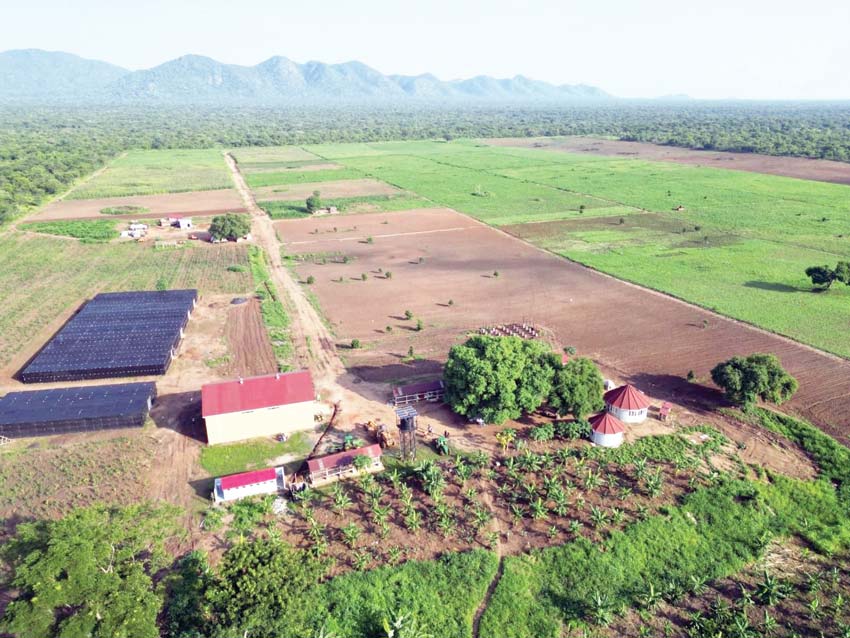
Virgin Land–to–Organific Farming Zones offer a paradigm where agriculture, horticulture, and fruit–forest systems evolve in harmony with elemental and ecological integrity rather than replacing it. These landscapes—largely untouched by industrial agriculture—retain intact soils, rich microbial diversity, balanced hydrology, and embedded biodiversity. Under organific regimes, they can yield nutrient-rich produce with minimal ecological footprint, free from chemical dependency. Integrated horticulture could combine perennial fruit trees, nitrogen-fixing shrubs, and seasonal crops, while fruit–forest agroforestry would act as perennial carbon sinks, sustain pollinators, enhance water infiltration, and buffer climate extremes.
Policy integration of such zones into food security and climate adaptation strategies could create ecological production buffers, stabilise rural livelihoods, and ease pressure on degraded farmlands. Internationally, alignment with FAO agroecology frameworks, UNCCD land degradation neutrality targets, and CBD biodiversity goals could open access to climate finance, biodiversity credits, and premium organic markets. The model’s potential is both productive and restorative, offering a replicable template that preserves Panchatatwa balance while monetising ecological assets sustainably.
India’s potential to lead the global organic food market rests on ecological diversity, agrarian heritage, resilient indigenous cultivars, and shifting global diets. Many regions—from arid interiors and high-altitude meadows to forest margins and wetland fringes—have avoided chemical-intensive farming, enabling certified organic production without costly restoration. This advantage is rooted in two foundations: a vast agroecological range, from semi-arid millet belts to spice-rich humid tropics, cold deserts, and fully organic states like Sikkim; and deep-rooted agrarian knowledge systems, including polycropping, integrated livestock–vegetation cycles, and botanical pest control, which align with organic certification and sustain productivity under variable conditions.
India’s genetic reservoir of landraces—adapted through farmer selection to withstand pests, diseases, and climatic variability—ensures stable yields without synthetic inputs and thrives across diverse environments, insulating production from global input volatility. Realising this potential demands aligning these biological and cultural assets with robust institutions and markets. Zoning virgin lands for specialised production—horticultural clusters, fruit–forest mosaics, grain–legume corridors—would diversify outputs and spread climatic and market risks. This must be paired with streamlined certification, strong traceability, and compliance with phytosanitary standards to access premium markets in Europe, East Asia, and North America. Cooperative farmer networks linked to biodiversity credits and climate finance can offset capital barriers and prevent regression to chemical farming.
By uniting virgin land’s natural balance with indigenous crop resilience and governance prioritising ecological stability over extraction, India can shift from a fragmented organic producer to a strategic global supplier. This transition would raise rural incomes, enhance climate diplomacy, preserve biodiversity, and assert sovereign control over food systems—establishing India’s ecological capacity as both an economic asset and a pillar of global environmental leadership.
Virgin Land as Strategic Ecological Infrastructure: Global Policy and Legislative Typology
Viewed through policy, legislation, and governance, virgin land’s ecological value is inseparable from the legal and institutional frameworks that determine its preservation, conversion, or sustainable use. Internationally, instruments such as the Convention on Biological Diversity (CBD), UN Convention to Combat Desertification (UNCCD), and Paris Agreement situate the safeguarding of virgin ecosystems within Nationally Determined Contributions (NDCs), making their conservation a measurable climate action. Yet, national translations of these obligations remain uneven. Statutory approaches vary: Brazil’s Forest Code, Canada’s Boreal Forest Conservation Framework, Russia’s Land Code, and Australia’s Native Title Act offer explicit safeguards, while India relies on indirect protection via the Forest Rights Act and Wildlife Protection Act. Effective governance requires statutory recognition, procedural safeguards, and integration of indigenous stewardship rights as stabilising mechanisms.
Towards a National Policy
on Virgin Land for India
A coherent Indian policy must recognise virgin landscapes—deserts, meadows, unclassed forests, riverine islands, mangroves, coastal islets—as a strategically vital yet underdefined ecological category. Statutory codification should define virgin land in ecological, hydrological, and biodiversity terms, integrating the Panchatatwa framework. Policy should rest on three pillars: (1) Protection through zoning, EIAs, and inclusion in biodiversity and climate targets; (2) Restoration using eco-engineering to recover elemental equilibrium before productive use; and (3) Sustainable Integration of low-impact livelihoods within ecological carrying-capacity limits. Governance should feature a central Virgin Land Register, geospatial mapping, cross-ministerial coordination, and community custodianship, aligning domestic land management with global environmental obligations.
Will the Government of India Legislate a Comprehensive Legal Instrument on Virgin Land?
India currently lacks a stand-alone legal framework for virgin land, with governance fragmented across the Forest Conservation Act, Wildlife Protection Act, Forest Rights Act, Coastal Regulation Zone rules, and state revenue codes. For dedicated legislation, three enabling conditions are critical:
1. Clear definition — Ecological, hydrological, and biodiversity parameters (potentially Panchatatwa-based) to distinguish virgin land from wasteland or degraded land.
2. Strategic framing — Positioning virgin land as ecological capital vital for climate adaptation, carbon sequestration, biodiversity corridors, and disaster resilience, linked to CBD, UNCCD, and Paris commitments.
3. Institutional alignment — Consensus across ministries and policy advocacy from NITI Aayog, parliamentary committees, and civil society to unify governance under a consolidated act.
If these align, legislation could follow models like Brazil’s Forest Code or Canada’s Boreal Framework, embedding virgin land in zoning, EIA triggers, indigenous rights, and climate targets. Absent such momentum, indirect governance will persist, leaving these landscapes vulnerable. The strategic window lies in integrating virgin land into India’s next NDC update or National Land Use Policy revision, which could trigger codification within a decade if supported by climate finance and biodiversity obligations.
Conclusion: Towards a Policy–Research Convergence on Virgin Land Governance
Virgin land—whether deserts, high-altitude meadows, unclassed forests, wetlands, islands, roadside margins, or pastoral commons—is not an underutilised territorial category but strategic ecological infrastructure, integrating biodiversity reservoirs, hydrological regulators, carbon sinks, and socio-cultural stewardship systems. Globally, definitional clarity, statutory codification, and enforceable governance determine whether such landscapes are preserved, sustainably integrated, or irreversibly converted.
In India, the lack of explicit legislative recognition leaves governance fragmented, exposing intact areas to conversion pressures from infrastructure, extraction, and market-led commodification. The Virgin Land–to–Organific Farming Zones framework, coupled with positioning India as a global organic food basket, offers a pathway beyond the preservation–exploitation binary—proving ecological integrity, elemental balance, and productive use can co-exist if backed by statutory clarity, restorative eco-engineering, and indigenous stewardship integration.
Mobilising virgin lands as ecological production buffers—delivering high-nutrition yields, conserving genetic diversity, and reinforcing climate resilience—gives India both a geopolitical and economic lever. Embedding these zones into food security strategies, export promotion, and climate adaptation frameworks, while aligning with CBD, UNCCD, and Paris Agreement commitments, transforms them from peripheral assets into drivers of economic sovereignty and environmental stability.
Internationally, this model offers a transferable template for converting “idle” lands into strategic ecological assets that meet domestic livelihood needs and global market standards. It reframes virgin land as a dynamic, multifunctional resource—feeding populations, sequestering carbon, safeguarding biodiversity, and projecting soft power. In this integrated vision, Virgin Land–to–Organific Farming Zones link environmental philosophy, regenerative agriculture, and strategic policy, ensuring the last unaltered frontiers remain enduring pillars of ecological resilience, economic strength, and global environmental leadership.

Dr. Padmalochan Dash
(The content of this article reflects the views of writers and contributors, not necessarily those of the publisher and editor. All disputes are subject to the exclusive jurisdiction of competent courts and forums in Delhi/New Delhi only)















Leave Your Comment