


The Kargil War, fought between India and Pakistan from May to July 1999, remains etched in the annals of military history as a remarkable example of bravery, strategic acumen, and the indomitable spirit of the Indian Armed Forces. The war, which took place in the Kargil district of Jammu and Kashmir, saw Indian soldiers reclaiming strategic peaks infiltrated by Pakistani troops and militants. This conflict, marked by high-altitude warfare, extreme weather conditions, and intense artillery bombardments, culminated in India’s resounding victory on July 26, 1999, celebrated annually as Kargil Vijay Diwas.
The origins of the Kargil War lay in the long-standing territorial disputes between India and Pakistan, primarily over the region of Jammu and Kashmir. The Line of Control (LoC), established after the Indo-Pakistani War of 1971, served as a de facto border between the two nations. However, in early 1999, Pakistani soldiers and militants, under the guise of Mujahideen, infiltrated the Indian side of the LoC, occupying key heights in the Kargil sector. Their objective was to cut off the crucial link between Srinagar and Leh, disrupt Indian supply lines, and internationalize the Kashmir issue.
In May 1999, local shepherds reported suspicious activities in the Kargil region, leading to initial reconnaissance by the Indian Army. Upon confirmation of large-scale intrusions, the Indian Army launched "Operation Vijay" to evict the infiltrators. The task was formidable, as the intruders had occupied well-fortified positions at altitudes ranging from 16,000 to 18,000 feet, providing them a significant tactical advantage.
Artillery: The Game Changer
One of the pivotal factors in the success of Operation Vijay was the extensive use of artillery by the Indian Army. Artillery regiments played a crucial role in softening enemy positions, destroying bunkers, and providing covering fire for advancing infantry units. The Bofors FH-77B howitzers, in particular, proved to be highly effective, delivering accurate and devastating firepower.
Daily, approximately 3,300 artillery rounds were fired at Pakistani-held positions, totaling around 293,600 rounds over the course of the three-month-long conflict. This relentless bombardment created chaos and disarray in the enemy ranks, significantly degrading their combat capabilities. The psychological impact of constant shelling also caused severe stress and sleepless nights for the Pakistani soldiers, further undermining their morale.
The Bravery of Indian Soldiers
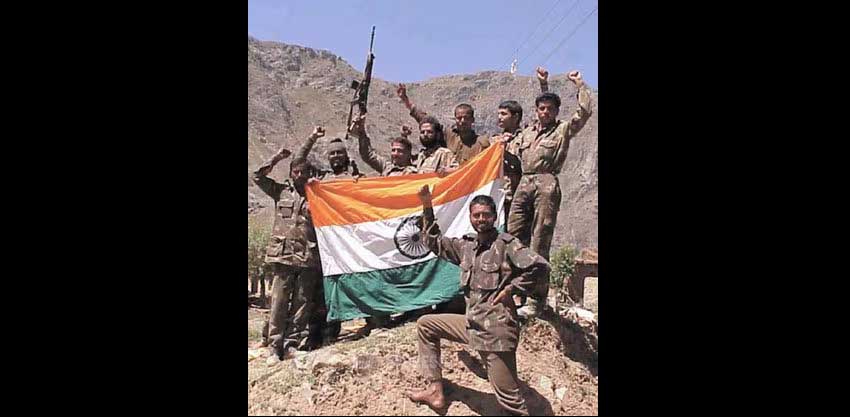
While artillery played a critical role, the ultimate success of Operation Vijay was a testament to the bravery and determination of the Indian soldiers. Despite the challenging terrain, adverse weather conditions, and the enemy’s entrenched positions, Indian troops launched numerous daring assaults to reclaim the occupied peaks.
Heroes emerged from the ranks, displaying extraordinary courage and selflessness. Captains VikramBatra, AnujNayyar, and Manoj Kumar Pandey, among others, led their men in ferocious battles, often engaging in close-quarters combat to oust the intruders. Their valor and sacrifices became legendary, inspiring the entire nation and earning them the highest military honours.
Political Leadership and Military Strategy
The political leadership of the time, under Prime Minister AtalBihari Vajpayee, played a crucial role in the successful prosecution of the war. The government adopted a measured and strategic approach, providing the armed forces with the necessary autonomy and resources to execute their operations effectively.
Prime Minister Vajpayee’s decision to give the military a free hand allowed the Indian Army to plan and execute operations without undue interference. This autonomy was instrumental in enabling rapid decision-making and dynamic responses to evolving battlefield conditions. The government also ensured that diplomatic efforts complemented military actions, isolating Pakistan internationally and garnering global support for India’s stance.
The Endgame: Victory at Kargil
By mid-July 1999, Indian forces had successfully recaptured most of the infiltrated positions. The decisive phase of the conflict saw intense fighting in key areas such as Tololing, Tiger Hill, and the Dras and Batalik sectors. Each victory was hard-fought, involving meticulous planning, precise execution, and immense sacrifices.
The turning point came with the recapture of Tiger Hill, a strategic peak that had provided the enemy with a commanding view of the surrounding areas. The Indian Army’s determined assault on Tiger Hill, backed by relentless artillery fire, culminated in its liberation on July 4, 1999. This victory marked a significant blow to the enemy’s morale and operational capabilities.
Subsequent operations continued to clear remaining intrusions, and by July 26, 1999, Indian forces had regained control of all the occupied territory. The war officially ended with Pakistan withdrawing its remaining troops under international pressure, and Kargil Vijay Diwas was declared to commemorate this hard-fought victory.
The Kargil War was a defining moment in India’s military history, showcasing the resilience, bravery, and strategic acumen of the Indian Armed Forces. The relentless artillery bombardment, coupled with the indomitable spirit of Indian soldiers, proved decisive in reclaiming the occupied heights and securing victory.
The political leadership’s decision to grant the military a free hand, along with effective coordination between diplomatic and military efforts, played a pivotal role in the successful outcome of the conflict. As the nation commemorates Kargil Vijay Diwas, it pays tribute to the courage and sacrifices of the soldiers who fought valiantly to protect India’s sovereignty and territorial integrity. Their legacy continues to inspire future generations, reminding us of the price of freedom and the valor required to defend it.
Uday India Bureau














Leave Your Comment