


In June 2025, the G7 Summit held in Kananaskis, Canada, marked a significant step in addressing the escalating global wildfire crisis through the adoption of the Kananaskis Wildfire Charter. This groundbreaking initiative, signed by the G7 nations and supported by five non-G7 countries, reflects a unified commitment to combat the devastating effects of wildfires, which have become more frequent and severe due to changing climatic conditions. This article explores the details of the charter, the countries involved, India’s role, and the broader impact of wildfires on biodiversity and the environment, while critically examining the omission of climate change in the charter’s narrative.
The Kananaskis Wildfire Charter: Purpose and Provisions
The Kananaskis Wildfire Charter is a pioneering agreement aimed at fostering global cooperation to prevent, fight, and recover from wildfires. The charter responds to the increasing frequency and intensity of wildfires across every forested continent, which have overwhelmed national resources, endangered lives, destroyed ecosystems, and incurred billions in damages. The G7 leaders, in their joint statement, emphasized a "whole of society" approach, involving governments, Indigenous communities, local organizations, academia, and the private sector to share knowledge and drive research. Key provisions include:
Prevention and Mitigation: Promoting sustainable forest management and Indigenous land management techniques, such as controlled burning, to reduce fire risks.
Response and Recovery: Enhancing access to firefighting equipment, improving data collection and sharing, and supporting community rebuilding efforts.
Global Cooperation: Facilitating interoperability among nations to provide timely assistance during wildfire crises.
The charter was signed by the G7 countries—Canada, France, Germany, Italy, Japan, the United Kingdom, and the United States—along with five non-G7 nations invited to the summit: Australia, India, Mexico, South Korea, and South Africa. This inclusion of non-G7 countries underscores the global nature of the wildfire crisis and the need for collaborative action.
India’s Role in the Kananaskis Wildfire Charter
India, as one of the non-G7 signatories, plays a supportive role in the charter, aligning with its broader environmental and disaster management strategies. India’s participation reflects its commitment to global cooperation on environmental challenges, as evidenced by its advocacy for responsible AI and digital infrastructure at the summit, which could aid wildfire monitoring and response. India’s relatively lower wildfire incidence compared to global averages is attributed to cultural practices like controlled burning for land clearance and grazing, as well as evolving fire management tactics. However, India faces its own challenges, particularly in dry forests where fire risks are projected to increase by up to 60% due to climate-driven changes in temperature and precipitation.
India’s role in the charter includes supporting initiatives for data sharing, research, and technology-driven solutions like GIS and remote sensing for wildfire risk assessment. The country’s expertise in managing fragmented forests and diverse ecosystems, such as those in Vellore, Tamil Nadu, can contribute valuable insights to global wildfire strategies. By endorsing the charter, India aligns with its G20 tech roadmap and commitments to biodiversity conservation, reinforcing its position as a leader in regional environmental governance.
Wildfires’ Impact on Biodiversity and the Environment
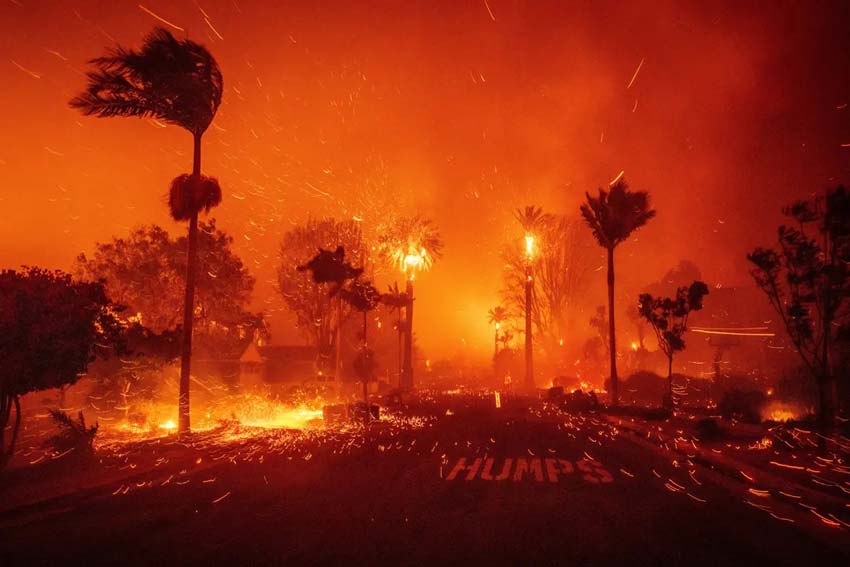
Wildfires, while a natural part of some ecosystems, have become increasingly destructive due to human activities and climatic shifts. Globally, wildfires have caused significant ecological and economic damage, with Canada alone reporting 2.6 million hectares burned in 2025, an area larger than Vermont. The 2023 Canadian wildfire season was the most destructive on record, and 2024 ranked among the worst, with “zombie fires” persisting for over two years in Alberta and British Columbia.
Biodiversity Loss: Wildfires destroy habitats, threatening species survival and disrupting ecosystem dynamics. In Canada, boreal forests, home to diverse flora and fauna, face heightened risks as fires burn hotter and longer. In India, fragmented forests, which cover 21% of the country and host rich biodiversity, are increasingly vulnerable, particularly in dry regions like the Javadhu Hills. Globally, wildfires contribute to habitat fragmentation, reducing species resilience and exacerbating extinction risks.
Environmental Degradation: Wildfires release vast amounts of carbon dioxide, worsening climate change and air quality. In 2025, smoke from Canadian wildfires traveled across oceans, affecting air quality in Northern Europe, the Mediterranean, and the United States. Toxic smoke poses health risks, prompting recommendations for air filters in affected regions. Soil erosion, water contamination, and loss of forest cover further degrade ecosystems, undermining their ability to sequester carbon and regulate climate.
Economic and Social Costs: The economic toll is staggering, with Canada’s 2024 Jasper wildfire causing $1.23 billion in insured damages. Globally, wildfires cost governments billions annually, displacing communities and straining resources. In Manitoba, 21,000 evacuees were displaced in 2025, highlighting the human cost of these disasters.
The Climate Change Omission: A Critical Oversight
A significant criticism of the Kananaskis Wildfire Charter is its failure to explicitly mention climate change, despite scientific consensus that it drives warmer, drier conditions fueling wildfires. Experts like Mike Flannigan of Thompson Rivers University argue that ignoring climate change misses the root cause of escalating fire risks. This omission may reflect political sensitivities, particularly from the United States, where climate policies face resistance. Canadian climate advocacy groups, such as Climate Action Network Canada, criticized the charter for catering to the “lowest common denominator,” undermining global climate leadership.
The absence of climate change in the charter contrasts with its inclusion in Canada’s broader G7 agenda and Prime Minister Mark Carney’s acknowledgment of climate challenges. This discrepancy suggests a missed opportunity to link wildfire management with greenhouse gas reduction, a critical step for long-term prevention. The United Nations and other sources emphasize that mitigating climate change through reduced emissions and sustainable land use is essential to curbing wildfire risks.
Moving Forward: A Call for Comprehensive Action
The Kananaskis Wildfire Charter is a vital step toward global cooperation, but its effectiveness hinges on addressing underlying causes like climate change. Integrating advanced technologies, such as satellite monitoring and AI-driven risk models, can enhance prevention and response. India’s expertise in GIS and regional fire management can inform global strategies, particularly for diverse ecosystems. However, without acknowledging and tackling climate change, the charter risks being a reactive rather than transformative solution.
In conclusion, the Kananaskis Wildfire Charter, supported by 12 countries including India, offers a framework for addressing the growing wildfire crisis. While it fosters collaboration and innovation, its silence on climate change limits its scope. Wildfires continue to devastate biodiversity, degrade environments, and incur massive costs, underscoring the need for a holistic approach that combines immediate action with long-term climate strategies. India’s role in this global effort highlights its potential to lead in environmental resilience, provided the world unites to confront the root causes of these escalating disasters.

By Viral Desai
(The author is a known Environmentalist and the pioneer of Satyagraha Against Pollution movement, viraludayindia@gmail.com )















Leave Your Comment