


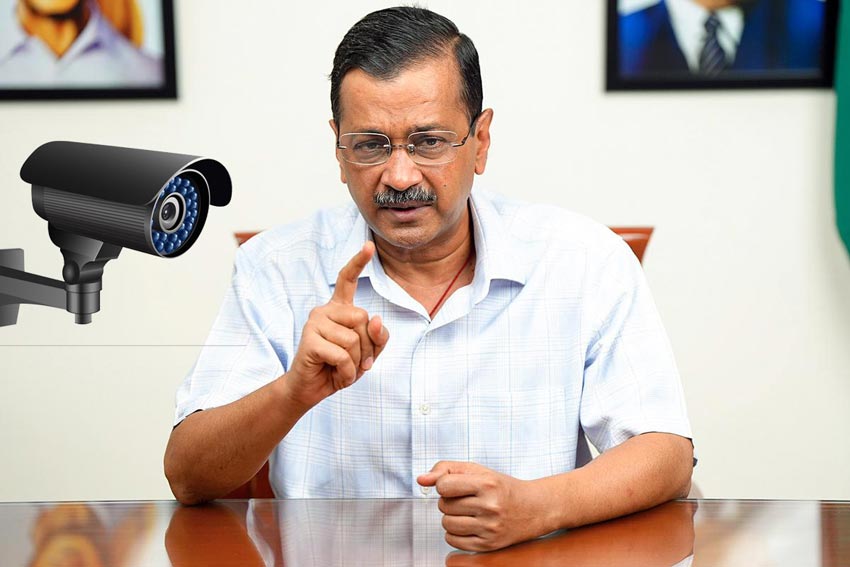
Arvind Kejriwal rose to power in Delhi with grand promises of transparency, security, and governance free from corruption. One of his major commitments was the installation of 2,000 CCTV cameras in each assembly constituency, a move purportedly aimed at enhancing public safety. However, as with many of his lofty assurances, this too turned out to be a case of deception and political maneuvering. While his government made a show of purchasing thousands of cameras with taxpayers’ money, their installation was conveniently stalled, particularly in the eight constituencies governed by BJP MLAs. This selective obstruction raises serious questions about the real intent behind the CCTV project and whether it was ever meant to be a functional initiative or just another publicity gimmick by the AamAadmi Party (AAP) to mislead the people of Delhi.
The CCTV initiative was initially welcomed by Delhi’s citizens, who saw it as a step toward better security, crime prevention, and improved law enforcement. The AAP government made a grand spectacle of rolling out the plan, showcasing it as a transformative move. However, a deeper examination reveals the cracks in Kejriwal’s claims. Despite purchasing the cameras, a substantial number were never installed, particularly in BJP-ruled constituencies. The question that naturally arises is: Where did these cameras go? If the money was spent and the equipment procured, why were these public security measures not implemented in a fair and transparent manner? This discrepancy hints at deliberate political sabotage, wherein Kejriwal’s government ensured that areas under BJP MLAs did not receive the promised CCTV coverage. Such tactics expose the AAP’s true colors—using taxpayer funds for self-serving political games while neglecting governance.
Kejriwal has built his political career on the narrative of being a messiah of clean politics, an anti-corruption crusader who supposedly stands against the very evils he now seems to practice. This CCTV scam is a glaring example of his doublespeak. The missing cameras point toward either financial mismanagement or intentional deception. If the cameras were purchased, why did the installation process stop midway? Was it because Kejriwal did not want BJP constituencies to benefit from improved security? Or was there an underhanded deal that resulted in the cameras being diverted elsewhere? Either way, the citizens of Delhi were the ones who suffered. This selective allocation of security infrastructure is not just a betrayal of public trust but also a dangerous precedent where political vendetta dictates governance.

The entire scam also raises serious concerns about accountability and transparency within the AAP government. If public money was spent on procuring cameras, then the Kejriwalled government must be answerable for where they are. However, instead of coming clean, Kejriwal and his team have skillfully dodged these questions, relying on diversion tactics and rhetoric. This is not the first instance of AAP using deception as a political tool. Time and again, Kejriwal has engaged in blame games—whether it be shifting responsibility to the Lieutenant Governor, making excuses about budget constraints, or conveniently blaming the Centre for his own government’s failures.
Moreover, Kejriwal’s refusal to implement the CCTV project fairly across Delhi reveals his larger strategy of selective governance. By ensuring that only AAP-ruled constituencies benefit from the scheme, he sought to create a false narrative of his party’s efficiency while deliberately neglecting areas governed by the then opposition. This tactic, aimed at discrediting BJP MLAs, backfired when residents of these constituencies started questioning why they were being deprived of basic security measures despite paying their taxes like everyone else.
What makes this entire episode even more shameful is Kejriwal’s ability to manipulate public perception. Despite being exposed multiple times, he has mastered the art of playing the victim while accusing others of the very corruption he indulges in. The CCTV scam is yet another testament to how Kejriwal’s politics thrives on deception, half-truths, and calculated propaganda. By deliberately stalling installations in BJP strongholds, he put political interests above public safety, proving once again that his governance model was built on optics rather than genuine development.
As Delhi’s citizens wake up to the reality of AAP’s governance failures, the question remains: How long will Kejriwal continue to fool the people with his lies? The CCTV scam is not just about missing cameras—it is about a deeper rot in the AAP government’s functioning. The misplaced funds, the unfulfilled promises, and the sheer audacity to play politics with public security expose the true face of Kejriwal’s administration. If he truly cared about the welfare of Delhi’s people, there would be no excuses—only results. Instead, Delhiites have been handed another broken promise, another betrayal, and yet another lesson in how ArvindKejriwal’s politics of deception continues to thrive.
Uday India Bureau














Leave Your Comment