


The geopolitical landscape of April 2026 is defined by a profound transition in the architecture of international mediation. As the trilateral tensions between the Islamic Republic of Iran, the State of Israel, and the United States reach a systemic inflection point, the traditional 'honest broker' model has been rendered largely obsolete. The exhaustion of previous diplomatic frameworks—including the Joint Comprehensive Plan of Action (JCPOA) and subsequent backchannel communications—has created a vacuum where only actors possessing significant material leverage and strategic autonomy can operate credibly.
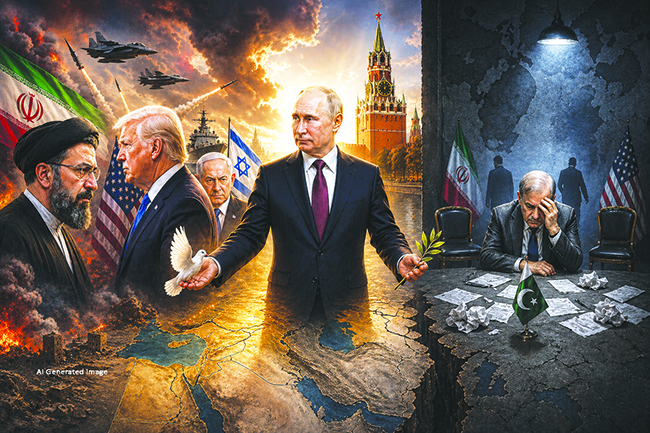
In this volatile theatre, the central paradox of 2026 is the emergence of Russia—despite its global pariah status in the West—as the primary candidate for peacemaker, while Pakistan, a historical regional bridge, faces acute diplomatic marginalisation. This article argues that the success of mediation in the 2026 crisis is predicated on 'power-based diplomacy' rather than the pursuit of perceived neutrality. Russia's capacity to mediate between Tehran, Tel Aviv, and Washington is rooted in its possession of tangible enforcement leverage and a multi-vector foreign policy. Conversely, Pakistan's failure is symptomatic of what this article terms the 'Dual Distrust Trap'—a condition wherein its strategic dependence on external patrons and its perceived lack of autonomous agency have alienated both the Iranian security establishment and the American State Department.
2. Theoretical Framework: The Changing Nature of Mediation
Traditional mediation theory, particularly within the liberal school of international relations, emphasises 'pure mediation'—an intervention where a third party holds no direct interest in the outcome and relies solely on facilitative techniques to improve communication (Zartman and Touval, 1985; Heemsbergen and Siniver, 2010). However, in the 2026 Middle East context, this model has proven categorically insufficient. The complexity of the Iran–Israel–US rivalry, characterised by nuclear-capable brinkmanship and regional proxy warfare, necessitates a form of 'Power-Based Mediation' (Bercovitch and Schneider, 2000; Vuković, 2015).
2.1 Strategic Autonomy and Power-Based Mediation
Power-based mediation is defined by the mediator's capacity to use incentives and disincentives to influence the strategic calculus of the disputants (Bercovitch and Schneider, 2000). Unlike neutral facilitators, power-based mediators are accepted precisely because they possess resources sufficient to protect the interests of parties or impose meaningful costs for non-compliance (Favretto, 2009). For any actor to be effective in this role, it must possess 'Strategic Autonomy'—the ability to act independently of the primary combatants' external patrons. Without this autonomy, the mediator is perceived as a proxy, leading to its immediate rejection by the opposing party (Vuković, 2015).
By 2026, the global order has shifted decisively toward 'manipulative mediation', where the third party intervenes precisely because it has a vested interest in a stable outcome and the material power to enforce it. This is not an aberration but the new normative architecture of geopolitical conflict resolution.
3. Russia as a Strategic Mediator
Russia's elevation to the role of primary mediator in the 2026 crisis is not a function of moral authority but of raw strategic positioning. By maintaining functional relationships with mutually exclusive adversaries, Moscow has rendered itself indispensable to the regional security architecture.
3.1 Multi-Vector Diplomacy and Strategic Access
Russia is arguably the only great power in 2026 that maintains high-level security deconfliction with Israel while simultaneously serving as Iran's primary external security partner. Following the 2025 strategic partnership agreement between Tehran and Moscow, Russia solidified its role as Iran's primary shield against Western economic and military pressure (Adar et al., 2025). Yet, the Kremlin has carefully preserved its hotline with Tel Aviv—a mechanism developed during the Syrian conflict that permits direct communication on Iranian movements near Israeli borders (Birinci, Sucu and Safranchuk, 2021; Samoylov, 2024). This dual access allows Russia to act as a 'formulator' of proposals that simultaneously address Israel's existential security concerns while acknowledging Iran's regional aspirations (Mirzayan, 2019).
This triangular access is exceptionally rare. More critically, it is structurally accepted by all parties—even if reluctantly—because each understands that excluding Russia from the diplomatic process would remove the only credible enforcement mechanism available.
3.2 Hard Power Backing and Enforcement Leverage
Unlike other potential mediators, Russia possesses a tangible military presence in the Levant. Its naval and air facilities in Syria provide a physical platform for monitoring and enforcement that diplomatic rhetoric cannot replicate (YAŞAR, 2025). In the 2026 context, Russia can offer boots-on-the-ground security guarantees—such as the deployment of military police to buffer zones—which the U.S. cannot provide due to domestic political constraints and which the United Nations cannot deliver due to its eroded credibility in Tel Aviv (ASKEROĞLU, 2022; Samoylov, 2024). This capacity to enforce red lines, rather than merely articulate them, is the critical differentiator in power-based mediation.
3.3 Diplomatic Independence and Geopolitical Timing
Russia's effective immunity to Western sanctions affords it a level of diplomatic independence that European or Asian powers conspicuously lack. For Iran, Russia is uniquely positioned to both withstand U.S. 'maximum pressure' and retain sufficient leverage with Israel to prevent a preemptive military strike (Tan and German, 2021; Karmo, 2025). This makes Moscow the only viable arbiter of a regional grand bargain in the current environment. Furthermore, with U.S.–Iran negotiations having stalled by April 2026 and intermediary channels failing to produce tangible results, Russia has stepped into a strategic vacuum—one that no other power has the combination of will and capability to fill.
4. Pakistan's Mediation Attempt
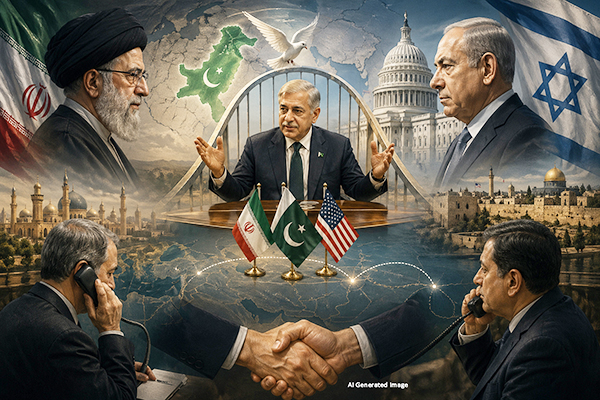
Pakistan's 2026 mediation initiative was launched as an effort to leverage its status as a nuclear-armed Muslim state with deep ties to both Washington and the broader Islamic world. Islamabad sought to position itself as a facilitator of a 'Brotherly Bridge' dialogue, proposing a de-escalation framework aimed at preventing a direct Iran–Israel war that would inevitably destabilise South Asia (Ahmed and Akbarzadeh, 2020; Yousafzai and Shah, 2022). Initially, Pakistani officials conducted high-level shuttle diplomacy, emphasising their unique capacity to transmit messages between Tehran and Washington.
However, this initiative stalled rapidly. Pakistan's role was reduced to that of a messenger rather than a moderator. It could relay demands between the parties, but it possessed neither the 'manipulative' capacity nor the enforcement leverage required in a power-based diplomatic framework (Uddin, 2016; Raza, 2020). The distinction between facilitation and mediation—theoretical in academic literature—became brutally apparent in practice.
5. Structural Reasons for Pakistan's Failure
The failure of Pakistani mediation is structural rather than contingent. Three interdependent factors have rendered its role obsolete in the 2026 strategic environment.
First, Pakistan suffers from a fundamental lack of material leverage. Its precarious economic state—characterised by heavy dependence on U.S.-influenced financial institutions and Gulf patronage—means it cannot offer Iran any tangible economic relief or enforceable security guarantees (Raza, 2020; Yousafzai and Shah, 2022). Without carrots to offer, diplomatic overtures carry no strategic weight in Tehran.
Second, Pakistan has no capacity to enforce agreements. Mediation in 2026 requires not only the ability to facilitate a deal but also a credible mechanism for monitoring compliance. Pakistan has no regional footprint in the Levant or the Persian Gulf sufficient to serve this function, and its military is oriented almost entirely toward its eastern border with India (Uddin, 2016; Khan, 2017).
Third, and most consequentially, Pakistan's foreign policy operates within a 'sovereignty paradox'—its strategic dependence on external patrons creates the firm perception that Islamabad acts not as an autonomous actor but as a state navigating within a diplomatically permitted corridor dictated by Washington or Riyadh (Ahmed and Akbarzadeh, 2020; Ali and Verma, 2024). This perception, whether or not it accurately reflects Pakistani intent, is functionally disqualifying in a high-stakes mediation context.
6. Iran's Distrust of Pakistan
The distrust between Tehran and Islamabad reached a systemic high in 2026, following a series of regional shifts that Iran perceived as Pakistan's abandonment of neutrality. The Iranian security establishment views Pakistan through the lens of accumulated strategic disappointments, including instances where Pakistani territory was perceived to have been used by foreign-backed elements hostile to the Islamic Republic (Raza, 2020; Yousafzai and Shah, 2022).
6.1 The Critique by Ebrahim Rezai
Ebrahim Rezai, the spokesperson for the Iranian Parliament's National Security and Foreign Policy Committee, articulated this distrust with exceptional clarity in a 2026 session on regional security. His statement deserves full citation, as it constitutes the most explicit diplomatic disqualification of Pakistan's mediatory role issued by any Iranian official:
"Mediation cannot be conducted by those who have traded their autonomy for foreign aid. We warn the regional countries that have provided their airspace and soil to the Zionist regime and the Americans that they will be held responsible for any aggression. Pakistan's claim of neutrality is a thin veil for a policy that is fundamentally tethered to Washington's containment strategy against the Islamic Republic."
This statement reflects the broader Iranian perception that Pakistan is 'leaned away' from Iran and toward the U.S.–Saudi axis (Ahmed and Akbarzadeh, 2020; Beidollahkhani, 2023). For Tehran, a mediator that cannot independently resist U.S. pressure—as evidenced by the halting of the Iran–Pakistan gas pipeline project under American coercion—is not a bridge but a conduit for Western demands (Raza, 2020). The result is complete erosion of credibility as a neutral party.
7. US Distrust of Pakistan
Simultaneously, the United States has largely discounted Pakistan as a viable regional peacemaker. Washington's distrust is rooted less in ideological concerns and more in a sober assessment of Pakistan's limited influence over the Iranian decision-making apparatus.
From the U.S. perspective, Pakistan possesses very little real leverage over the Iranian Revolutionary Guard Corps or its network of regional proxies. When Washington has used Pakistan as a conduit for messages, the results have consistently been either ignored by Tehran or met with escalatory responses (Kaussler and Newkirk, 2012; Monshipouri, 2022). By 2026, Washington views Pakistan not as a strategic bridge but as a diplomatic mailbox—useful for communication, but irrelevant for substantive negotiation.
The legacy of past interactions has further eroded the trust capital Pakistan once held in Washington. The U.S. security establishment, in high-stakes 2026 negotiations, prefers to engage 'peer-level' mediators—actors like Russia or China who can credibly deliver on their commitments—rather than a middle power perceived as prioritising its own diplomatic survivalism over concrete regional security outcomes (Uddin, 2016; Raza, 2020).
8. The "Dual Distrust Trap": A Key Analytical Concept
The 'Dual Distrust Trap' is the central analytical concept that explains Pakistan's structural diplomatic marginalisation in 2026. It is a condition wherein a mediator finds itself caught between two opposing parties, both of whom view the mediator's perceived proximity to the other as a disqualifying liability.
From Iran's perspective, Pakistan is too closely aligned with the United States—economically, militarily, and diplomatically—to be entrusted with sensitive strategic discussions or to be regarded as a fair arbiter of Iranian security concerns. From the U.S. perspective, Pakistan is simultaneously too geographically entangled with Iran and too domestically constrained by pro-Iranian political constituencies to serve as an effective partner in a pressure-based containment strategy.
This trap is self-reinforcing and structurally inescapable without a fundamental reconfiguration of Pakistan's strategic relationships. Any initiative proposed by Islamabad is immediately scrutinised by each party for evidence of bias toward the other. In 2026, mediation requires two foundational resources: strategic autonomy—which Pakistan has effectively traded away in exchange for economic survival—and material leverage—which it has forfeited due to internal political instability and strategic dependence. Absent both, the mediation process collapses into a series of performative gestures that neither party treats as diplomatically serious (Uddin, 2016; Khan, 2017).
9. Comparative Analysis: Russia vs. Pakistan
The following comparative analysis encapsulates the structural divergence between Russia's and Pakistan's respective capacities as mediators in the 2026 crisis:
The data above reveals that Russia's mediation capacity is rooted in structural power, while Pakistan's attempted role was grounded in aspiration unsupported by material resources. This is not a commentary on Pakistani intent but on the objective constraints that define diplomatic effectiveness in the contemporary international order.
10. India's Strategic Perspective: The Necessity of Autonomy
The 2026 mediation crisis offers a profound and instructive lesson for Indian foreign policy. As New Delhi continues to navigate its own doctrine of strategic autonomy, the Russia–Pakistan contrast functions as an analytical mirror.
India's primary takeaway is clear: strategic autonomy is not a luxury reserved for great powers; it is a prerequisite for meaningful regional influence. India's diplomatic strength lies in its capacity to maintain partnerships with the United States, preserve its historically significant link with Iran through the Chabahar Port agreement, sustain deep security and technology ties with Israel, and engage Russia without existential dependency (Raza, 2020; Yousafzai and Shah, 2022). This multi-vector architecture is structurally analogous to Russia's triangular access—though India's material power basis remains at a different scale.
However, the Dual Distrust Trap offers a cautionary note: if India tilts too decisively into a single security orbit—particularly under pressure from the U.S. in the context of QUAD commitments—it risks replicating Pakistan's structural predicament and losing its credibility as a facilitator in future crises involving Iran. India must ensure that any diplomatic or facilitation role it assumes is anchored in material capability—either economic or security-based—rather than in moral positioning alone (Zartman and Touval, 1985; Uddin, 2016). Legitimacy in 2026 geopolitics is not conferred by good intentions but by the structural capacity to shape outcomes.
11. Conclusion
The geopolitical landscape of 2026 has decisively demonstrated that modern mediation is a function of power, leverage, and strategic autonomy rather than neutrality or moral standing. Russia's emergence as a credible peacemaker between Iran, Israel, and the United States is a testament to the enduring value of multi-vector diplomacy in a consolidating multipolar world. By positioning itself as an actor capable of both supporting and restraining Iran while preserving dialogue with Israel and the United States, Moscow has rendered itself structurally indispensable.
In contrast, Pakistan's failure underscores the accelerating obsolescence of 'facilitative mediation' undertaken by strategically dependent middle powers. Trapped comprehensively in the Dual Distrust Trap, Islamabad lacks both the autonomy to be trusted by Tehran and the leverage to be taken seriously by Washington. The result is a form of diplomatic irrelevance that is not the product of bad faith but of structural constraints that no amount of goodwill can overcome.
For the global order, this shift signals a more transactional and power-centric modality of diplomacy—one in which the path to regional peace is paved not by shared values or declared neutrality, but by a calculated balance of interests enforced by actors with the structural capacity to do so. The age of the honest broker may not be over, but the 2026 Iran crisis suggests it has been profoundly and perhaps permanently qualified by the imperatives of hard power.
Dr. Vikas Bhardwaj
Ph.D. & M.Phil., Centre for Russian & Central Asian Studies, School of International Studies, Jawaharlal Nehru University, New Delhi
(The content of this article reflects the views of writer and contributor, not necessarily those of the publisher and editor. All disputes are subject to the exclusive jurisdiction of competent courts and forums in Delhi/New Delhi only)



















Leave Your Comment