


In a powerful address highlighting India’s energy and agricultural future, Union Minister for Road Transport and Highways, Nitin Gadkari, presented a compelling vision. He pointed to a staggering national reality: 87% of India’s energy is imported, at a colossal cost of ₹22 lakh crore annually. “This money goes out of the country,” he asserted. “Shouldn’t this money be saved?”
This rhetorical question forms the bedrock of a transformative policy shift—India’s ambitious ethanol blending programme. Minister Gadkari’s words underscore a dual national mission: achieving energy self-reliance (Atmanirbharta) and simultaneously boosting farm incomes.
The Ethanol Catalyst: From Farm to Fuel
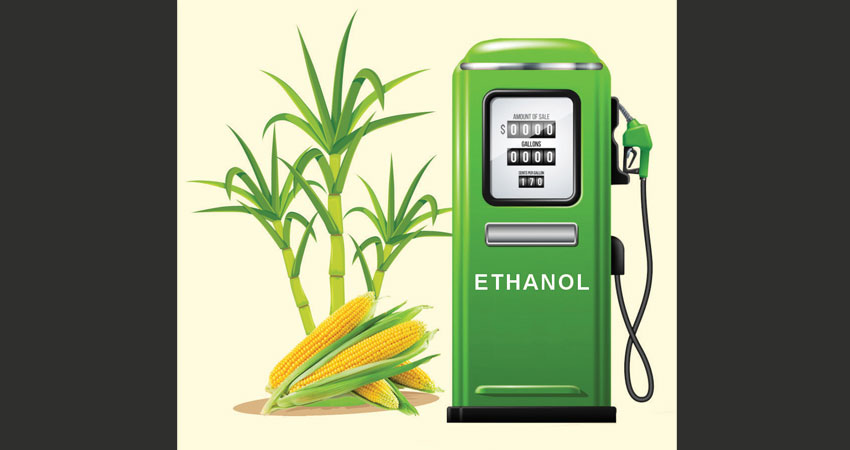
Minister Nitin Gadkari illustrated the direct link between green fuel and green shoots in the farm economy with a concrete example: maize (corn). He recalled that before the ethanol push, maize prices were around ₹1,200 per quintal, with a Minimum Support Price (MSP) of ₹1,800. “As soon as ethanol came into the picture, its price increased to ₹2,600-₹2,800 per quintal,” he noted.
This wasn’t just a market fluctuation; it was a structural change. The consistent, large-scale demand from distilleries for ethanol production created a lucrative new market for agricultural produce. The result, as Gadkari highlighted, is transformative: “Today, in Uttar Pradesh and Bihar, maize cultivation has tripled.” Farmers, responding to better price signals and assured demand, are shifting to energy crops.
The ₹22 Lakh Crore Question: Who Benefits?
The Minister then addressed the most significant part of the equation: the redistribution of national wealth. “When we save this ₹22 lakh crore, whose pocket will it go into?” he asked. His answer was clear and purposeful: “It will go into the pockets of the farmers of this country.”
This is the core of the ethanol strategy’s socio-economic logic. The monumental sum currently spent on importing fossil fuels can be repurposed into a circular domestic economy. Money flows to oilseed growers, sugarcane and maize farmers, and to investments in distillation and supply infrastructure within India, creating jobs and rural prosperity.
The Road Ahead: Challenges and Integration
The path is not without challenges. It requires careful calibration to ensure ethanol production does not conflict with food security needs, promoting water-efficient crops and advanced (2G) ethanol technology from agricultural waste. Supply chain logistics, distillery capacity, and vehicle compatibility also need sustained focus.
However, Nitin Gadkari’s statement powerfully frames the ethanol narrative not just as an environmental or energy policy, but as a pro-farmer, pro-nationalist economic revolution. It posits a future where the nation’s fuel tanks and farmers’ fortunes are connected, where every drop of ethanol conserved is foreign exchange saved and income generated domestically.
In essence, the shift to biofuels represents a strategic turning of the page. India is moving from being a passive importer, exporting its wealth, to becoming an active self-sustainer, circulating that wealth within its own villages and fields. As the Minister’s vision suggests, the true fuel for India’s growth engine in the 21st century might well be cultivated in its own heartland.
Beyond Economics: Energy Security and Environment
The benefits extend beyond economics. Reduced dependence on imported crude oil strengthens India’s geopolitical and energy security, insulating the economy from volatile global oil prices. Furthermore, ethanol, a biofuel, burns cleaner than petrol, reducing harmful emissions like carbon monoxide and hydrocarbons. The government’s target of E20 (20% ethanol blended petrol) by 2025-26 is a key pillar of its climate action plan, aligning the goals of a healthy economy and a healthier environment.
UDAY INDIA BUREAU















Leave Your Comment