


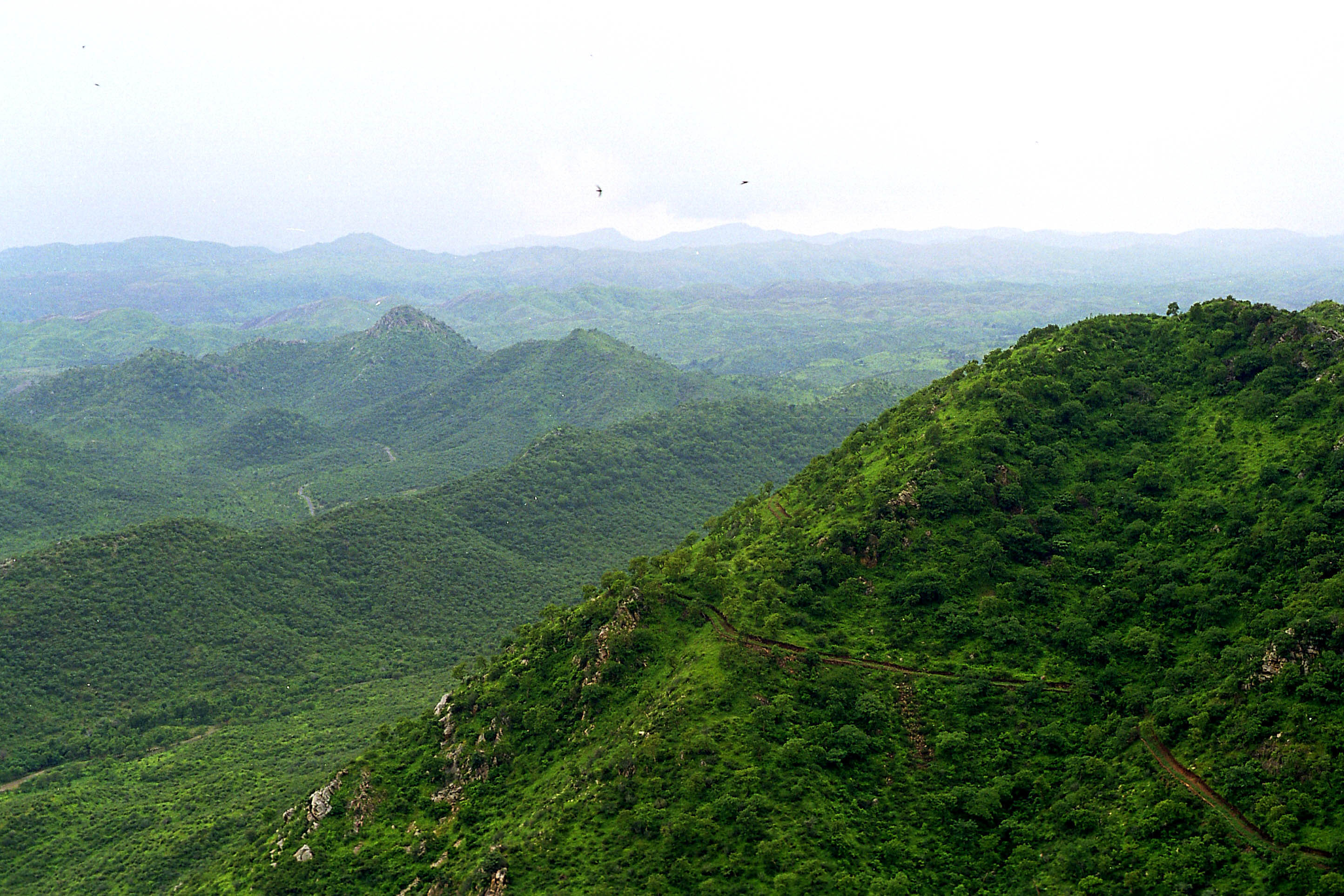
The Aravalli Range has always played a crucial role in the environmental security of Delhi-NCR and its surrounding areas. It not only contributes to air and water conservation but also helps maintain groundwater flow from rainfall and prevents soil erosion. Over the years, various political parties, builders, and authorities have attempted to weaken this natural shield. Numerous plans have been made to open Aravalli land in Haryana and Rajasthan for real estate and mining, but environmentalists, the Supreme Court, and the NCR Planning Board have protected it through strict decisions. Without these measures, today high-rise buildings would have stood on the Aravalli hills around Delhi and nearby cities, leading to a severe environmental crisis. A significant portion of the Aravalli range falls in Faridabad and Gurugram in Haryana. Over the years, state governments repeatedly tried to remove this land from the definition of forest areas to benefit builders. In December 2017, the NCR Planning Board rejected a proposal to remove 17,000 acres of land in the Faridabad region from forest land classification. The board clarified that the Aravalli range would not be limited to Haryana and Rajasthan alone but would be recognized throughout the NCR region. This decision protected the Aravalli Range from encroachment and destruction.
The case of selling land to DRDO also highlights the sensitivity of the Aravalli. The Faridabad Municipal Corporation sold 407 acres of land, which fell under the Punjab Land Preservation Act (PLPA) Sections 4 and 5, to the Ministry of Defence. According to this Act, non-forest activities on such land are prohibited. The municipal corporation conditioned the sale on DRDO obtaining environmental clearance independently. The Supreme Court’s Central Empowered Committee and the Ministry of Environment did not grant permission, preventing construction in the protected hills. The Comptroller and Auditor General (CAG) also criticized the Ministry of Defence for this imprudent decision. In fact, DRDO had started acquiring 700 acres of land in February 2004, later increasing it to 1,100 acres in August 2005. Subsequently, DRDO attempted to divert forest land for non-forest use, but the Regional Forest Officer confirmed in November 2005 that this land was part of a forest. According to Supreme Court orders, approval from the central government was required for non-forest use. In May 2007, DRDO reduced its requirement to 407 acres, and the municipal corporation approved the allocation. In April 2008, DRDO occupied the land, but the Central Empowered Committee appointed by the Supreme Court did not grant permission.
Another example of Aravalli conservation is the case of the European Technology Park in the Manesar area, approved by the Hooda government on 500 acres of land. The Ministry of Environment had put a halt on this project. In 2012, the draft Manesar Development Plan-2031 included 10,426 hectares of land from 23 villages, but the NCR Planning Board refused to approve it in order to protect forest areas. Many attempts by the Congress government failed, and later, the BJP government’s policies were also monitored by the Supreme Court and environmentalists. On 27 February 2019, the Haryana Assembly passed the Punjab Land Preservation (Haryana Amendment) Bill, which could have opened about 60,000 acres of Aravalli forest land for real estate and mining. The Supreme Court halted this move, validating environmentalists’ concerns. The Court emphasized that forests cannot be destroyed, and lands falling under the PLPA must be considered ‘forest land.’
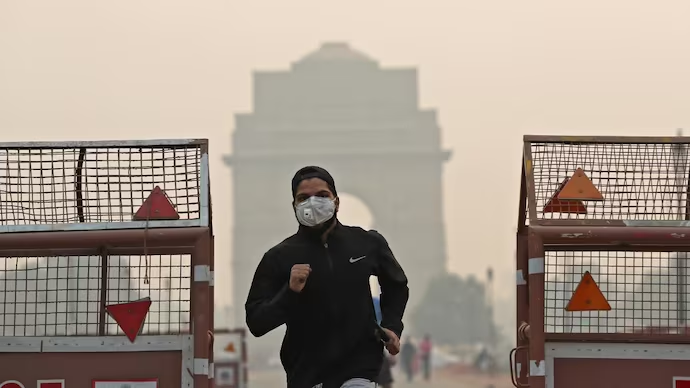
Recently, the Supreme Court issued a new definition of the Aravalli, considering only parts that are 100 meters or higher as hills. This raises concerns about the protection of smaller slopes. Experts argue that even smaller slopes are vital for water recharge, air purification, and preventing soil erosion. If excluded from protection, Delhi-NCR would face increased air pollution, water scarcity, and dust-laden winds. People and environmental organizations in Rajasthan and Haryana have started protests and movements. Student organizations like NSUI and civil society groups are organizing activities like the “Save Aravalli March.” Citizens emphasize that the Aravalli is not just a mountain but a home for life, water, air, and biodiversity. Attempts to hollow it out could create a serious crisis for future generations.
The protection of the Aravalli is now under the scrutiny of the nation’s politics, judiciary, and the public. The government claims no new mining leases will be issued and land management will proceed under Supreme Court supervision. Environmentalists and citizens, however, warn that changes in definition may weaken protection. Meanwhile, the Court has already rejected several proposals attempting to declare forest land as non-forest. The conservation of the Aravalli Range has become a decisive struggle. It is not merely a matter of land and wildlife but concerns our environment, social security, and the lives of future generations. If the Aravalli is not protected, Delhi-NCR and surrounding states will face air pollution, water crises, and biodiversity loss. Therefore, the Aravalli case is not only a symbol of environmental protection but also a test of justice, policy, and public interest.The struggle to save the Aravalli is not just a matter of current politics; it symbolizes safeguarding the lifelines of future generations, farmers, urban and rural communities. That is why the eyes of the entire nation are now on this mountain range, to ensure a healthy, safe, and clean environment in Delhi-NCR and neighboring regions.
By Ajay Kumar
(The content of this article reflects the views of writer and contributor, not necessarily those of the publisher and editor. All disputes are subject to the exclusive jurisdiction of competent courts and forums in Delhi/New Delhi only)

















Leave Your Comment