


The just concluded 2024 general election was a watershed in Odisha’s political history with the state having had to reset itself to a new government and new governance model that was literally inconceivable under the preceding regime. No wonder the change happened after two and half decades during which there was only one person all over. Curiously there was not just one event that merits mention to comprehend the change. They were many. And they happened almost simultaneously. The cumulative effect was so penetrating that many of those who once hymned their praise on the man and rallied support for his party came to realise that he was no more worth their trust and must be abandoned. The result was for anybody to see to believe.
• The BJP came to power in Odisha, for the first time and on its own majority. The party had never even got more than 40 seats in the 147-member Assembly, not even during the 2000 and 2004 elections when it was in alliance with the BJD. The last it got the maximum of 38 seats was in 2000 that to as BJD’s junior alliance partner. This time the number soared to 78 seats to form the government. Later three independent MLAs, who had contested elections as rebels after being denied tickets, extended their support thus taking the saffron strength in the House to 81.
• The BJP for the first time also sent the largest ever contingent of MPs - 20 of 21 – to the Lok Sabha from the state. Its best performance was in 1999 when it won 9 out of 21 Lok Sabha seats.
• The Biju Janata Dal (BJD) tested defeat in the hands of BJP, an unthinkable political twist that even ardent saffron supporters were loath to believe till counting ended of the last EVM. For the BJP it was indeed the long awaited moment of joy. “Thank you Odisha! It’s a resounding victory for good governance and celebrating Odisha’s unique culture”, Prime Minister Narendra Modi said in X (formerly Twitter).
For the Odisha BJP unit the electoral victory was a sort of revenge the party was waiting for the past 15 years. Way back in 1997 it was the saffron brigade that patronised the birth of BJD, forged alliance with it, ensured Naveen Patnaik as its leader and made him a cabinet minister in the Atal Bihari Vajpayee government. Naveen was a novice in politics then, yet Vajpayee gave him an important ministry like steel and mines. The party also fought the 2000 Assembly elections against the Congress shoulder to shoulder with the BJD. Naveen became the chief minister. Everything was hunky-dory till the unpredictable Naveen in 2009 suddenly ahead of elections announced breaking the 11 years of alliance with the BJP. Further, what in hindsight appears rubbing salt to the injuries Naveen in a perceived magnanimous gesture offered just a few seats to the BJP to contest in case they wanted to sustain the alliance. The offer however had strings attached to it that Naveen would decide the seats. The blow was too hard for the BJP to bear. The party that year had no choice but to face the elections alone with ragtag candidates and practically no organisation in existence. The results came accordingly, 6 seats in the Assembly and no seat for the Lok Sabha.

This time the BJP paid back to the BJD in the same way, to say the least. Prior to the elections the BJD reportedly tried to lay a ‘trap’ for the BJP with an alliance offer. A message in this regard was passed on to party’s top leaders in New Delhi. The BJD’s game plan was seemingly based on an overestimation of its brute money power, strong organisational network, Naveen Patnaik’s popularity and the domineering presence of V.K.Pandian, an IAS officer who later joined the BJD and became party’s de facto chief. The BJP central leaders detected foul smell in BJD’s offer, but kept mum for strategic reasons. As days turned into weeks and workers in both camps became restless ground inputs showed real gaffes in the BJD setup and the culprits surprisingly were none else but Naveen and Pandian. Party’s morale had hit rock bottom, leaders had been isolated, and the duo had become dictatorial, quite threatening to Odisha’s growth and Odia self-respect. The BJP saw in all this an opportune moment to strike the empire. The party rejected the offer without raucous. “The alliance talk is a rumour being spread by some unknown force. We will fight the elections alone and Odia pride would be our main poll plank,” BJP state president Manmohan Samal said after returning from New Delhi where he held talks on election issues with central leaders.
• The worse in the elections happened to Naveen Patnaik in chair as chief minister and party president. He lost one of the two Assembly seats he had contested. Naveen wanted to repeat what he did in 2019. He had then contested two seats (Hinjli in Ganjam district and Bijepur under Bargarh district) and won both. He did so to create a facade of belongingness in the minds of western Odisha voters. The move was to cut down the BJP’s rising support base in the region that includes large pockets of tribals. But fate smudged his plan this time. His traditional Hinjli constituency apart, Naveen had chosen Kantabanjhi seat in Balangir district as the second safe seat. Kantabanjhi is one of the many major areas in Odisha from where every year thousands of people, called ‘dadan’ in local parlance, migrate to other states in search of livelihood. The migrants are mostly unskilled daily labourers. Naveen’s traditional Hinjli seat, which has returned him to the Assembly uninterruptedly since he set his foot in politics, is also a major ‘dadan-prone’ pocket. Be it Hinjli or Kantabanjhi or for that matter other places in the vicinity rows of locked houses and the spooky looks in villages cannot miss the eyes of visitors.
Amid this when Naveen decided to also contest from Kantabanjhi many eyebrows were raised in askance. Even his own party people were taken aback, though decision-making has always been the prerogative of Naveen and his close confidante the proverbial V.K.Pandian. Many suspect that Naveen choosing Kantabanjhi alongside Hinjli was part of an insidious strategy to legitimise Pandian as the de facto ruler of Odisha. They say Naveen had thought that he would in any case win both the seats and later vacate Kantabanjhi for Pandian to contest. But what he perhaps overestimated himself or failed to gauge the undercurrent of public antipathy against him. The BJD had set the trend in the past to bring migrant workers to cast vote for its candidates and for that met their cost of transport and other expenditures in crores. This time the migrant workers did not turn up.
As counting progressed on June 4 bad news began to trickle in to the heavily fortified Naveen Niwas. At Shankha Bhawan, BJD’s swanky state office, security guards started stacking up chairs and locking rooms. At the Naveen Niwas there was dead silence all over. The BJD showed no sign of touching the magic number of 74 and that Naveen was trailing at Kantabanjhi. “I knew Naveen Patnaik could not save himself, because people wanted change. I have been with the people since 2014, associated in their happiness and sufferings. My conscience said people would repose their trust on me,” said Laxman Bag, the giant killer who defeated Naveen by a not so poor margin of 16,344 votes to become MLA for the first time. “There was still one more booth, Gudighat, left uncounted,” he added. News from Hinjli was not exciting either. As Naveen moved in slow pace the claims of his campaign agents to take his winning margin beyond one lakh dashed soon. He escaped defeat by a paltry lead of 4636 votes.
Amongst all regional parties in the country the Biju Janata Dal (BJD) was considered a behemoth. The party was born post the demise of one of country’s tall politician Biju Patnaik in April 1997. From its birth the BJD dominated the political space continuously in the state, becoming virtually impregnable with every election, be it Lok Sabha, Assembly or at the panchayat level going in its favour. Few had imagined that the huge corporate styled head office called the Sankha Bhawan the party has built in Unit-6 area of Bhubaneswar would look like a khandar (in ruins), a scene not seen earlier.
Pandian Syndrome
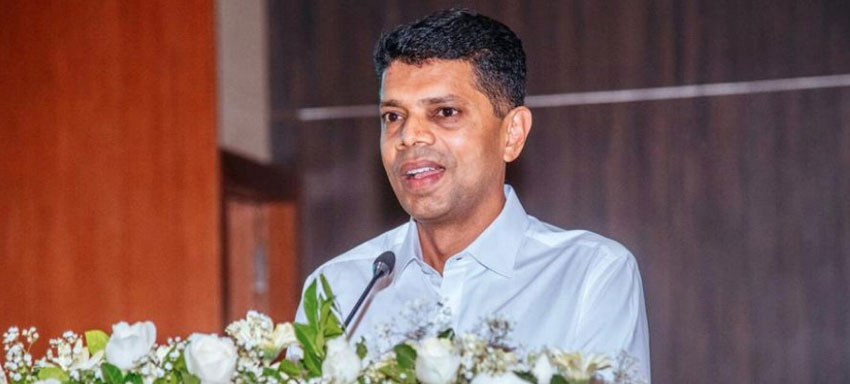
The election over, what has begun haunting the BJD leaders most is not the defeat per se but the cause of it. The party was formed to champion Odisha’s issues at the national level. The state being a stark case of poverty in plenty founders of BJD initially had thought that a regional outfit could fill the vacuum of political leadership. It would strongly take up Odisha’s problems with the Union government and utilise the state’s limited resources for the last mile development of the poor masses. These twin objectives in mind the party was named after Biju Patnaik, Biju symbolising ‘Odia pride’. After long squabbling on the leadership issue party leaders chose Biju’s son Naveen for the driver’s seat, his inadequacies in politics notwithstanding. As Naveen started settling down party leaders’ hopes too started petering out. They saw in him the inclination to function in a manner not commensurate with democratic ethos and party norms. They had got an inkling of this at the time of preparing the party constitution. As the 2000 Assembly elections approached Naveen the real was out in the open. He suspected all top leaders in the party as potential threats to him and started throwing them out one after another. They were branded corrupt in public, a stigma an ousted politician can ill afford to defend. Naveen’s style of functioning, party insiders say, never showed that he took governance seriously. In his initial years he had outsourced governance, party affairs and even what to say to media persons to a retired IAS officer Pyari Mohan Mohapatra. Pyariraj continued till 2012 when Naveen suspected him as a future threat to his position and ousted him. V.K.Pandian was the latest addition. There is no difference between the two except Pyari son of the soil and ran the show alone. Pandian had formed a cabal of a few senior bureaucrats, all outside Odisha, and some rookie party leaders.
The ill-effects of Naveen-Pandian duo on the party were too glaring to hide during the elections. The public saw BJD as being reduced to a group of self-serving individuals undermining the interests of Odisha and Odias. By the same logic the BJP, thanks to the high voltage campaign by the Prime Minister and other central leaders, was seen as a protector of ‘Odia Asmita’ (self-esteem) and benefactor of Odisha’s development. Many BJD leaders left the sinking ship. Those got tickets stuck to their constituencies. Others went underground only to refrain from campaigning. Party’s campaign had almost collapsed from the beginning. There was none in the field to talk about the party that ruled Odisha for a quarter century. The lone Naveen was too sick to walk, speak, hold microphone speaker in hands constantly shaking. With him was Pandian, seen by BJD people the only villain responsible for party’s debacle. The BJP camp however, was happy. “Pandian’s tour intensified the anti-BJD feeling in the state,” said a BJP leader.
Maiden BJP government many challenges
But BJD’s expected defeat is no solace for the BJP. For, the saffron brigade has long lists of tasks to do and challenges are numerous. The honeymoon period of Mohan Charan Majhi government will last at best for six months. After that, regardless of chief minister’s assertion of running a peoples’ government the general public would like to see works on the ground. This is for the first time the Assembly will have a robust opposition of 66 members including 51 of BJD and 14 of Congress. No matter what be their past track record, they would try to pin down government having a slender majority of 81 members including three independents. The Mohan government no doubt has started well, focussing initially more on addressing the Jagannath temple issues. But there is a long way to go.

By Dr. Rajaram Satapathy
(The content of this article reflects the views of writers and contributors, not necessarily those of the publisher and editor. All disputes are subject to the exclusive jurisdiction of competent courts and forums in Delhi/New Delhi only)














Leave Your Comment