


How Opposition’s Each Move — including on the 130th Constitutional Amendment — Adds to Modi’s Electoral Consolidation
From Operation Sindoor–centred narratives to the 130th Constitutional Amendment, from Trump’s tariff pressures and ceasefire mediation claims to the turbulence of farmers’ protests and the opposition’s endless chants of “vote chor,” one striking constant has defined Indian politics over the past decade: every challenge directed at Narendra Modi has ended up reinforcing rather than weakening him. What rivals framed as disruption has instead become opportunity for the Prime Minister and the BJP — to reaffirm moral authority, project nationalist strength, safeguard constituencies such as farmers, pashupalaks, and gopalaks, and consolidate the claim of clean and decisive governance.
The Modi Way of Managing Incumbency
In an era where Indian politics has long been synonymous with anti-incumbency, Modi has turned the very logic of governance on its head. This is the essence of what can only be called the art of making pro-incumbency — a reversal of India’s traditional anti-incumbency cycle. Among the many instances that have marked the last 11 years, for example, the Pegasus row was reshaped into a question of national security, the farmers’ agitation recast as responsiveness to public sentiment, the Covid crisis answered with the triumph of the vaccine rollout, and opposition theatrics in Parliament reduced to proof of stability in contrast to chaos. Even foreign pressures — from Washington’s tariff squeeze to deep-state manoeuvres echoing the Bangladesh script — have been getting pre-empted and transformed into symbols of India’s strategic autonomy. Within this continuum, each move by the opposition has not diminished but instead persistently expanding Modi’s electoral ground, adding fresh and firsthand redeems to his pro-incumbency basket.
130th Constitutional Amendment Bill – Why the Opposition Is So Nervous
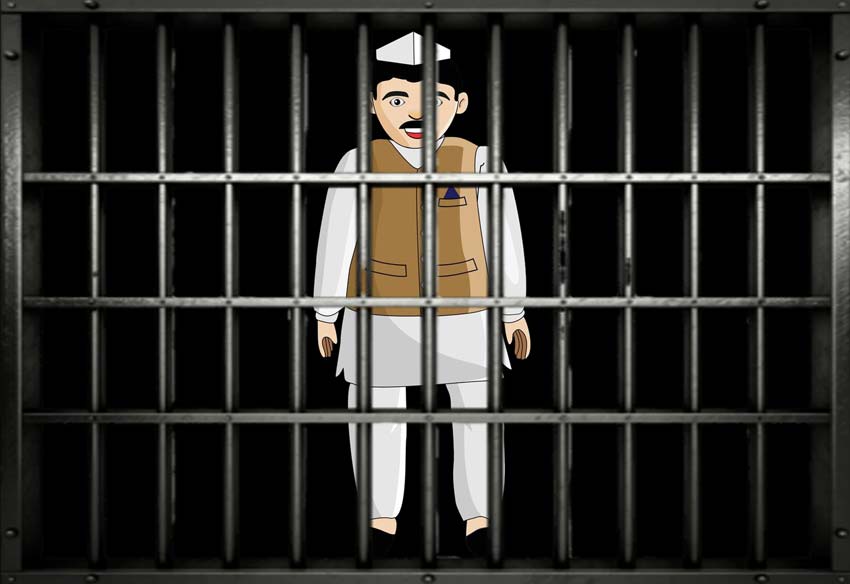
The 130th Constitutional Amendment Bill stands as a classic example of how an initiative designed to embed integrity into India’s political system has unnerved the opposition but simultaneously reinforced the ruling party’s nationalist image. Introduced by Home Minister Amit Shah on 20 August 2025, the Bill directly alters the terms of executive office at both Union and state levels by stipulating that if a Prime Minister, Chief Minister, or minister is in custody for thirty consecutive days on charges carrying a sentence of five years or more, they must resign or automatically cease to hold office. They may be reappointed upon release, but the principle is clear: governance cannot continue from jail. Parallel amendments for Delhi, Jammu & Kashmir, and Union Territories make this uniformly applicable across India.
The nervousness of the opposition arises first from the fear that due process is being trumped by political optics. Some opposition Leaders even have denounced the measure calling it “black bill,” painting it as a “Hitlerian assault” that would herald a “super-Emergency.” Yet such rhetoric plays directly into the BJP’s hands, because to the public it sounds less like a defence of constitutional liberty and more like a plea from those politicians who anticipate their own vulnerability to criminal investigations. The more the opposition insists on the sanctity of presumption of innocence, the more Modi’s camp takes all opportunity to underline the moral clarity of the reform — echoing the Home Minister’s blunt statement that no office-bearer, however high, should rule from jail when ordinary civil servants are suspended after 48 hours in custody. This contrast transforms opposition outrage into confirmation of Modi’s commitment to probity.
A second source of agitating nervousness - is the charge of political weaponisation. Opposition parties argue that agencies like the ED or CBI could be misused to detain rivals for thirty days and topple elected governments without conviction. In theory, this is a legitimate anxiety. But in practice, to voters it exposes an even starker truth: many opposition leaders face serious pending cases. Their collective protests — shouting vendetta and disrupting Parliament — can be read not as defence of democracy, but as defence of self-interest. This only enables Prime Minister Modi to consolidate his position as the crusader who will not let entrenched corruption escape accountability. To stand against such reform is to stand opposed to the aspiration of Viksit Bharat. Empowering the state to discipline those who misuse power- becomes not authoritarian excess but the echo of the hour to protect institutions. Moreover, Federalism too is invoked as a point of uneasiness, with opposition leaders warning that the Centre will gain leverage over state executives. But here again, the public mood sides with the government. For the ordinary citizen, the idea that “no Chief Minister can govern from jail” resonates with moral common sense far more than abstract debates about constitutional federal balance. Thus, while federal arguments may carry political correctness weight, they fail to capture popular imagination, leaving the BJP with the upper hand.

The Anti-Corruption Lens: “Na Khaaunga, Na Khane Doonga”
Within the art of making pro-incumbency, the anti-corruption plank has constituted the most resilient pillar of Narendra Modi’s political strategy. The 2014 declaration — “Na khaaunga, na khane doonga” — often criticised as political rhetoric, has gradually been established as a normative rupture from an earlier era characterised by scams, cronyism, and rent-seeking. A decade later, this ethos has acquired legislative embodiment in the 130th Constitutional Amendment Bill, which seeks to institutionalise a personal pledge into a constitutional discipline. By mandating cessation of office for any Prime Minister, Chief Minister, or minister who remains in custody for thirty consecutive days on charges carrying a sentence of five years or more, the Bill operationalises the principle that governance cannot be exercised from within prison, and that high office must not only be conducted with integrity but must also remain visibly above reproach.
The government presents the measure as a logical extension of an existing bureaucratic norm: civil servants are suspended after forty-eight hours of detention. The pro-reformists framing, therefore, interprets this not as a technical amendment but as a moral imperative, precluding politicians from exercising patronage, signing executive files, or directing networks of governance from custody. In this respect, the Bill advances the original spirit of the “Na khane doonga” pledge by transposing political morality into constitutional compulsion.
The opposition’s resistance reveals a deeper tension between the symbolism of clean governance and the pragmatism of political survival. A significant number of regional leaders and party elites remain under active investigation for financial misconduct. Their collective opposition to the Bill is thus interpreted less as a principled defence of constitutional liberty and more as an act of self-preservation. Modi himself has emphasised this point, arguing that those who most vocally resist the amendment are precisely those most vulnerable to its provisions. Consequently, opposition protests are recast within the government’s narrative as validation: the corrupt fear accountability, while the nationalist project demands integrity.
Notwithstanding these claims, critics advance a significant concern: the risk of weaponisation. By linking cessation of office to custody rather than conviction, the amendment arguably unsettles the principle of presumption of innocence. The thirty-day threshold could, in theory, be manipulated through strategic remand cycles, allowing allegations rather than judicial verdicts to determine political survival. Such a scenario, if realised, could undermine the very moral capital the government seeks to cultivate. Yet, within the nationalist discourse, this risk is framed as secondary to the overriding necessity of cleansing the political system. Government spokespersons contend that the law’s intent is disciplinary, not vindictive, and that judicial oversight will always remain a safeguard against excess.

However, the broader implication of this trajectory lies in the transformation of Modi’s anti-corruption slogan into a political lodestar around which both reforms and controversies are structured. The 130th Amendment reinforces Modi’s image as a leader unwilling to legitimise governance from within jail custody. While constitutional scholars may continue to interrogate questions of proportionality, due process, and federal balance, the political optics remain unequivocal: Modi is positioned as raising the threshold of accountability beyond any post-Independence precedent. However, the amendment’s eventual legitimacy still will depend upon its impartial implementation and the robustness of judicial review. If applied with consistency, it will strengthen democratic institutions while simultaneously consolidating the nationalist narrative of a government that delivers on its commitments. In this sense, the Bill exemplifies the strategic conversion of moral rhetoric into institutional reform- and of opposition outrage into another episode of pro-incumbency consolidation.
Statecrafting Pre-Emption of the Deep State Designs & the Play of Foreign Powers
The 130th Constitutional Amendment must be read in the context of strategic pre-emption — the imperative to anticipate covert challenges, blunt them in advance, and convert adversity into advantage. Its scope therefore transcends anti-corruption or constitutional morality; it safeguards sovereignty against the coordinated playbook of the “deep state,” a nexus of entrenched interests, foreign lobbies, and transnational advocacy platforms that has, since independence, exploited institutional loopholes and amplified social fault lines to keep India off balance. What once operated through intellectual capture and policy infiltration now surfaces as open collusion between opposition formations and foreign-funded advocacy fronts, with the farmers’ protest of 2020–21 illustrating how domestic dissent can be internationalised through Western campaigns, orchestrated hashtags, and celebrity interventions to weaken democratic confidence. The Bangladesh precedent further clarifies the stakes. In 2024, Sheikh Hasina, despite commanding electoral legitimacy, was forced into resignation under pressure from orchestrated protests, selective media framing, and external lobbying — a vivid demonstration of how the rhetoric of “saving democracy” can be weaponised to subvert democratic choice. The resonance with India is stark: opposition leaders’ cries of “super-Emergency,” “black day,” and “dictatorship” coinciding with accountability reforms like the 130th Amendment mimic this destabilisation script. Leaders facing graft charges, dynastic parties fearful of losing privilege, and formations weakened by defeats have converged not from ideological conviction but self-preservation, amplifying alarmist vocabulary to shield corruption networks by reframing accountability as tyranny.
Seen through this lens, the 130th Amendment is less a legal innovation than a stress test of India’s strategic autonomy. Modi’s assertion that no leader should govern from jail embodies the pledge of no tolerance to corruption, while opposition resistance exposes the erosion of buffers that long protected elites from scrutiny. Risks of foreign-backed disruption remain, yet India’s cohesive security institutions, Modi’s robust legitimacy, and public memory of corruption scandals render a Bangladesh-style outcome improbable. The larger implication is that deep state conspiracies thrive where reforms strike entrenched interests; by advancing the 130th Amendment, Modi demonstrates the art of pre-emption — framing reform as nationalist defence, converting every destabilisation attempt into proof of the indispensability of strong leadership— therefore transforming criticism into pro-incumbency consolidation.
Law and Order as a State Subject – but, Hybrid Warfare Demands Federal Leverage
Extending from the looming danger of deep state conspiracies and the lessons of Bangladesh, the structural question of law and order within India’s federal design becomes unavoidable. The Constitution places law and order in the State List, reflecting the framers’ vision of decentralised governance. Yet, in an era of hybrid threats, foreign-sponsored agitations, and covert destabilisation, this division has become vulnerability. State governments opposed to the Centre have often treated law and order less as a constitutional responsibility and more as a political shield — resisting central investigations or dismissing anti-corruption probes as “vendetta.” In several non-BJP states, law and order has been used to insulate entrenched elites or to allow foreign-backed narratives to ferment unrest, revealing how a constitutional provision can be bent into a tool of obstruction.
For the Union, this makes it imperative to retain tooth-and-nail control mechanisms that prevent national stability from being undermined by local gamesmanship. Constitutional instruments such as Articles 355 and 356, the concurrent jurisdiction of central investigative agencies, and special provisions for safeguarding national security provide legitimate levers to intervene when state administrations deviate from constitutional morality. The 130th Constitutional Amendment Bill belongs to this logic: by mandating cessation of office after thirty days of custody, it introduces structural discipline that state leaders cannot bypass through friendly police or political manoeuvres. It ensures executives remain accountable not only to their legislatures but also to the constitutional ethos, closing loopholes the deep state could exploit to destabilise governance from within.
Critics argue that such measures erode federalism, but in reality, they fortify it. A federation without strong central correctives risks capture by corruption, foreign money, and manipulated protests. The Bangladesh precedent demonstrates how swiftly external actors can convert domestic discontent into regime change when weak institutions or fragmented authority permit subversion. In India’s context, should a Bangladesh-like crisis emerge in any state, the Centre must possess the legal, administrative, and constitutional tools to contain it before it spirals nationally. Thus, “keeping state governments under control” is not about dismantling autonomy but about placing constitutional guardrails to ensure that autonomy is not misused as a cover for corruption or as a gateway for foreign-backed machinations. In striking this balance — between federal freedom and national security, between political autonomy and institutional accountability — lies the guarantee of India’s sovereignty and democratic resilience. And in asserting this balance firmly, the Modi government once again demonstrates the art of pro-incumbency: central authority framed not as overreach, but as a nationalist safeguard against internal decay and external manipulation — which the awakened citizens now strongly desire.
130th Constitutional Amendment
– Modi’s Game Traps
The opposition’s pattern of protest does not stop with the 130th Amendment. In their zeal to corner PM Modi, they have repeatedly ended up strengthening him. From Pegasus to the farmers’ protests, from “vote chor” sloganeering to parliamentary walkouts, every attempt to create liability has boomeranged into an asset, reinforcing his nationalist appeal and pro-incumbency advantage. The Pegasus scandal, pitched as “treason,” was reframed as national security; the farmers’ protest, intended to brand him anti-farmer, became proof of responsiveness after repeal; the COVID-19 crisis lost its sting once free vaccines transformed potential failure into a welfare triumph. Allegations of “vote chori” and EVM manipulation collapsed in court and in public opinion, amplifying Modi’s credibility as the bearer of a genuine mandate. Other charges followed the same arc: the wrestlers’ protest failed to dent the BJP electorally; liquor policy cases, branded as vendetta, only reinforced his anti-corruption plank; hate-speech accusations consolidated the nationalist base; and now, parliamentary disruptions over Op. Sindoor or the 130th Amendment have exposed not Modi’s overreach, but the opposition’s own confusion and hunger for power.
Conclusion
The Modi era has inverted India’s traditional cycle of anti-incumbency, ushering in an unprecedented pro-incumbency trend — shaped by 21st-century tech-savvy, informed Indian voters who now play a confident role at the forefront. With these voters as Modi’s living credentials, every opposition attack has become ammunition, every crisis an instrument, and every protest a reinforcement of his democratic assessments. From Rafale to Operation Sindoor, from Trump’s tariff blackmail to parliamentary assaults, none have diminished him; instead, they have consolidated his image as an incorruptible, nationalist, and unyielding statesman. What was meant as disruption has become discipline, accusation has become advantage, and every gambit of the opposition has been absorbed into Modi’s art of pro-incumbency big bang. Now, the 130th Constitutional Amendment adds another crucial chapter to this trajectory — embedding the pro-incumbency cycle as a defining feature taking shape in the Modi Raj.

By Dr. Padmalochan Dash
(The content of this article reflects the views of writers and contributors, not necessarily those of the publisher and editor. All disputes are subject to the exclusive jurisdiction of competent courts and forums in Delhi/New Delhi only)















Leave Your Comment