


The history of warfare is also the history of technology. From the invention of the longbow to the arrival of gunpowder, from the industrialisation of warfare in the twentieth century to the emergence of nuclear weapons, each technological revolution has reshaped the nature of conflict and the balance of power. Some embraced the power of this revolution as a means to secure peace and harmony among international communities, while others pursued it merely to assert dominance and affirm their self-perceived greatness.
Today, the world stands at the threshold of another such transformation, one driven not by steel or explosives, but by algorithms. Artificial Intelligence (AI) is rapidly becoming a central component of modern military strategy, intelligence gathering, battlefield decision-making, and cyber warfare. As governments race to integrate AI into their security apparatus, technology companies such as Anthropic and OpenAI which were once seen primarily as innovators in civilian applications are increasingly drawn into the orbit of national security and geopolitical competition.
The question that now confronts policymakers, scholars, and citizens alike is simple yet profound: what happens when machines begin to influence the conduct of war?
Technology, Warfare, and Influence
Throughout history, technological shifts have fundamentally altered the dynamics of war. The industrial revolution introduced mass production of weapons and logistics systems, enabling large-scale global conflicts such as the two World Wars. The development of nuclear weapons during the Cold War introduced the concept of deterrence, where the sheer destructive potential of technology reshaped global diplomacy and military strategy.
The digital revolution of the late twentieth century brought another transformation. Precision-guided munitions, satellite surveillance, and network-centric warfare became defining features of modern military operations. The United States, in particular, pioneered the use of digital technologies to enhance battlefield awareness and operational efficiency during conflicts such as the Gulf War and subsequent military interventions.
At the same time, modern technologies have increasingly become tools of influence, mobilisation, and psychological impact. Digital platforms have demonstrated the ability to shape public opinion, coordinate movements, and amplify narratives across borders in ways that were previously unimaginable. For instance, social media played a crucial role during the Arab Spring, where online platforms enabled the rapid organisation of protests and the dissemination of political messages that challenged entrenched regimes across the Middle East and North Africa. Similarly, extremist networks have leveraged digital ecosystems to spread propaganda and recruit followers globally; movements such as “We Are All Khalid Said” emerged online as powerful symbols of resistance, illustrating how digital narratives can catalyse political mobilisation.
Technology has also been misused to broadcast violence and influence public perception. The Christchurch attack in 2019, where the perpetrator live-streamed the assault on social media, demonstrated how digital platforms could be exploited to magnify terror beyond the physical site of violence. The attack was not only an act of violence but also an attempt to use technology as a mechanism of psychological warfare, spreading fear and ideological messaging to a global audience in real time.
These developments illustrate that modern technologies are no longer confined to conventional military applications; they have become instruments of influence capable of shaping political movements, public consciousness, and international discourse.
Artificial Intelligence represents the next phase in this technological evolution. Unlike previous technologies, AI has the capacity not only to enhance human capabilities but also to process vast amounts of data and generate recommendations or predictions at speeds far beyond human cognition. This has enormous implications for intelligence analysis, threat detection, autonomous systems, and strategic planning.
The Rise of AI in Military Strategy
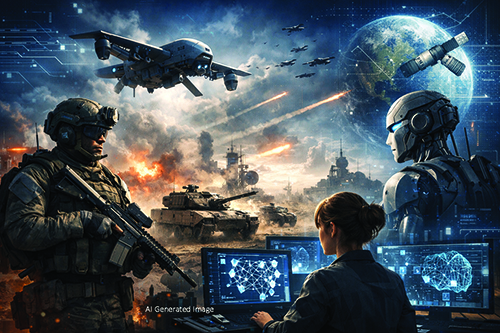
AI is already being integrated into various aspects of military operations. Modern armed forces employ AI systems to analyze satellite imagery, detect cyber threats, predict logistical requirements, and optimize decision-making processes. Autonomous drones, surveillance systems, and data analytics platforms powered by AI are increasingly becoming standard tools in contemporary warfare.
The United States Department of Defense has actively pursued AI integration through initiatives such as the Joint Artificial Intelligence Center (JAIC) and various partnerships with private technology companies. The strategic logic behind this push is clear: in a world where geopolitical competition is intensifying, particularly with technologically advanced rivals such as China, AI is seen as a critical enabler of military superiority.
Yet the involvement of private technology companies in national security activities introduces new complexities. Unlike traditional defense contractors, companies such as Anthropic and OpenAI emerged from the civilian technology sector with missions centered around innovation, safety, and ethical AI development. Their growing proximity to government agencies raises important questions about the relationship between technological innovation and military power.
Anthropic, OpenAI, and the Expanding AI Ecosystem
Anthropic and OpenAI represent a new generation of AI companies focused on advanced language models and large-scale machine learning systems. These technologies have primarily been used for applications such as natural language processing, research assistance, and productivity tools. However, the underlying capabilities—particularly in data analysis, pattern recognition, and decision support—also have clear relevance for intelligence and security operations.
In recent geopolitical tensions, including conflicts involving Iran and the United States, AI-based analytical systems have been increasingly discussed in strategic circles. Governments seek to leverage AI to process intelligence data, monitor geopolitical developments, and simulate potential scenarios. While such systems do not make decisions independently, they can influence how information is interpreted and how policymakers evaluate risks.
The administration of former U.S. President Donald Trump placed significant emphasis on technological competition and national security innovation. During that period, AI was framed as a strategic priority for maintaining American leadership in emerging technologies. Policies encouraging closer collaboration between government agencies and technology companies became part of the broader effort to ensure that the United States remained ahead in the global technological race.
This convergence of Silicon Valley innovation and military strategy is reshaping the geopolitical landscape. Technology companies are no longer merely providers of consumer products or digital platforms; they are increasingly part of the strategic infrastructure of modern states.
Human Reasoning versus Machine Reasoning
One of the most debated issues in AI-driven warfare is the balance between human judgment and machine-generated analysis. AI systems can process vast datasets, identify patterns, and generate probabilistic assessments, enabling intelligence agencies to analyse satellite imagery, communications data, and potential threat indicators with unprecedented speed. However, machines lack contextual awareness, ethical judgment, and political understanding. Warfare is not merely technical; it is shaped by political, cultural, and humanitarian considerations that require human deliberation.
The danger arises when policymakers rely excessively on algorithmic outputs, as AI systems may replicate biases embedded in their training data and produce flawed recommendations. For this reason, military doctrines stress the principle of “human-in-the-loop” decision-making, where AI assists but does not replace human authority, though maintaining such oversight may become increasingly difficult as AI systems accelerate decision-making cycles.
The Legal and Ethical Vacuum
The rapid advancement of AI has outpaced the development of legal frameworks governing its use in armed conflict. Existing International Humanitarian Law (IHL), particularly the Geneva Conventions and their Additional Protocols, was designed to regulate conventional warfare and establish core principles such as distinction, proportionality, military necessity, and precaution in attack. While these principles apply to all means and methods of warfare, their application to AI-enabled and autonomous systems raises complex legal questions. When an AI-assisted system contributes to unintended civilian harm, determining accountability becomes challenging, potentially involving military commanders under the doctrine of command responsibility, system operators, engineers, or private companies that developed the technology.
These concerns have triggered ongoing international deliberations on the regulation of autonomous weapons systems within forums such as the United Nations Convention on Certain Conventional Weapons, where states are examining the concept of Lethal Autonomous Weapons Systems (LAWS). Parallel discussions are also emerging within broader governance initiatives such as the United Nations and the Organisation for Economic Co-operation and Development, on AI governance frameworks. While several states and civil society coalitions advocate stricter regulations or even a pre-emptive ban on fully autonomous lethal systems, others caution that excessive restrictions may impede legitimate technological innovation and national defence preparedness.
Legal scholars and technology governance experts increasingly stress the need for binding international norms to ensure transparency, accountability, and meaningful human control over critical military decisions involving AI. While ethical guidelines issued by technology companies support responsible innovation, they cannot replace comprehensive international regulation grounded in established principles of international law.
Strategic Implications for the Future
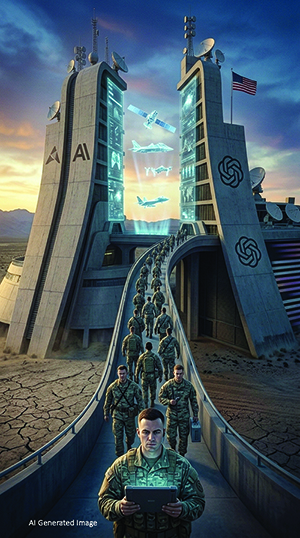
The integration of AI into military strategy is likely to reshape global power dynamics in the coming decades. Nations that successfully combine technological innovation with strategic foresight may gain significant advantages in intelligence, cyber operations, and battlefield coordination.
At the same time, the proliferation of AI technologies raises the risk of an arms race in autonomous and semi-autonomous systems. As more states develop AI-enabled military capabilities, the speed and complexity of conflicts may increase, potentially reducing the time available for diplomatic intervention or de-escalation.
Another emerging challenge is the role of private technology companies in geopolitical competition. Companies such as Anthropic and OpenAI operate within global markets and often emphasize the universal benefits of AI innovation. Yet they also operate within national jurisdictions and may face increasing pressure to align with national security priorities.
This tension between global innovation and national strategic interests will likely become a defining feature of the AI era.
Toward Responsible Governance of AI in War
The emergence of AI in warfare does not necessarily signal a future dominated by autonomous machines making life-and-death decisions. Instead, it underscores the urgent need for strong governance, ethical frameworks, and international cooperation. Governments, technology companies, and global institutions must work together to develop norms that ensure responsible and transparent use of AI, with clear accountability and meaningful human oversight in critical decisions. For countries like India, rapidly advancing in both technology and strategic capabilities, this debate is particularly significant, positioning India to play an important role in shaping global AI governance norms.
Conclusion
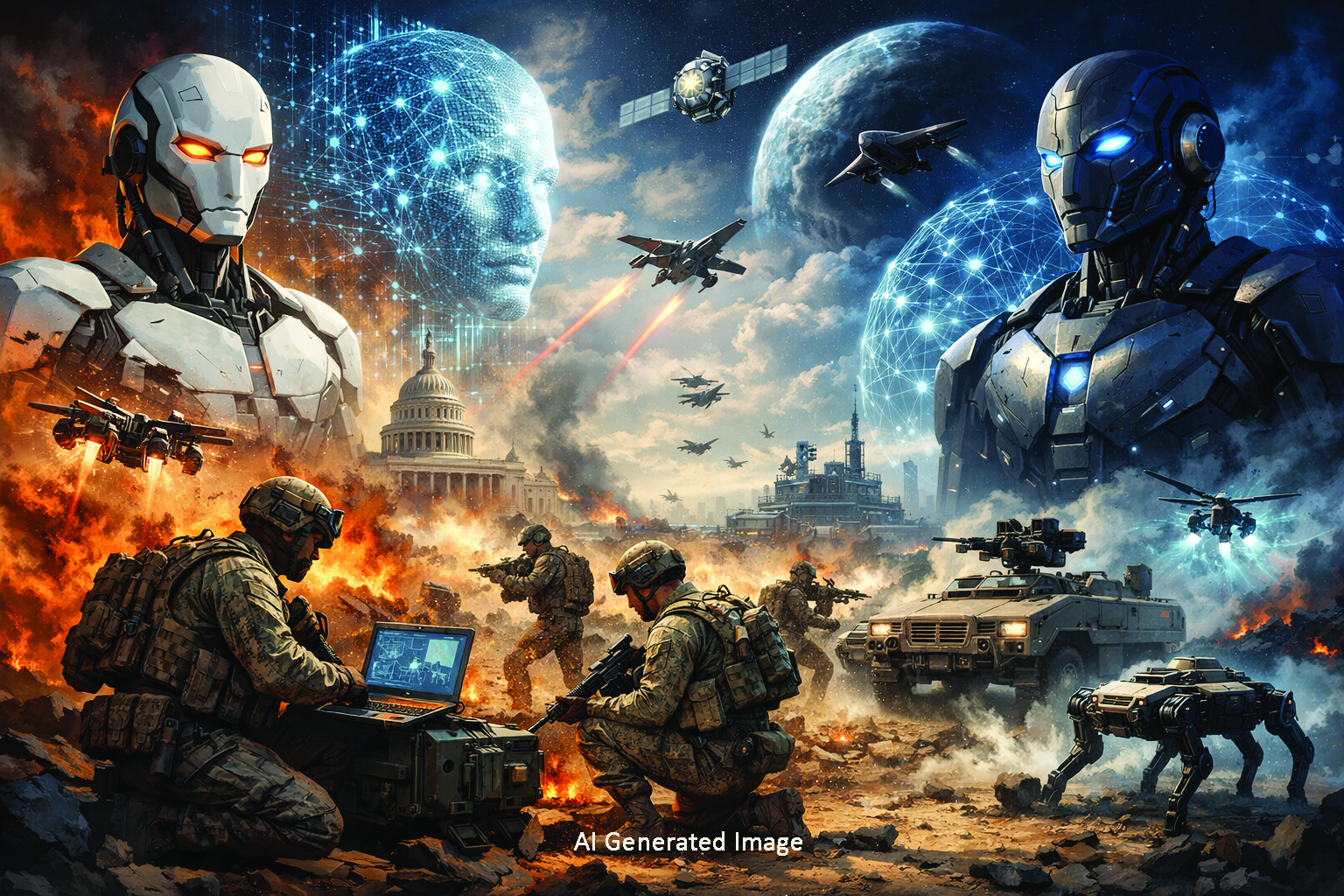
AI is transforming warfare in ways once imagined only in science fiction. The growing involvement of companies like Anthropic and OpenAI in national security highlights how the line between technological innovation and military strategy is increasingly blurred. As algorithms assist in analysing threats, planning operations, and shaping strategic decisions, they offer unprecedented speed and analytical capability. However, this also raises critical ethical and legal concerns. While future battlefields may be influenced by algorithms, human judgment, responsibility, and accountability must remain at the centre of how these technologies are used.

KK Dash
(The content of this article reflects the views of writer and contributor, not necessarily those of the publisher and editor. All disputes are subject to the exclusive jurisdiction of competent courts and forums in Delhi/New Delhi only)



















Leave Your Comment