


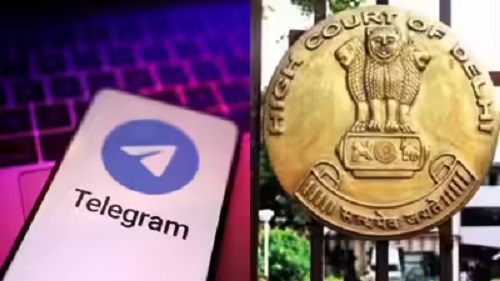
Messaging platform Telegram on Wednesday approached the Delhi High Court challenging the Centre’s temporary restrictions on its services in India, imposed ahead of the NEET UG re-examination scheduled for June 21. The matter is expected to be heard later in the day by Justice Tajas Karia.
The Union government had ordered a temporary restriction on access to Telegram until June 22, a move welcomed by the National Testing Agency (NTA), which argued that the measure was necessary to curb fraud and misinformation targeting NEET aspirants.
According to the NTA, the decision followed the exposure of a large-scale scam network operating through Telegram channels. The agency alleged that fraudsters were charging students amounts ranging from ₹14,000 to ₹25,000 and, in some cases, as much as ₹10 lakh, falsely claiming to have access to “leaked” NEET re-examination papers.
In a statement, the NTA said the Ministry of Electronics and Information Technology (MeitY) had directed the temporary restriction on Telegram during the examination period and its immediate aftermath. The ministry also instructed the platform to disable its message-editing feature in India until June 30.
The NTA explained that the message-editing restriction was aimed at preventing the fabrication of false evidence of paper leaks. Officials argued that users could otherwise alter previously sent messages while retaining original timestamps, creating misleading impressions that examination papers had been leaked before the test.
While acknowledging the inconvenience caused to millions of users, the NTA maintained that the measures were temporary and essential to safeguard the integrity of the examination process. The re-examination was ordered after the original NEET UG test held on May 3 was cancelled amid allegations of irregularities and paper leaks.
Telegram founder Pavel Durov sharply criticised the government’s action, arguing that the restrictions unfairly penalised ordinary users. In a post on X, Durov said the week-long ban affected more than 150 million users in India while failing to stop those responsible for sharing leaked content.
“India’s IT ministry banned Telegram for one week because some users shared leaked exam questions. This punishes 150M+ ordinary Telegram users in India, not the insiders who leaked the exam materials. And the ban hasn't stopped anything. The leaks just moved to other apps,” Durov wrote.
Defending the government's decision, NTA Director General Abhishek Singh said the restrictions would significantly reduce the reach of fraudulent channels. While acknowledging that some operators could continue functioning through virtual private networks (VPNs) or from outside India, Singh argued that restricting access for students within the country would deprive such channels of their audience.
“People can operate some channels by using VPN or they can operate from outside India. But the fact is that the students who are accessing them will not be able to do so. Even if those channels continue to operate, the fraud will be prevented and students will be protected from losing money and wasting their time chasing fake question papers,” Singh said.
The court’s decision is likely to have significant implications for both digital platform regulation and the government’s efforts to secure the conduct of one of India’s largest entrance examinations.




















Leave Your Comment