


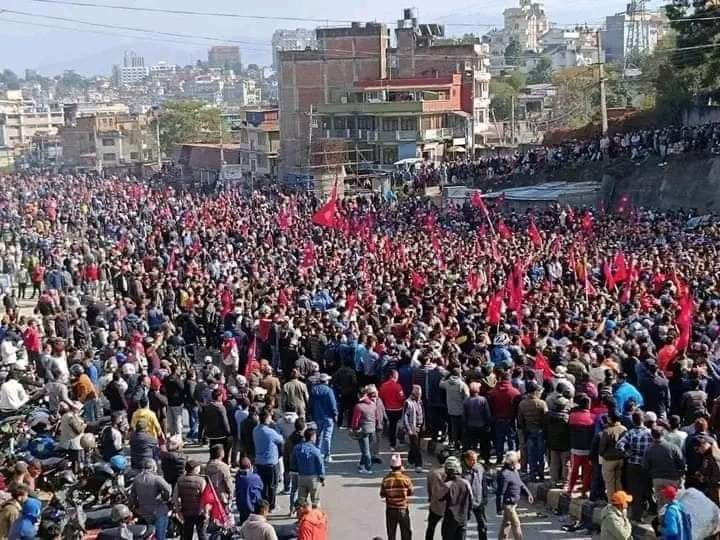
In recent weeks, Nepal has witnessed a surge in mass protests, marked by fervent calls for the overthrow of the existing democratic system and the reinstatement of a "Hindu Rajtantra" – a move that reflects a growing dissatisfaction with the current political landscape. The rallying cry of "Come King Save Us from Oppressive Democracy" has echoed through the streets, sparking debates and discussions on the delicate balance between democracy and the desire for a return to Nepal's Hindu roots.
Nepal has a rich history deeply intertwined with Hinduism. For centuries, the country was a Hindu kingdom, until a decade ago when the monarchy was abolished, and Nepal declared itself a secular state. The move was part of a broader political transformation following a decade-long Maoist insurgency, culminating in the Comprehensive Peace Agreement of 2006.
The subsequent years saw a shift towards democratic governance, with Nepal adopting a federal democratic republic in 2008. However, the path to stability and prosperity has been fraught with challenges, including political instability, economic struggles, and issues of social inclusion.
The recent protests, characterized by calls for a return to a Hindu monarchy, suggest a growing sentiment that the democratic experiment in Nepal has fallen short of expectations. Proponents of the movement argue that a constitutional monarchy based on Hindu principles would restore stability, order, and a sense of national identity.
Critics, however, caution against romanticizing the past, pointing out that a return to a Hindu monarchy might not be a panacea for the nation's problems. They argue that the challenges facing Nepal are multifaceted and require a comprehensive, inclusive approach that respects the diversity of its population.
The protests have brought to the forefront a clash of values, with some expressing nostalgia for the perceived stability of the Hindu monarchy, while others champion the ideals of democracy, inclusivity, and social progress. The debate is not confined to the streets but extends to the highest echelons of Nepalese society, with political leaders, intellectuals, and religious figures engaging in a discourse that will shape the country's future.
The international community has been closely monitoring the developments in Nepal. Concerns have been raised about the potential erosion of democratic values and the impact on the rights and freedoms of Nepal's diverse population. Diplomats and foreign leaders are urging all parties involved to engage in peaceful dialogue and find common ground that respects both democratic principles and the nation's historical and cultural heritage.
The protests in Nepal, calling for the restoration of a "Hindu Rajtantra" and the rejection of the current democratic system, underscore the complex interplay between historical identity, political structures, and societal aspirations. As the nation navigates these tumultuous times, finding a balance between tradition and progress, unity and diversity, will be crucial in shaping Nepal's future trajectory. The outcome of this debate will not only define the governance structure of the nation but also impact the lives and aspirations of its people for generations to come.




















Leave Your Comment