


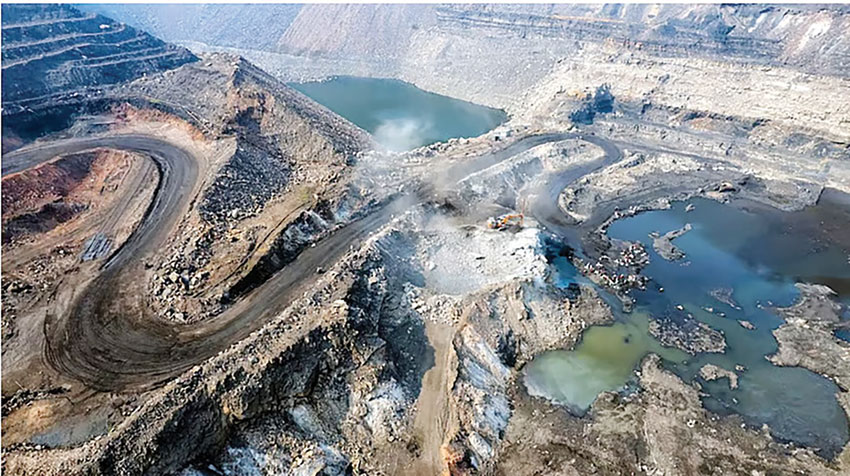
In the mineral-rich heart of Jharkhand lies Jadugoda, India’s first uranium mine since 1951. Nestled within the Singhbhum Shear Zone, it has powered a national dream for decades —but nearby families describe a very different reality: dust blowing off tailing ponds, water they no longer trust, and illnesses that shadow entire households. Behind the glow of uranium lies a darker reality of radiation exposure, environmental degradation, and a growing health crisis.
A recent study titled ‘Effects of uranium mining on health: a case study of Jadugoda of Jharkhand, India’ by Koustab Majumdar, Lal Chhandama, Punam Kumari and Dipankar Chatterjee in Discover Global Society finds alarmingly high respiratory issues, skin diseases, various forms of cancer, neuropsychiatric disorders, congenital disabilities , reproductive health problems as well as significant psychological distress among people living in close proximity to the mining area.
Mining burdens the marginalised
India’s uranium deposits are largely low-grade and geographically concentrated, spanning states like Chhattisgarh, Karnataka, Rajasthan, Haryana, Meghalaya, Andhra Pradesh, and Jharkhand. Jadugoda has been central to this extraction economy. In its early years, the Jaduguda plant processed nearly 1,000 tonnes of ore daily, using separation techniques to distinguish between copper-rich and uranium-rich ores.
While the Uranium Corporation of India and state authorities are tasked with environmental management, the economic benefits have disproportionately favoured state revenues and national development as communities continue living in the shadow of the mines.
Radiation without remedy
Radiation levels in Jadugoda are estimated to be 5 to 6 times higher than those in other uranium mining zones. Though some studies advocate for technical fixes—rock fill, liquid dilution systems, strict protocols—others call for evacuation, citing persistent failures in safety compliance and waste management.
Unprotected tailing ponds, where radioactive slurry is stored, are seen by locals as a primary source of exposure. These ponds, often located near villages, leak into soil and groundwater systems, creating invisible but potent health hazards.
Lived realities: Voices from the villages
Informal interviews and experiences shared by people living in three villages near the Jadugoda mine paints a grim picture. Chronic respiratory issues, skin diseases, cancers, congenital deformities, reproductive health problems, and psychological distress are widespread among people in the area.
Groundwater serves as a route for entry of uranium into food
Improper waste disposal practices, especially the lack of adequate treatment to separate coarse and fine particles in uranium tailings leads to seepage of uranium particles in groundwater and consequently into the food chain.
Uranium mining significantly affects the health of community members and the surrounding environment.
Uranium exposure leads to serious health effects on the physical, reproductive and mental health of people living in the area. Chronic respiratory illnesses; cancers; congenital disabilities; reproductive health problems and psychological stress are common in the region.
Respiratory illnesses
Respiratory problems that people in the region suffer from include asthma, prolonged coughing, chest pain, shortness of breath, tuberculosis (TB) and chronic bronchitis.
Carcinogenic effects
Unprotected or uncovered tailing ponds located adjacent to the villages are the main source of radioactive contamination that seeps into the soil and groundwater. The condition worsens during summer and premonsoon storms and high winds when dust blows from unprotected tailing ponds to villages. The commonly associated cancers in the region include lung, blood, skin and throat cancer – a distressing outcome of radiation-related diseases.
Congenital deformities
Congenital disabilities including birth defects, developmental disabilities and physical deformities, are common among children in the village.
Reproductive morbidities
Women suffer from irregular periods, heavy periods (severe menstrual bleeding), stillbirths and miscarriages.
A female respondent shares, “I had no issue with my period cycle. Since I moved to this village, I have noticed heavy bleeding during my menstrual cycle. I used to have some medicine. Sometimes it works. I have noticed many people with the same issues" (p 11).
High stress levels
People in the region experience widespread psychological stress and fear, anxiety and helplessness on the effects of long-term exposure to radiation and are concerned about the contaminated water they drink, the food that they cultivate and eat and the air they breathe, increasing the uncertainty about their health.
Care gaps compound exposure
Primary Health Centres serve vast areas with scarce staff and minimal diagnostics. Travel to district hospitals can cost a month’s wages. Language and cultural barriers alienate many Scheduled Tribe families from public facilities. Without local data, doctors treat symptoms—not causes—keeping the link between radiation and illness invisible in official records. Limited access to healthcare facilities, fear of long-term health deterioration, socioeconomic vulnerability further exacerbates this crisis.
Advocacy vs. Entrenchment
Despite decades of activism and civil society campaigns, Jadugoda’s plight remains unaddressed. Bureaucratic resistance and entrenched power dynamics between government bodies, corporations, and affected citizens hinders meaningful reform. Grassroots opposition continues, but faces an uphill battle.
What must change now
Jharkhand’s uranium reserves are projected to decline after 2030 due to over-exploitation and new sites are emerging across the country. Experiences from Jadugoda call for an urgent need to introduce integrated policy responses that combine environmental solutions with expansion of accessible and affordable healthcare services. There is thus a need for:
Containment of tailing ponds – By installing impermeable liners, engineered covers, fencing, and storm-water drains; publish audit results.
Monitoring radiation and water quality – Setting up independent labs to test groundwater, air, and crops; maintain monthly public dashboards.
Strengthening healthcare services– Providing mobile clinics for TB and cancer screening; trauma counselling with translation support in tribal languages.
Providing compensation and welfare – Ensuring cancer-care funds, travel subsidies and social-security inclusion for affected families.
Building accountability – Through establishing joint monitoring committees with community representatives; grievance redressal mechanisms within fixed timelines.
Planning safe mine closure – Through long-term monitoring and ecological restoration of abandoned sites.
Rethinking energy, restoring trust
Jadugoda’s people live at the fault line between national ambition and local survival. Their stories reveal not only a public-health crisis but a crisis of governance and equity. If uranium lights our cities, its waste must not darken the lives of those at its source.
Real progress will begin when the air is measured, the ponds are secured, and every household has access to safe water and care—not fear.
By Aarti Kelkar Khambete
(The content of this article reflects the views of writer and contributor, not necessarily those of the publisher and editor. All disputes are subject to the exclusive jurisdiction of competent courts and forums in Delhi/New Delhi only)














Leave Your Comment