


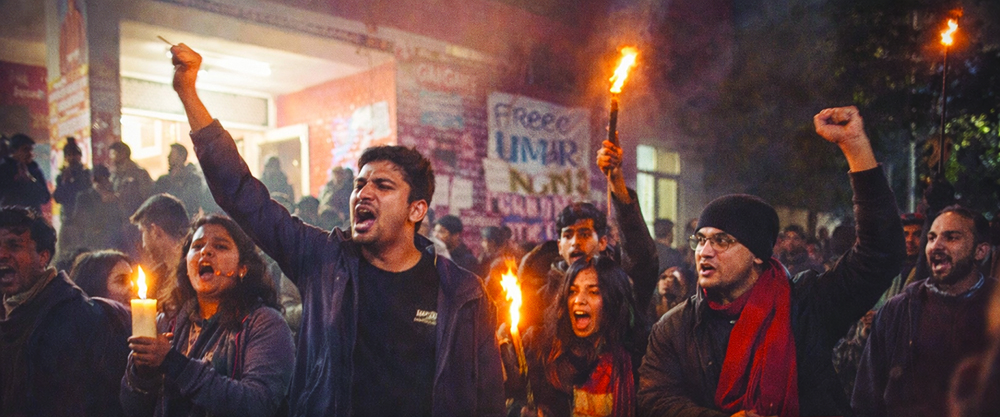
On the night of 5th January 2025, a gathering was organised by the JNU Students Union (JNUSU) titled ‘Night of Resistance with the Guerrilla Dhaba’ to mark the sixth anniversary of the violence that broke out on campus on 5th January 2020. Around 35 students participated in the protest at JNU’s Sabarmati Hostel, during which they raised controversial slogans against Prime Minister Modi, Home Minister Shah, and Industrialists Ambani and Adani. They also protested against the Supreme Court's denial of bail to Umar Khalid and Sharjeel Imam. This incident should not be viewed in isolation, as many similar protests have occurred in the past.
Jawaharlal Nehru University (JNU):
Legacy and Politics
Jawaharlal Nehru University (JNU), established in 1969 in New Delhi, was envisioned as a centre of excellence for higher learning, research, and critical inquiry. Named after India’s first Prime Minister, the university emphasised interdisciplinary studies, the social sciences, international relations, languages, and scientific research. Over the decades, JNU built a strong reputation for academic rigour, affordable education, and intellectual freedom, attracting students from across India. JNU has produced many prominent national figures. Alumni include senior politicians, diplomats, economists, historians, journalists, and civil servants. Notable names often associated with JNU’s intellectual legacy include Nirmala Sitharaman, S. Jaishankar, leading academics, and numerous IAS and IFS officers who shaped public policy and governance. At the same time, JNU has been in the spotlight for controversial student figures such as Kanhaiya Kumar, Umar Khalid, Sharjeel Imam, and Shehla Rashid, whose activism and speeches brought national attention, especially during the 2016 campus controversy and later protests. These episodes triggered intense debates on nationalism, free speech, and dissent.
A defining feature of JNU is the strong presence of left-wing student politics, particularly through organisations like AISA, SFI, and DSU, which dominated the JNU Students’ Union (JNUSU) for decades. These groups promoted issues such as secularism, social justice, anti-imperialism, and resistance to fee hikes. Supporters view this as a vibrant democratic tradition, while critics argue it led to ideological dominance and the excessive politicisation of campus life. Together, JNU’s history reflects the broader tensions of Indian democracy—between debate and discipline, dissent and nationalism, and ideology and education.
Campus Controversies of 2016 and 2020
In February 2016, an event was organised to mark the anniversary of the execution of Afzal Guru, who was convicted in the 2001 Parliament attack case and was executed in 2013 after following due process of law. Allegations that anti-national slogans were raised during and after the event sparked nationwide outrage, intense media coverage, and a heated political debate. JNUSU president Kanhaiya Kumar and students like Umar Khalid were arrested on charges of sedition, though they were later granted bail. The episode sparked a larger debate on nationalism, free speech, dissent and the role of universities in India.
On the evening of 5th January 2020, a masked mob armed with sticks and rods entered the campus and assaulted students, teachers, and staff, leaving several injured. The incident occurred amid protests over hostel fee hikes and broader political tensions, including debates around the Citizenship Amendment Act (CAA). The attack triggered nationwide outrage, protests, and condemnation across political lines. Investigations followed, but accountability and identification of perpetrators remained a subject of controversy and debate.
Universities are centres for innovations and new ideas, and must not be allowed to become laboratories for spreading hatred. Any form of violence, unlawful conduct, or anti-national activity must be dealt with strictly in accordance with the law.
Delhi Riots of 2020
The riots of February 2020 erupted in Northeast Delhi amid heightened tensions over protests against the Citizenship Amendment Act (CAA). They were one of the most serious episodes of communal violence in the capital in recent decades. The causes included political polarisation, provocative speeches, road blockades, rumours spread on social media, and delayed preventive policing. Local disputes escalated into large-scale communal violence, resulting in over 50 deaths, hundreds of injuries, and extensive damage to homes, shops, and places of worship. The alleged role of some JNU students in the riots centres on conspiracy charges, protest mobilisation, and speeches cited by police in charge sheets. Several former students were arrested, while many have denied their involvement. Courts are still examining evidence, and trials are ongoing.
Unlawful Activities (Prevention) Act (UAPA)
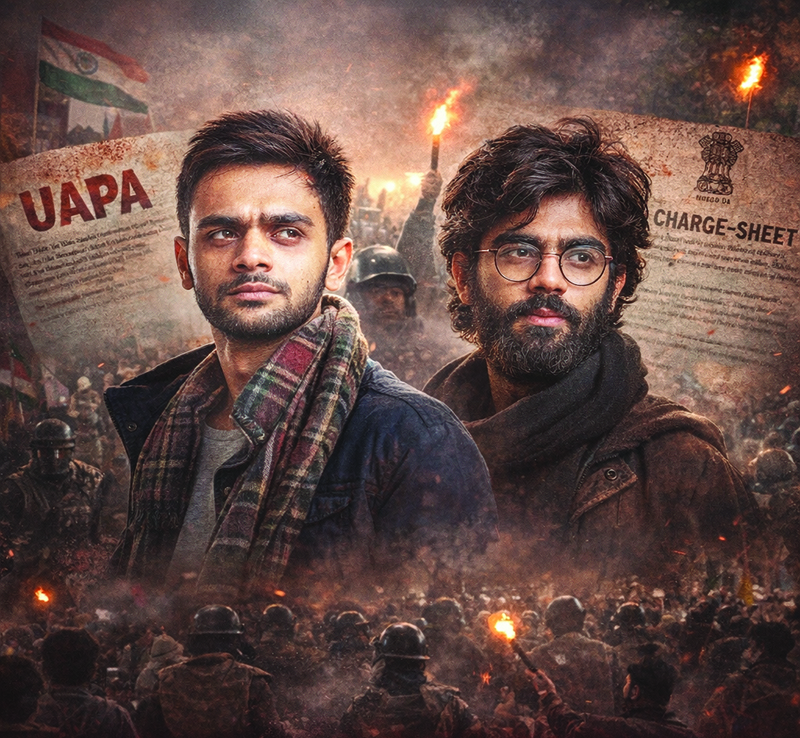
This is India’s primary anti-terror law, enacted in 1967 to safeguard national integrity and security. It empowers the government to declare organisations and individuals as terrorists and to prosecute activities threatening India’s sovereignty, unity, and public order. The Act allows extended detention, stringent bail conditions, and special procedures for investigation and trial. Supporters argue that UAPA is essential to combat terrorism, separatism, and organised violence. Critics, however, raise concerns about misuse, prolonged incarceration without trial, and the impact on civil liberties. The Act has been amended in 2004, 2008, 2012, and 2019, to address evolving security threats. These amendments have expanded the law’s scope and imposed a higher threshold for bail, prioritising societal safety over individual liberty at the preliminary stage.
Batla House Encounter and Burhan Wani
The Batla House encounter took place on 19 September 2008 in Jamia Nagar, New Delhi, following the serial bomb blasts in Delhi earlier that month. Delhi Police’s Special Cell raided a flat suspected to house Indian Mujahideen operatives. During the operation, Inspector Mohan Chand Sharma was killed, and two suspected terrorists, Atif Ameen and Sajid, were shot dead. Two others were arrested. The encounter sparked controversy, with some groups questioning its authenticity, while multiple investigations, court judgments, and inquiries later upheld the police version. The incident remains a significant episode in India’s counter-terrorism history.
Burhan Wani, a Hizbul Mujahideen militant from Kashmir, became a prominent face of terrorism through social media propaganda. He was involved in several militant activities and was killed in an encounter with security forces on 8 July 2016. His death triggered widespread unrest in Jammu and Kashmir, including violent protests, stone-pelting, and attacks on security forces. A section of society expressed sympathy and glorification after his killing, portraying him as a “martyr,” which drew sharp criticism. The Indian state and judiciary categorised him as a terrorist, and authorities argued that such sympathy romanticised violence and undermined the rule of law. The episode highlighted challenges of radicalisation, misinformation, and counter-terrorism in the region.
Umar Khalid and Sharjeel Imam
They are former JNU students who rose to national prominence through their political activism and speeches during student movements and protests in India. They have been booked under UAPA in connection with the February 2020 Northeast Delhi riots conspiracy case. The Delhi Police Special Cell named them in charge-sheets under UAPA and various sections of the Indian Penal Code, alleging they were part of a larger conspiracy linked to the violence that left over 50 people dead and hundreds injured. They are currently in judicial custody, and their bail pleas have been denied by the Supreme Court, which noted serious allegations and prima facie evidence linking them to the alleged conspiracy.
The prolonged delay in their trial is mainly due to the complexity of UAPA cases. The prosecution relies on voluminous charge sheets, digital evidence, call records, and multiple protected witnesses, all of which take time to examine. There are many accused persons in interconnected cases, requiring coordinated hearings. Strict procedural requirements, frequent legal petitions, and appeals also slow progress. Additionally, COVID-19 disruptions delayed court functioning in the early years. Courts must ensure due process and witness security, which further prolongs the trial despite its seriousness.
Justice, Bail, and the Way Forward
Delays in India’s judicial system arise from structural, procedural, and administrative challenges, including a massive case backlog, a shortage of judges, frequent adjournments, complex procedures, lengthy evidence recording, and slow trials. Poor investigation and delayed charge sheets further exacerbate the problem. Inadequate infrastructure, staff shortages, and multiple appeals at different stages further prolong cases. The misuse of legal remedies and the lack of strict timelines also contribute. Together, these factors overburden the judiciary and delay justice, reinforcing the need for systemic reforms and efficient case management.
The principle that “jail is an exception and bail is the norm” is not automatically applicable to cases involving serious offences under special laws such as UAPA placing a higher threshold for bail. When allegations involve organised violence, incitement, or threats to the nation’s integrity, courts may justifiably deny bail until the evidence is tested in a trial, making these cases exceptions to the general bail principle.
Justice in Indian courts can be made faster through a combination of structural reforms and efficient practices. Increasing the number of judges and filling vacancies promptly is essential to reducing the heavy case backlog. Limiting unnecessary adjournments and enforcing strict timelines for trials will discourage delays. Greater use of technology, such as e-courts, digital filings, and virtual hearings, can speed up procedures. Strengthening investigation and prosecution quality will prevent repeated hearings. Promoting alternative dispute resolution mechanisms like mediation and arbitration can reduce the court burden. Simplifying laws and procedures and improving court infrastructure will collectively ensure faster, more effective justice delivery.
Conclusion
Terrorism has no religion, and the vast majority of Indians reject violence and extremism. However, expressing sympathy for convicted terrorists or violent extremist groups—whether separatists or Naxals—crosses a moral and legal line. Such support legitimises violence, undermines democratic institutions, and endangers public safety.
While dissent is a democratic right, glorifying extremism or questioning judicial verdicts after due process undermines the rule of law. A healthy democracy must protect civil liberties while maintaining zero tolerance for terrorism and unwavering respect for constitutional institutions. Any person convicted by the court following due procedure of law deserves no sympathy or support.

Manoj Dubey
Principal (Retd.)
Delhi Public Schools
(The content of this article reflects the views of writer and contributor, not necessarily those of the publisher and editor. All disputes are subject to the exclusive jurisdiction of competent courts and forums in Delhi/New Delhi only)
















Comments (3)
N
The author raises important questions regarding the political atmosphere within premier educational institutions like JNU. Universities should ideally remain centers for intellectual growth and innovation rather than becoming hubs for ideological polarization. Balancing civil liberties with the responsibility to prevent radicalization is a complex but necessary challenge for our society today. The article is nicely authored.
S
आतंकवाद राष्ट्रीय सुरक्षा के लिए कई तरह से चुनौती प्रस्तुत करता है, जैसे मानवीय क्षति, आर्थिक नुक्सान, सामाजिक अशांति, राजनीतिक अस्थिरता इत्यादि। इसके मुख्य स्रोत हैं राज्य प्रायोजन, आपराधिक गतिविधियां (जैसे ड्रग तस्करी, हथियारों की तस्करी,मानव तस्करी और फिरौती इत्यादि),दान और सहानुभूति, ऑनलाइन वित्त पोषण, गैर कानूनी व्यापार (जैसे अवैध खनन, वन उत्पादों की तस्करी इत्यादि)। इसके नियंत्रण के उपाय हैं -निवारक उपाय (जैसे शिक्षा, जागरुकता, सामुदायिक भागीदारी इत्यादि), कानून प्रवर्तन (गिरफ्तारी, खुफिया एजेंसियों और पुलिस बलों की मजबूती), अंतरराष्ट्रीय सहयोग, पुनर्वास (पूर्व आतंकियों के लिए),साइबर सुरक्षा, सीमा सुरक्षा और संदिग्ध वित्तीय लेनदेन पर निगरानी। भारत सरकार ने कई कदम उठाए हैं जैसे -NIA,TADA, सख्त वीजा नियम.... लेखक ने बहुत ही महत्वपूर्ण विषय पर विस्तार से चर्चा की है जो राष्ट्रीय हित से युक्त है। इसके लिए उन्हें बहुत बहुत आभार।
D
The prestigious institutions like JNU has produced the talents such as N. Sitharaman, S. Jaishankar and many more IAS and IPS etc. Besides this also remains the battle ground for students unions, leftists. The students like Umar Khalid, Sharjeel Imam who raised the anti India Slogans and propoganda which leads to death of more than 50 persons. The judiciary and administration took it's own course deal them under UAPA. Any person convicted under the law by the court following due procedure by the court deserves no sympathy or support. The auther analysed the issue very critically which is admirable.