


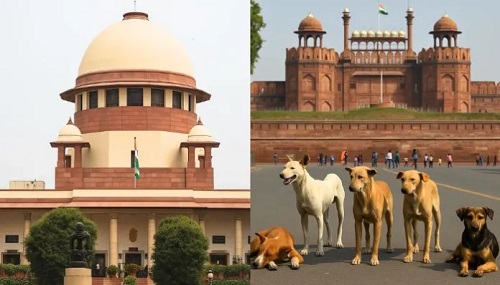
In a significant move that balances public safety with animal welfare, the Supreme Court of India has revised its earlier directive calling for the removal of all stray dogs from the streets of Delhi-NCR. The new order, delivered by a three-judge bench comprising Justices Vikram Nath, Sandeep Mehta, and NV Anjaria, advocates for a more nuanced approach, allowing for the release of vaccinated strays back to their original locations while imposing strict conditions to mitigate risks.
This decision comes after the court's initial August 11 order, issued by a bench of Justices JB Pardiwala and R Mahadevan, had mandated the relocation of all stray dogs in the capital region to shelters within eight weeks. That directive was a response to alarming government data citing over 37 lakh dog bites and 54 suspected rabies deaths in 2024 alone.
However, the blanket removal order faced strong opposition from animal rights activists and celebrities, prompting the court to review its stance.
Key Directives of the Revised Order
The Supreme Court's latest ruling modifies the previous instructions, introducing a framework intended for nationwide application. The key points of the order are:
Regulated Return, Not Blanket Removal: The court has now clarified that only dogs exhibiting aggressive behaviour or those infected with rabies must be held in shelters for immunization. Other stray dogs, once vaccinated, can be released back to their original territories.
Nationwide Application: The directives of the two-judge bench from August 11 have been expanded to apply across all of India. The Supreme Court has transferred all related cases pending in various High Courts to itself to ensure a uniform national policy.
Designated Feeding Zones: In a bid to prevent human-dog conflicts on streets, the court has directed municipal authorities to designate special feeding areas for stray dogs within each ward. It explicitly prohibited feeding dogs on public streets, warning that any violation would attract legal action.
Financial Responsibility for NGOs: Dog lovers and Non-Governmental Organizations (NGOs) who had approached the court are required to deposit Rs. 25,000 and Rs. 2,00,000 respectively. These funds are intended for the upkeep and management of dog shelters.
Upholding Most Previous Directives: Except for the clause prohibiting municipal officials from releasing stray dogs, all other instructions from the August 11 order remain in effect.
A Search for Balance
The revised order represents a judicial effort to find a middle ground between two pressing concerns: the undeniable threat of rabies and dog bites to public health, and the ethical treatment of street animals. By advocating for vaccination and controlled release, the court emphasizes prevention through Animal Birth Control (ABC) programs rather than mere removal.
The directive on designated feeding areas is particularly crucial, as haphazard feeding on streets and parks is often a primary cause of territorial aggression in dogs and subsequent conflicts with residents.
The case has been scheduled for a further hearing after eight weeks, allowing time for the new directives to be implemented and assessed. This ongoing process underscores the complexity of managing urban wildlife and the continuous search for a humane and effective solution that safeguards both citizens and animals.





















Leave Your Comment