


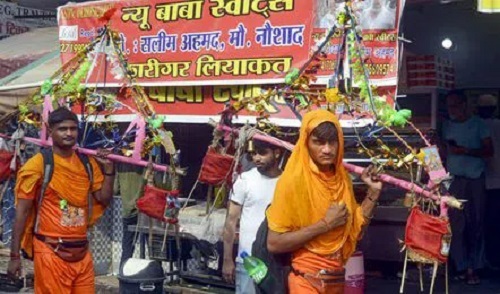
In a significant development concerning the directives issued by the governments of Uttar Pradesh, Uttarakhand, and Madhya Pradesh, the Supreme Court of India has extended its interim order staying the controversial requirement for eateries along the Kanwar Yatra route to display the names and identities of owners and staff. The directive, aimed at enhancing security measures during the annual pilgrimage, has sparked debates surrounding privacy rights and religious freedoms.
A bench comprising Justices Hrishikesh Roy and SVN Bhatti upheld its stance from the July 22 order, asserting that compelling individuals or establishments to disclose personal details goes against fundamental rights. Justice Hrishikesh Roy remarked, "We have said what needed to be said in our July 22 order. Can't force anyone to disclose names."
The Supreme Court's decision came amidst the backdrop of submissions made by the Uttar Pradesh government defending its directive through an affidavit filed earlier on Friday. The governments of Uttarakhand and Madhya Pradesh were granted additional time to file their responses, with the next hearing scheduled in two weeks.
Interestingly, the apex court also dismissed an intervention filed by Kanwar pilgrims who supported the state directives, arguing that these measures were essential for ensuring the safety and security of the pilgrimage. The court emphasized that any such directive must be balanced with the constitutional rights of privacy and freedom of religious practices.
The contentious directives had mandated eateries to prominently display the names and identities of their owners and staff along the Kanwar Yatra route, citing security concerns and the need for accountability during the religious procession. However, critics argued that such measures could potentially infringe upon the privacy rights guaranteed under the Constitution, especially without adequate safeguards against misuse of personal information.
The Supreme Court's interim stay provides temporary relief to stakeholders concerned about the implications of the directives on privacy and religious freedoms. The upcoming hearings are expected to delve deeper into the legal and constitutional aspects surrounding the balance between security imperatives and individual rights in the context of public events and religious gatherings.
As the debate continues, the Supreme Court's role remains pivotal in navigating the delicate balance between security measures and the protection of fundamental rights, setting crucial precedents for future cases involving privacy and religious freedoms in India.




















Leave Your Comment