


The recent electoral defeats of the Congress Party in states like Haryana, Rajasthan, and Madhya Pradesh have reignited a longstanding debate within the party: are its ageing leaders a source of strength, or have they become stumbling blocks hindering the party’s progress? In a political landscape marked by shifting allegiances and the emergence of younger leaders in other parties, Congress’s reliance on older, sometimes inflexible figures raises important questions about its adaptability, innovativeness, and ability to win over a rapidly evolving voter base.
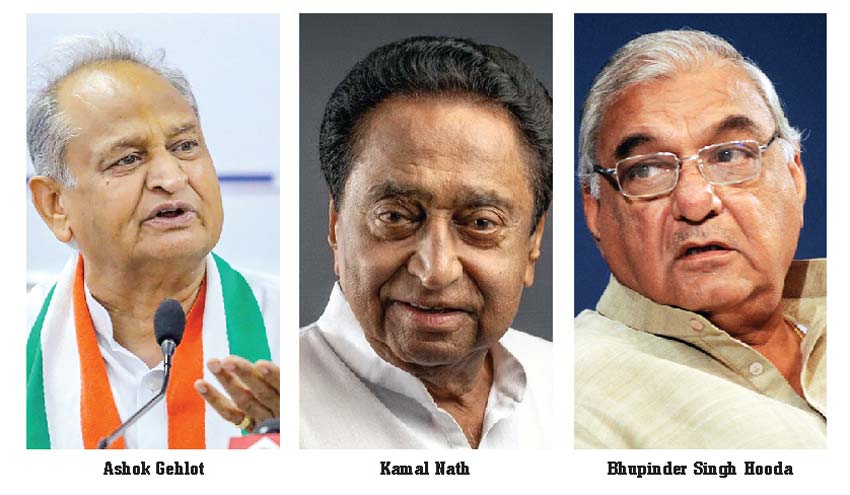
Senior Congress leaders have long been seen as the guardians of the party’s legacy, representing a bridge to the era of Nehru and Gandhi. Figures like Ashok Gehlot, Kamal Nath, and Bhupinder Singh Hooda embody continuity, stability, and a profound understanding of complex, state-specific issues. These leaders have weathered countless political challenges, policy shifts, and power realignments. Their commitment to Congress’s ideals and extensive experience in governance have kept the party relevant in many states. However, this reliance on senior leaders can be a double-edged sword. While their wisdom and experience have undeniable value, these veterans often struggle to connect with India’s increasingly young population. Their policies and worldviews were shaped in an era very different from today, and they may lack the resonance that younger voters seek in terms of progressive ideas and responsive governance.
One of the significant issues facing Congress today is the generational divide within its own ranks. While parties like the BJP and regional players have introduced fresh faces to energize their base, Congress still leans heavily on a cadre of aging satraps. This generational divide is most evident in how the party’s internal structures resist substantial change. Young leaders such as Sachin Pilot in Rajasthan and JitinPrasada in Uttar Pradesh, who show promise and popularity, often find themselves clashing with senior colleagues over policy direction and leadership. The absence of a clear succession plan or a pathway to integrate younger voices systematically threatens the party’s long-term survival and makes it less appealing to younger voters.
This reliance on senior leaders has also resulted in a tendency toward inertia, with the party’s internal culture often resistant to necessary structural change. While Congress has made sporadic attempts to refresh its image and strategies, entrenched leaders frequently oppose the shifts required to keep the party competitive. This reluctance is evident in Congress’s hesitancy to embrace technology, innovative outreach, and more direct communication with younger demographics. In contrast, the BJP and other regional parties have aggressively invested in digital campaigns and targeted engagement, thereby widening the gap between Congress and its potential voter base. For example, while other parties are fully immersed in social media campaigns and grassroots outreach, Congress’s efforts often seem outdated and inconsistent due to the lack of genuine youth representation in its highest echelons. The result is a party that frequently appears out of sync with the modern political environment and lags in agility and responsiveness.
The dominance of senior leaders also poses a crisis of internal democracy within Congress, which discourages promising younger leaders from staying. The top-down structure of decision-making leaves little room for grassroots voices or fresh ideas to rise through the ranks. Talented young leaders, who might inject much-needed vitality into the party, often find themselves marginalized. Over the years, several prominent young leaders have exited Congress to join rival parties or start independent careers, a trend that highlights the party’s difficulties in retaining talent. Leaders like JyotiradityaScindia and JitinPrasada left to join the BJP, often voicing frustrations over Congress’s inflexible hierarchy. Their departures signify a broader challenge: if ambitious young talent continually feels stifled, Congress will struggle to retain the fresh perspectives it desperately needs to stay relevant in a changing political landscape.
Additionally, Congress’s continued dependence on aging leaders has resulted in a disconnect with India’s younger voters. With over half the country’s population below the age of 30, this demographic is technology-driven, aspirational, and eager for relatable, accessible leadership. In this context, Congress’s aging leadership stands in stark contrast to the younger faces that populate rival parties. Leaders like Arvind Kejriwal from the Aam Aadmi Party and Tejasvi Surya from the BJP have connected effectively with younger voters through social media engagement and public forums focused on youth concerns. Congress’s outreach to young voters, by comparison, can seem forced and unconvincing, largely due to the limited representation of young leaders within its core leadership. Without the presence of leaders who genuinely understand and reflect the aspirations of millennials and Gen Z, Congress risks further alienating this crucial voting bloc.
Despite these challenges, it’s important to acknowledge the benefits that senior leadership brings to the table. The experience and political acumen that senior leaders possess are assets in situations that require historical insight, legal knowledge, and complex coalition-building. Veteran leaders such as Kamal Nath have demonstrated an ability to navigate complicated political landscapes that might overwhelm younger leaders. Additionally, senior leaders often maintain a loyal voter base and strong relationships with local party workers, connections cultivated over decades that can play a significant role in mobilizing support, particularly in rural constituencies where Congress still retains influence.
The road ahead for Congress involves finding a balance between retaining the experience of its senior leaders and bringing in fresh, younger talent. This balancing act, while challenging, could prove beneficial if executed thoughtfully. A mentorship model, where experienced leaders actively groom and empower younger counterparts, could foster continuity while nurturing the innovation needed to adapt to changing times. Instead of seeing youth as a threat, Congress could view it as an opportunity to infuse dynamism and modernize its approach to campaigning and policy-making. By empowering younger leaders to lead campaigns and participate in strategic decisions, Congress could reestablish itself as an agile, forward-thinking party capable of connecting with today’s electorate.
In sum, the question of whether Congress’s aging leaders are a strength or a stumbling block is a nuanced one. Their dedication, experience, and knowledge are invaluable, especially in areas requiring seasoned governance and coalition-building. However, their resistance to change and disconnect from the youth have become significant obstacles. To survive and thrive, Congress must embrace a generational shift that respects its legacy while adapting to the demands of modern India. Without such transformation, Congress risks being outpaced by more agile competitors, particularly as younger leaders continue to shape the future of Indian politics. For Congress, the future hinges on its ability to evolve, recognizing that honoring the past need not come at the cost of embracing the future.
By Uday india bureau




















Leave Your Comment