


On Condolences
First and foremost, we want to express our deepest condolences to the families of those who lost their lives. This is a heartbreaking tragedy, and our thoughts are with them.
Condole the tragic loss of life. Do not say that such losses are to-be expected in conflict.
On Blaming India
There's a narrative going around that somehow India is responsible for what happened to the IRIS Dena. It is clearly disinformation attempt. This was a kinetic strike between two nations at war with each other, in international waters. India had nothing to do with it.
Highlight that blaming India for a kinetic strike between two foreign nations in international waters is a disinformation tactic. Each warship is Sovereign territory. After leaving Visakhapatnam, IRIS Dena was following orders of its-own Sovereign Government.
On the Timeline
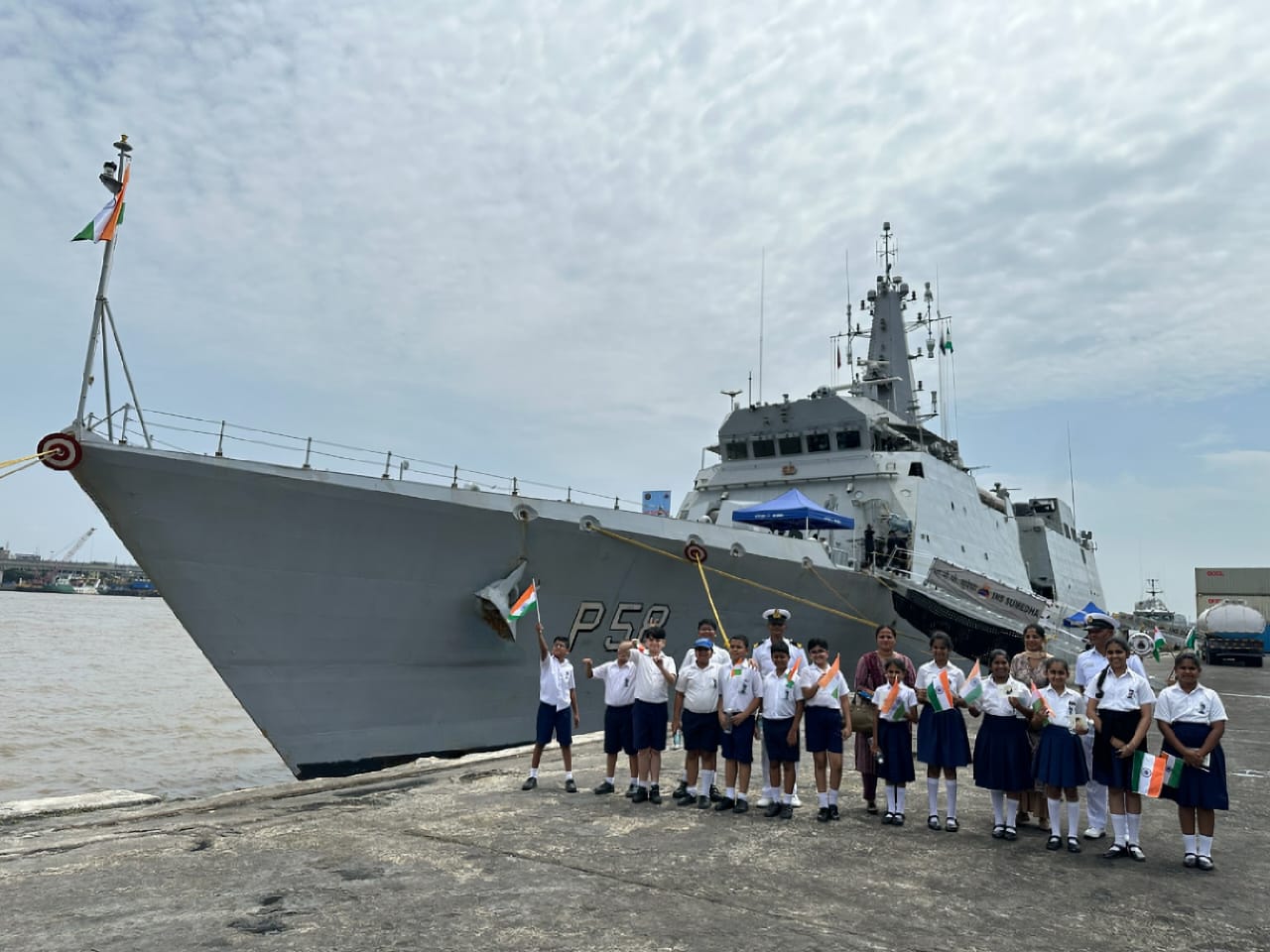
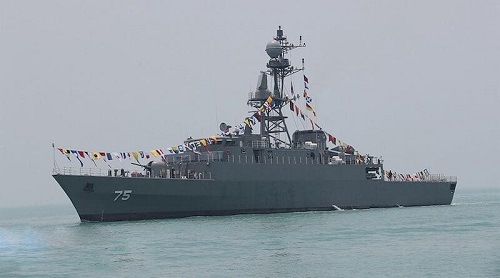
The Dena left Visakhapatnam on the 25th of February. The US-Iran conflict broke out three days later, on the 28th. The ship was struck on the 4th of March — a full week after it had left Indian waters and was well into international waters.
On the Nature of Naval Warfare
When two nations are at war at sea, their warships are legitimate military targets — anywhere in the world, in neutral waters. That's just the reality of how naval warfare works. A warship is sovereign territory of its own nation, operating under its own government's orders.
India cannot stop belligerents engaged in Armed Conflict who may attack each other anywhere in neutral waters anywhere in the world.
On India Sharing Positional Data
There's absolutely no question of India providing anyone with positional data to facilitate an attack. That question doesn't even make sense as the Americans have some of the most advanced satellite and maritime surveillance capabilities on the planet. They're tracking every ship at sea. They don't need to ask us.
There is significant positional transparency today of all ships at sea. Powers like US have extensive satellite coverage and MDA capability. They do not seek assistance.
On the Milan Exercise
The fact that IRIS Dena participated in our multinational exercise doesn't change anything. Once a warship leaves, it is under its own flag, its own government. Participation in a multinational exercise hosted by India does not alter the ship’s wartime status as a belligerent warship
On India's Jurisdiction
Under international law — specifically UNCLOS — India's jurisdiction extends to 12 nautical miles from our coast. Incident happened more than 200 Nautical Miles from India. IRIS Dena was sunk 20 Nautical Miles West of Galle/ 60nm South of Colombo. That's over 1,200 kilometres from Visakhapatnam.
Proximity does not translate to responsibility in international law. As per UNCLOS India is constrained by jurisdiction only within its territorial waters – 12 Nautical Miles from its coast. You cannot logically hold India accountable for something that happened that far away, that many days later.
On Expecting India to Intervene
It is simply not logical to expect the Indian Navy to escort a foreign warship for days after it has departed our waters — especially when no request for security assistance was ever made.
Expecting the Indian Navy to assume responsibilities for a foreign warship several days after its departure, when no security assistance has been sought, does not stand to logic.
On Search and Rescue
The moment we knew there was an incident endangering lives at sea, we stepped in. Sri Lanka's MRCC led the SAR operation — and rightly so, given the location — but India has been cooperating fully, with both surface and aerial assets. We're doing everything we can for those in the water.
SAR provided by Sri Lanka MRCC was timely. While Sri Lanka is in the lead, India continues to coordinate with surface and aerial assets in SAR efforts.
On the 'Net Security Provider' Role
People are asking why India didn't intervene as a Net Security Provider. That Net Security Provider role is about peacetime security — going after pirates, responding to disasters, keeping trade routes safe. It is not a mandate to intervene into an active armed conflict between two foreign belligerents. That would be a completely different matter altogether.
If questioned on the concept of Net Security Provider and First Responder, it may be highlighted that security efforts are peacetime measures for good order at sea. Under the ‘Net Security Provider’ doctrine, the Navy fights non-state threats like pirates, conducts disaster relief (HADR) and protects trade routes. It cannot be used to intervene in conventional armed conflicts between belligerents
On the Legal Picture
Under international humanitarian law, an enemy warship is a lawful military target during hostilities. There doesn't need to be a formal declaration of war for this — armed conflicts are covered under the Geneva Conventions. So the strike itself, as much as we mourn the loss of life, falls within the laws of armed conflict.
That said, what is not acceptable is failing to rescue survivors. Once the engagement was over, and the submarine faced no further threat, international humanitarian law required those survivors to be searched for and assisted. That obligation was not met — and that is a serious violation that the international community must take note of.
US submarine sank the Iranian warship IRIS Dena in the EEZ of Sri Lanka (beyond Territorial Waters). Warships of enemy belligerents qualify as military objectives in naval warfare under customary international humanitarian law (IHL). Neither the 1949 Second Geneva Convention nor the 1907 Hague Convention X prohibits attacks on opposing warships during armed conflict.
Formal declarations of war are obsolete post-WWII due to UN Charter Article 2(4) restrictions on force. Armed conflicts are covered under the IHL via Geneva Convention II Article 2. Belligerent action, as reported in the US strikes on Iranian naval ship, indicate an international armed conflict. An armed conflict exists without formal declaration of war, rendering the armed forces of both countries a valid target for the other belligerent.
USN submarine strike on IRIS Dena is inline with LOAC, however the submarine violated LOAC by not rescuing IRIS Dena survivors after engagement since the submarine itself was under no threat. International Humanitarian Law mandates parties take all possible measures without delay to search for, collect, and care for shipwrecked, wounded, and sick post-engagement/ attack.
SAR Response by Indian Navy
A distress call from IRIS Dena was received at the MRCC Colombo in the early hours of 04 March 26 as reported by the Sri Lankan Navy. The ship was operating in the SAR region under Sri Lankan responsibility. Indian Navy promptly launched its SAR efforts commencing with a long-range maritime patrol aircraft at 1000 hr on 04 March 26. Another aircraft with air droppable life rafts was also kept standby. INS Tarangini was deployed and arrived in search area by 1600 hr on 04 March 26. By this time SAR had been undertaken by Sri Lankan Navy. INS Ikshak has also sailed from Kochi to augment the search efforts Coordination with the Sri Lankan side on Search and Rescue efforts is ongoing.

















Leave Your Comment