



Manoj Dubey
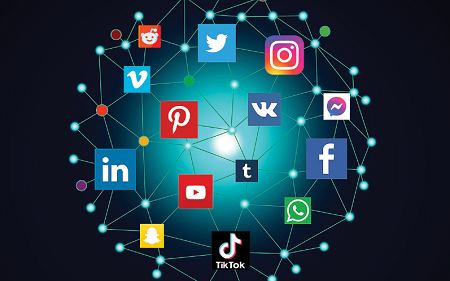
Social media began in the late 1990s with websites such as SixDegrees, which allowed users to create profiles and connect with friends. Key platforms include Facebook (founded in 2004), YouTube (2005), Twitter (now X, 2006), WhatsApp (2009), Instagram (2010), Snapchat (2011), Telegram (2013), TikTok (2016), and Threads (2023). These platforms have transformed communication, networking, entertainment, business, education, and information sharing worldwide. They have transformed online communication by enabling people to share text, photos, videos, and ideas instantly. The widespread use of smartphones has further accelerated social media's growth, making it an integral part of daily life. Today, social media influences communication, education, business, entertainment, and politics while also raising concerns about privacy, misinformation, and mental well-being.
Importance
Social media has become an essential part of modern life, connecting people across the world instantly. It enables communication through text, voice, and video calls, making personal and professional interactions easier. It is a powerful platform for sharing information, news, ideas, and educational content. Students and teachers use it for online learning, while businesses promote products, engage with customers, and expand their markets. Governments and public agencies use social media to disseminate important announcements, provide emergency updates, and raise awareness of public welfare schemes. It also supports social causes, disaster relief, fundraising, and community building. Creative professionals use social media to showcase their talents and reach global audiences, while users enjoy entertainment through videos, music, games, and live events. When used responsibly and in moderation, social media promotes communication, collaboration, innovation, and economic opportunities, making it a valuable tool for individuals, organisations, and society.
Threat to Security
Social media has transformed communication by enabling the rapid exchange of information, but it also poses significant challenges to India's internal security. The widespread use of these platforms enables misinformation, fake news, and inflammatory content to spread quickly, sometimes triggering communal tensions, riots, and public unrest. Terrorist organisations, extremist groups, and criminal networks may use social media for propaganda, recruitment, fundraising, and encrypted communication. Anti-national elements can exploit these platforms to spread disinformation, erode public trust in institutions, and incite violence. Cybercriminals also use social media for phishing, identity theft, financial fraud, and online radicalisation. Foreign actors may attempt to influence public opinion through coordinated misinformation campaigns and fake accounts, especially during elections or periods of national crisis, thereby undermining social harmony and democratic processes.
To address these challenges, India needs stronger cybersecurity, effective enforcement of existing laws, greater cooperation between technology companies and law enforcement agencies, a strengthened intelligence network, and improved digital literacy. Users should verify information before sharing it and report any suspicious content.
Social media can be exploited by hostile state and non-state actors to influence public opinion, create instability, and undermine national security. While such tactics have been observed globally, they should not be assumed in any specific case without evidence. Hostile actors based in neighbouring countries may misuse social media in several ways, including spreading misinformation and fake news to create panic, communal tension, or distrust in government institutions; inciting communal or regional conflicts by circulating provocative videos and edited images, and promoting extremist propaganda to encourage radicalisation or support for violent organisations; interfering in elections by spreading misleading information, amplifying divisive narratives, or using automated bot networks; committing cyber fraud and phishing attacks through fake social media profiles to steal personal, financial, or sensitive information; spreading anti-India propaganda to damage India's international image or create mistrust among citizens; and targeting youth with divisive or misleading content to increase polarisation and social unrest.
Impact On Human Relations
Social media has profoundly changed the way people build and maintain relationships. It has made communication faster, easier, and more accessible, enabling families and friends to stay connected across long distances through instant messaging, video calls, and shared experiences. It also helps people reconnect with old friends, build professional networks, and form communities based on common interests.
However, excessive use of social media has strained human relationships. Face-to-face conversations are often replaced by online interactions, which reduce the depth of personal connections. Many people spend more time on their devices than with family and friends, leading to loneliness, misunderstandings, and emotional distance. Constant comparison with others' carefully curated online lives can cause stress, anxiety, jealousy, and low self-esteem, which in turn affect personal relationships.
Social media can also contribute to cyberbullying, online harassment, and the spread of misinformation, which may erode trust and social harmony. Excessive screen time may reduce empathy, weaken interpersonal communication skills, and strain family bonds.
Therefore, while social media is a valuable tool for communication and networking, it should complement rather than replace real-life relationships. Maintaining a healthy balance between online and offline interactions is essential for building meaningful, trusting, and emotionally fulfilling human relationships.
Impact On Health
Social media has become an integral part of modern life, but excessive or unhealthy use can affect both mental and physical health. Frequent comparisons with others' lifestyles and achievements can erode self-confidence, especially among adolescents and young adults. Cyberbullying, online harassment, and exposure to disturbing content can further increase emotional distress.
Excessive social media use can also become addictive, reducing attention span, productivity, and academic or professional performance, and leading to poor time management. It may interfere with sleep by encouraging late-night screen use and blue-light exposure, resulting in insomnia and poor sleep quality. Prolonged use can contribute to stress, anxiety, depression, loneliness, and low self-esteem. Physically, prolonged screen time can cause eye strain, headaches, neck and back pain, poor posture, and a sedentary lifestyle. Reduced physical activity increases the risk of obesity, cardiovascular diseases, and other lifestyle-related disorders. Excessive device use may also reduce outdoor activities and face-to-face social interactions, affecting overall well-being.
These risks can be mitigated by limiting screen time, staying physically active, getting adequate sleep, verifying online content, and balancing digital engagement with real-world relationships and hobbies. Responsible social media use allows people to enjoy its benefits while protecting their mental and physical health.
Conclusion
Social media has become an indispensable part of modern society, transforming communication, education, business, governance, and entertainment. It enables people to stay connected with family and friends worldwide, provides access to educational resources and employment opportunities, and helps businesses engage with customers and expand their reach. Governments and public agencies use it to share important announcements, disaster alerts, and public health information, while communities benefit from greater social awareness, fundraising, and civic participation.
At the same time, excessive or irresponsible use can contribute to misinformation, cybercrime, social division, and adverse effects on mental and physical health, particularly among minors. Australia became the first country to pass legislation setting a minimum age of 16 for many social media platforms, and several other countries are considering similar measures.
Maintaining a healthy balance between online and offline life, verifying information before sharing it, and promoting responsible digital behaviour are essential to maximising the benefits of social media while minimising its risks. Used wisely, social media can continue to support innovation, collaboration, cultural exchange, and inclusive social and economic development.
(The content of this article reflects the views of writer and contributor, not necessarily those of the publisher and editor. All disputes are subject to the exclusive jurisdiction of competent courts and forums in Delhi/New Delhi only)





















Comments (5)
S
सोशल मीडिया के लाभ - हानि को दर्शाने के लिए बहुत बहुत धन्यवाद।
S
Absolutely Inspirational and Truly Amazing and Insightful!! Commendable, Bravo!!
v
Very informative and relevant as per present day scenario.
v
Very informative and relevant as per present day scenario.
A
Describing social media it's growth in a fine way by wrter. He describe solution of good and bad effect of social media. He advice to verify information before sharing and report suspicious content. Excessive use can affect mental and physical health writer advice healthy balance between online and offline life very impressively. Very knowledgeable.