


India is home to one of the largest young populations in the world, with millions of children entering the digital space every year through smartphones and social media platforms. Though technology has provided a new platform of learning and communication, it has also built a world in which children are spending more and more time scrolling through reels, following online trends, and communicating with online strangers. Recognizing the risks associated with early exposure, several countries—including Australia, Indonesia, and France— are now moving to restrict social media access for children under sixteen. With India undergoing its own digital revolution, a pertinent question is: can similarly stringent measures be imposed on the country to shield young minds from the unwanted effects of social media?
India today is one of the largest digital societies in the world. With affordable smartphones and low-cost data services, the country has experienced a remarkable expansion in internet access. Current estimates suggest that India has over 460–500 million active social media users, making it one of the biggest markets for global digital platforms such as Instagram, YouTube, Facebook, Snapchat, and short-video applications.
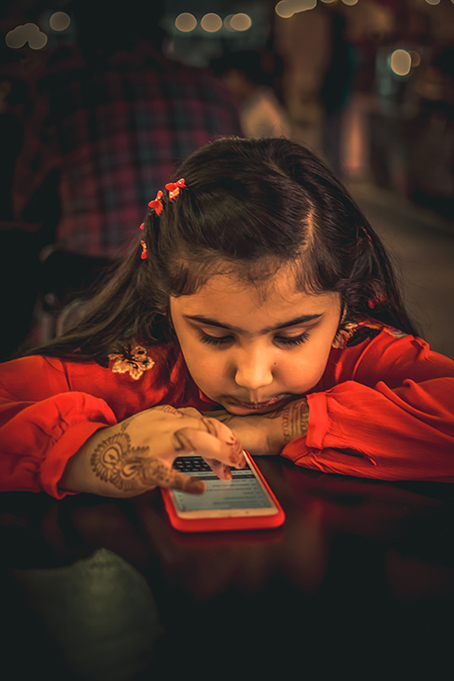
A significant portion of these users are teenagers and school students. Studies indicate that around one-fifth of India’s social media users are below the age of eighteen, with many children beginning to access these platforms as early as eleven or twelve years old. For many adolescents, social media has become a daily habit—watching reels, posting short videos, following influencers, and seeking validation through likes and comments.
Though digital technology provides chances to be creative, network and learn, overuse of digital technology during the formative years can have unforeseen results. Issues of mental health, academic distraction, cyberbullying and exposure to unhealthy material are a growing concern among educators, parents and policymakers worldwide.
Recognizing these challenges, several countries have begun introducing restrictions on social media usage for children. Australia has taken the most decisive step so far by implementing a nationwide ban on social media access for children under sixteen, which came into effect in December 2025. The regulation covers major platforms such as Instagram, TikTok, Facebook, Snapchat, and YouTube, and companies that fail to enforce age verification may face substantial financial penalties.
Australia’s policy decision has sparked an international debate about children’s digital safety. Other countries are now exploring similar measures. Indonesia has announced plans to restrict social media access for users under sixteen starting in 2026, while Malaysia is preparing to implement comparable regulations. Papua New Guinea has introduced rules requiring age verification for users above fourteen.
The discussion is on the rise throughout Europe. France has supported restrictions among children under fifteen, and Spain and the United Kingdom are debating similar measures to safeguard young users. Germany and some other European countries are also reinforcing digital safety measures in order to control access by minors.
The underlying concern in all these countries is similar: social media platforms are powerful digital ecosystems designed primarily for adult interaction, and their influence on young minds may not always be beneficial.
In India, the issue is gradually entering public discussion as well. Some states have begun exploring whether age-based restrictions could help reduce the negative effects of excessive social media exposure among school-going children. While the country has not yet introduced nationwide regulations, the global experience suggests that the debate is both timely and necessary.
Among the top issues related to the early use of social media, one can speak about its effect on mental health. Teenagers are more susceptible to the mental stress that is generated by the virtual world. The social media platforms usually show edited pictures of prosperity, affluence, and life that may cause young users to draw comparisons with unrealistic ideal pictures.
For children who are still developing their sense of identity, such comparisons can generate feelings of inadequacy, anxiety, and low self-esteem. The pursuit of digital popularity—measured through likes, shares, and followers—may also create emotional stress and dependence on online validation.
Another serious issue is cyberbullying. Harassment online is perpetrated anytime and may have a large population of victims in real time. Verbal abuse, trolling, or publishing of embarrassing information may have a severe impact on the emotional state of a child. Digital bullying, in contrast to classic bullying, does not end in schools, and thus, young victims find it hard to get out of its grip.
Social media platforms also expose children to interactions with strangers, increasing the risk of online grooming, fraud, and exploitation. Law enforcement agencies in many countries have reported a rise in cybercrime cases involving minors.
Beyond psychological safety issues, social media also affects academic concentration and performance. Contemporary portals are made to ensure that users are constantly entertained by means of algorithms that keep suggesting them new media. Instantly entertaining short videos and reels may considerably lower the attention span.
Teachers in most schools have noted that students are becoming increasingly incapable of focusing on studies due to constant digital distractions. The otherwise valuable time that could be used in reading, homework, or other creative activities is usually substituted by the infinite scrolling of internet content.
Another challenge is exposure to inappropriate or harmful material. Despite moderation efforts, children may encounter violent content, misinformation, or risky online trends. In some cases, they may also access banned websites or engage in unhealthy digital behaviours.
These concerns are particularly relevant in a country like India, where educators and parents already worry about issues such as youth addiction, substance abuse, and declining physical activity. Excessive digital engagement may further aggravate these problems if not addressed responsibly.
Although the concept of limiting access of children below the age of sixteen to social media might be seen as a controversial one, the aim is not to deprive young people of technology. Rather, it is aimed at making sure that children are exposed to the digital platform at the appropriate age and in the appropriate way.
Parents play the most immediate role in shaping children’s digital habits. Monitoring screen time, encouraging outdoor activities, and promoting reading and learning can help create balanced lifestyles for young users.
Another very important task for schools is to equip students for the digital age. Digital literacy education should be introduced to help children understand the advantages and dangers of online platforms. Responsible internet behaviour, critical thinking, and online safety can be taught to students to be more informed when dealing with digital environments.
Technology firms should also play a role by reinforcing age-checking systems and safety features, specifically for young viewers. Social media platforms have a technological and moral mandate to provide safer digital environments for minors.
Lastly, policy-makers might have to look at age-based regulations or restricted access models that strike a balance between the freedom and protection of children in the digital world. These policies might involve more serious verification procedures, time limits, or a less risky digital space, which is specifically oriented towards younger users.
India's demographic dividend is one of its best assets. A young population can bring about innovation, entrepreneurship, and economic growth over the decades. But such an opportunity can be achieved only if young people are focused on education, sports, skill development, and healthy socialization.
The growing trend worldwide to restrict minors' access to social media reflects a broader recognition that childhood and adolescence are key phases of intellectual and emotional development. It might be necessary to prevent these youthful years from being overly absorbed by digital distractions and to raise responsible, productive citizens.
The question, therefore, is not whether children should be exposed to technology. Technology will remain an integral part of modern life. The real challenge is ensuring that young individuals enter the digital world with maturity, awareness, and balance.
India may not necessarily need an absolute ban on social media for children under sixteen. However, the country certainly needs a thoughtful conversation about safeguards, digital responsibility, and the long-term impact of social media on its young population.
As India continues its rapid digital transformation, the lives of young citizens are becoming increasingly intertwined with technology. Social media platforms offer opportunities for learning, creativity, and global connection, but they also present risks that cannot be ignored.
A number of nations have already made radical decisions to restrict access to social media by minors to safeguard their mental health, academic attention, and online safety. With the huge number of young people and an expanding digital environment, India needs to take a closer look at whether such actions are required.
Finally, it is not to take the technology away from children but to make sure that their early life is focused on education, curiosity, innovation and reality and not on the digital gadgets.
When India manages to find this golden mean between the liberty to technology and the prudent control, it will be providing a platform to the generation not only digitally aware but also intellectually endowed and socially accountable.
( Author Bio: Prof. P. Srinivas Subbara, Head & Director, Department of Management Studies, NALSAR University of Law, Hyderabad.)
(The content of this article reflects the views of writer and contributor, not necessarily those of the publisher and editor. All disputes are subject to the exclusive jurisdiction of competent courts and forums in Delhi/New Delhi only)
















Leave Your Comment