


How US–Israel Attacks on Iran Could Reshape Global Geopolitics
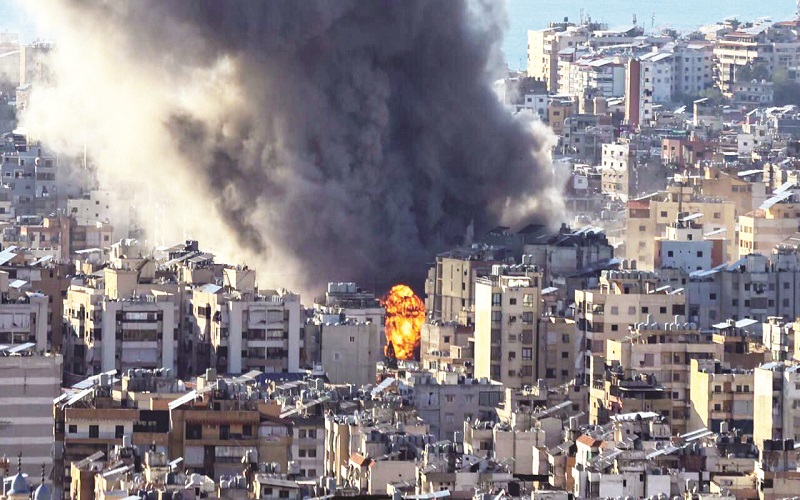
The recent coordinated military strikes by the United States and Israel against Iran represent one of the most consequential geopolitical developments of the decade. What initially appeared to be a strategic attempt to weaken Iranian military infrastructure and curb its nuclear ambitions has quickly evolved into an event with profound implications for the global balance of power. The conflict has reignited tensions in the Middle East, disrupted fragile regional equilibriums, and triggered debates across diplomatic circles about the future of international security.
At its core, the confrontation reflects the transformation of the global geopolitical environment. In the past, regional conflicts often remained geographically limited. Today, however, interconnected economies, energy dependencies, and strategic alliances mean that even localized military actions can send shockwaves across continents. The US–Israel strikes on Iran therefore represent more than a tactical military episode; they are a moment that could reshape geopolitical alignments and accelerate the transition toward a more unstable and multipolar international order.
The Strategic Context: A Long-Brewing Confrontation
The roots of the confrontation lie in decades of hostility between Iran and Israel, compounded by the United States’ long-standing strategic rivalry with Tehran. Since the Islamic Revolution of 1979, Iran has positioned itself as a challenger to American influence in the Middle East and as a staunch opponent of Israel. In response, Washington and Tel Aviv have sought to contain Iran’s regional ambitions and prevent it from acquiring nuclear weapons capability.
Over the years, this rivalry has manifested in covert operations, proxy wars, sanctions, cyberattacks, and diplomatic confrontations. Iran’s expanding network of allied militias across the Middle East—from Lebanon to Iraq and Yemen—has further intensified security concerns in Israel and among US allies in the Gulf. The recent military strikes therefore represent the culmination of years of escalating tensions rather than a sudden outbreak of hostilities.
Yet the geopolitical environment in which these strikes occurred is dramatically different from that of previous crises. The international system is now more fragmented, global institutions are weaker, and great-power competition has returned as a defining feature of world politics. These structural shifts mean that the consequences of the current conflict could be far more far-reaching than earlier confrontations between Iran and its adversaries.
The Immediate Regional Fallout
The most direct impact of the attacks is the heightened risk of a broader regional conflict. Iran possesses considerable military capabilities and an extensive network of allies and proxy groups across the Middle East. Organizations aligned with Tehran operate in countries such as Iraq, Syria, Lebanon, and Yemen, giving Iran the ability to respond indirectly even if its own territory becomes vulnerable.
This networked strategy of deterrence makes the conflict difficult to contain. An escalation in one theatre can quickly spill over into others. Missile attacks, drone strikes, and maritime disruptions could spread across the region, drawing additional states into the confrontation. Gulf countries hosting American military bases could become targets, while Israel faces the possibility of multi-front hostilities involving armed groups in Lebanon and Gaza.
The prospect of such a regional escalation is particularly concerning because the Middle East remains one of the world’s most volatile geopolitical arenas. Long-standing rivalries among Iran, Saudi Arabia, Israel, and various regional actors create a complex web of competing interests. Any major military confrontation risks destabilizing the delicate balance that has prevented large-scale interstate war in the region for decades.
Energy Security and the Global Economy
Beyond military considerations, the strikes carry significant geoeconomic implications. The Middle East continues to occupy a central position in the global energy system, and Iran itself is a major energy producer situated near one of the world’s most critical maritime chokepoints—the Strait of Hormuz.
This narrow passage connects the Persian Gulf to the global ocean and serves as the transit route for a substantial portion of the world’s oil and liquefied natural gas exports. Any disruption in this corridor could trigger severe turbulence in global energy markets. Even the perception of instability in the region often leads to sharp increases in oil prices, affecting economies far removed from the battlefield.
Rising energy costs have cascading consequences for the global economy. Higher oil prices can increase inflation, disrupt manufacturing supply chains, and strain the fiscal stability of energy-importing nations. Developing countries, which are already grappling with economic uncertainty and debt pressures, would be particularly vulnerable to such shocks.
For major industrial economies in Europe and Asia, the stakes are equally significant. Many of these countries rely heavily on energy imports from the Gulf. Prolonged instability in the region could therefore undermine economic recovery and create new vulnerabilities in an already fragile global economic system.
The Return of Great-Power Politics
Perhaps the most profound geopolitical consequence of the US–Israel strikes lies in their interaction with the ongoing resurgence of great-power rivalry. Iran maintains close strategic relationships with both Russia and China, and these partnerships have grown stronger in recent years as Tehran has sought to counter Western pressure and economic sanctions.
While neither Moscow nor Beijing is likely to become directly involved in the conflict militarily, both countries have strong incentives to prevent Iran from being decisively weakened by Western powers. Diplomatic support, economic cooperation, and strategic coordination could therefore increase in response to the crisis.
At the same time, the United States will likely deepen its cooperation with Israel and its traditional allies in Europe and the Gulf. This alignment of opposing geopolitical camps could reinforce a broader pattern of polarization within the international system. Countries may find themselves under increasing pressure to align with one side or another, reducing the strategic flexibility that many states have sought to maintain in recent years.
The conflict thus risks reinforcing a new era of geopolitical bloc politics—though unlike the Cold War, these blocs are likely to remain fluid and overlapping rather than rigidly defined.
The Expanding Role of Hybrid Warfare
Another dimension of the crisis that underscores its global significance is the increasing role of hybrid warfare. Modern conflicts are no longer confined to traditional battlefields. Cyber operations, information warfare, economic pressure, and covert actions have become integral components of geopolitical competition.
In the context of the US–Israel strikes on Iran, cyber warfare has already emerged as a crucial instrument. Digital attacks targeting infrastructure, financial networks, and communication systems can disrupt a country’s functioning without the need for conventional military escalation. Such tactics allow states to impose costs on adversaries while maintaining a degree of plausible deniability.
Iran has demonstrated considerable capabilities in this domain and has previously been linked to cyber operations targeting critical infrastructure and financial institutions abroad. Retaliatory cyberattacks could therefore extend the impact of the conflict far beyond the Middle East, affecting businesses, governments, and technological systems across the globe.
The growing prominence of hybrid warfare means that geopolitical conflicts increasingly operate across multiple domains simultaneously—military, economic, digital, and informational. This complexity makes crises more difficult to manage and increases the risk of unintended escalation.
The Diplomatic Dilemmas for the Global South
For many countries outside the immediate conflict zone, the US–Israel attacks on Iran present a difficult diplomatic challenge. Nations across Asia, Africa, and Latin America must navigate a complex geopolitical landscape while protecting their own economic and security interests.
Countries such as India, for example, maintain important strategic relationships with multiple actors involved in the crisis. India has strong ties with Israel in defense and technology cooperation, while also maintaining energy and connectivity partnerships with Iran. At the same time, India’s strategic partnership with the United States has deepened significantly in recent years.
Balancing these relationships will require careful diplomatic maneuvering. A prolonged conflict in the Middle East could complicate India’s energy security and disrupt regional connectivity initiatives such as the development of trade corridors linking South Asia with Central Asia and Europe.
Similar dilemmas confront many other emerging powers. The crisis underscores the difficulty of maintaining strategic autonomy in an increasingly polarized world.
The Impact on Regional Diplomacy
The strikes could also reshape diplomatic dynamics within the Middle East itself. In recent years, several Arab states have pursued cautious engagement with Israel through normalization agreements and security cooperation frameworks. At the same time, regional powers have attempted to reduce tensions with Iran through diplomatic dialogue.
A large-scale conflict threatens to derail these fragile diplomatic efforts. Arab governments may face domestic and regional pressure to distance themselves from Israel, while renewed hostilities could strengthen hardline factions within Iran. The resulting polarization could undermine years of tentative progress toward regional stability.
However, the crisis could also produce unexpected diplomatic openings. History shows that major conflicts sometimes create the conditions for new negotiations once the immediate confrontation subsides. Whether the current crisis ultimately leads to deeper polarization or renewed diplomacy remains uncertain.
Implications for the Future Global Order
At a broader level, the US–Israel attacks on Iran highlight the evolving nature of global power structures. The post-Cold War era was characterized by a relatively stable international system dominated by the United States. Today, however, the world is moving toward a more complex multipolar order in which multiple centers of power coexist and compete.
In such an environment, regional conflicts often become arenas for broader geopolitical competition. The Middle East has historically played this role, and the current confrontation could once again transform the region into a focal point of global strategic rivalry.
This shift has profound implications for international governance. Institutions designed to manage conflicts and maintain stability are increasingly strained by geopolitical divisions. As great powers pursue competing interests, the ability of global organizations to mediate crises becomes more limited.
A Crisis With Global Consequences
The US–Israel strikes on Iran therefore represent far more than a localized military operation. They are a manifestation of deeper transformations in global politics—transformations marked by renewed great-power competition, economic interdependence, and the growing complexity of modern warfare.
Whether the crisis escalates into a prolonged confrontation or eventually stabilizes through diplomacy, its impact will likely extend far beyond the Middle East. Energy markets, global trade routes, diplomatic alliances, and security architectures could all be reshaped by the ripple effects of this conflict.
In an increasingly interconnected world, geopolitical events rarely remain confined to their place of origin. The deserts of the Middle East may be the immediate stage for the current confrontation, but its consequences will be felt across continents. The real question facing policymakers is not whether the conflict will reshape global geopolitics—it already has—but how profound and enduring that transformation will ultimately prove to be.
Opposition's restlessness and the test of national interest


NILABH KRISHNA
(The content of this article reflects the views of writer and contributor, not necessarily those of the publisher and editor. All disputes are subject to the exclusive jurisdiction of competent courts and forums in Delhi/New Delhi only)

















Leave Your Comment